

More news on this day
Global appetite for air travel is on course to more than double by mid century, as new long term projections from the International Air Transport Association point to record passenger demand and a rapidly expanding aviation network worldwide.
Get the latest news straight to your inbox!
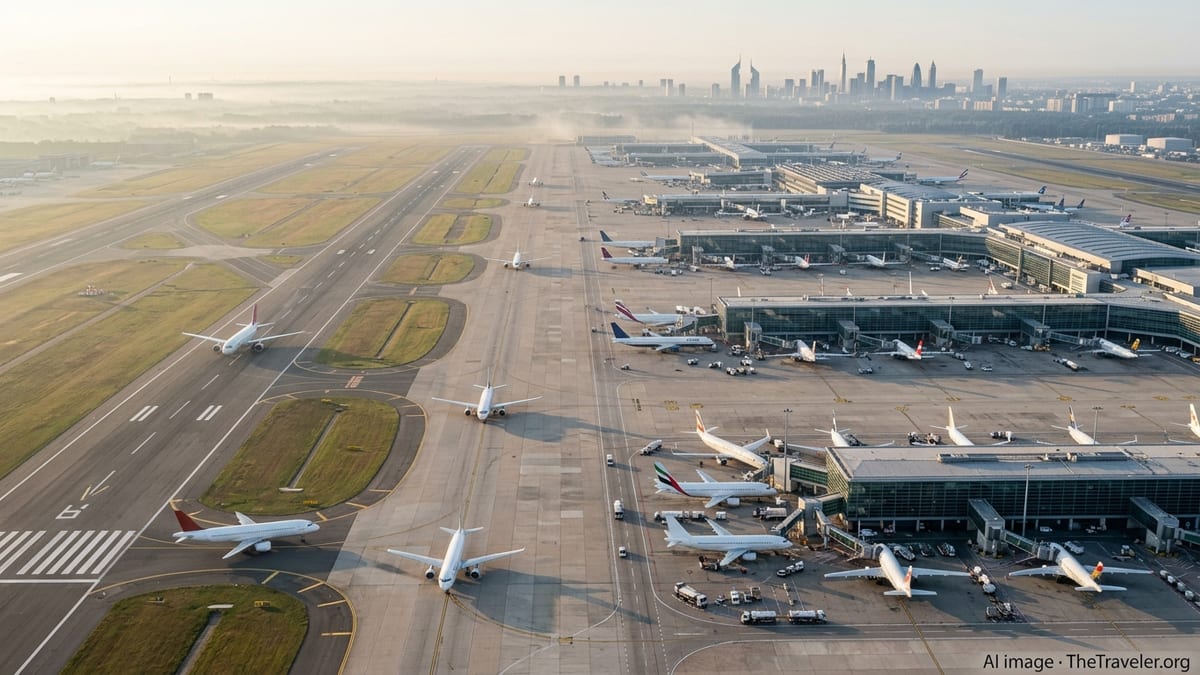
New Long Term Forecasts Point to Surging Demand
The International Air Transport Association’s latest long term air transport passenger demand projections indicate that global air travel could more than double by 2050. In its central scenario, IATA estimates that revenue passenger kilometres, a key measure of traffic volume, could rise from about 9 trillion in 2024 to around 20.8 trillion by mid century, implying compound annual growth of just over 3 percent over the period.
According to summaries of the forecast, the projection assumes a relatively smooth energy transition and continued, if uneven, global economic expansion. The outlook aligns with other industry analyses that tie air traffic growth closely to GDP trends and rising incomes, especially in emerging markets where first time flyers are entering the system in large numbers.
Separate figures cited in recent industry briefings suggest that the number of annual air passengers worldwide could climb from roughly 4.5 billion in 2019 to more than 9 billion by 2050. The combined picture is of a sector that has not only recovered from the pandemic shock but is expected to set new records almost every year through the coming decades.
Airport and airline data providers report that passenger volumes in 2024 approached or exceeded pre pandemic benchmarks, setting a higher base for future expansion. With travel demand remaining resilient despite economic and geopolitical headwinds, long term growth expectations are being revised upward in many forecasts.
Asia Pacific and Africa Lead Regional Growth
IATA’s long term projections highlight sharp regional contrasts. Asia Pacific and Africa are expected to be the fastest growing air travel markets, with mid range scenarios pointing to annual passenger traffic growth of around 3.8 percent in Asia Pacific and 3.6 percent in Africa between 2024 and 2050. These regions combine rising populations, expanding middle classes and significant investments in new airports and airline fleets.
Recent traffic data and independent analysis show that Asia Pacific has already overtaken North America and Europe as the world’s largest air travel market, with passenger numbers more than quadrupling in the region between 2000 and 2019. Forecasts from aircraft manufacturers and financial institutions similarly see Asia as the main driver of new aircraft deliveries and route development over the next two decades.
In Africa, passenger numbers start from a smaller base but are projected to accelerate as economic growth, regional integration and tourism initiatives strengthen air connectivity. National carriers in countries such as Ethiopia and others have unveiled multi decade growth strategies involving large fleet expansions and major hub developments, reflecting expectations of sustained traffic gains.
By contrast, North America and Europe are still set for growth but at a slower pace. IATA’s knowledge hub analysis points to compound annual growth rates of about 3 percent for North America and 2.5 percent for Europe in passenger traffic to the mid 2040s, as mature markets add capacity more gradually and focus on efficiency, premium travel segments and replacement of older aircraft.
Infrastructure and Capacity Pressures Intensify
The prospect of global air passenger demand doubling by 2050 is already prompting concern about whether airport and airspace infrastructure can keep pace. Regional outlooks from aviation organisations suggest that in Europe alone, the number of flights could rise by as much as 50 percent between the early 2020s and 2050, even under scenarios that factor in efficiency gains and environmental constraints.
Industry reports highlight that runway capacity, terminal congestion and air traffic management bottlenecks are likely to be most acute around major hubs and fast growing megacities. Expansion projects ranging from new terminals and runways to entirely new airports are underway or under discussion across Asia, the Middle East and parts of Africa, while North America and Europe are investing heavily in digital air traffic systems intended to squeeze more capacity out of existing airspace.
According to airport traffic updates compiled by global airport associations, total passenger traffic in 2024 climbed to around 9.4 billion, up strongly on 2023 and closing in on projected 2025 milestones. This rebound is reinforcing pressure on infrastructure that in many places was already running near capacity before the pandemic, raising questions about how quickly additional gates, stands and support facilities can be brought online.
Analysts note that if infrastructure investments lag behind demand, travellers could face more frequent congestion, delays and higher fares, which in turn could dampen some of the projected growth. As a result, long term planning by governments, airport operators and airlines is increasingly being framed around both capacity and sustainability considerations.
Net Zero Targets Collide with Traffic Growth
IATA’s projection that global air passenger demand will more than double by 2050 is being released against the backdrop of the sector’s commitment to reach net zero carbon emissions by the same year. Airline associations have reaffirmed a target of net zero by 2050, while states in the International Civil Aviation Organization have adopted a long term global aspirational goal for international aviation.
The combination of steep traffic growth and tight climate goals implies a massive scale up in cleaner technologies and fuels. IATA’s economic assessments of the energy transition underscore that the cost and availability of sustainable aviation fuel, or SAF, are critical variables in long term demand forecasts. In a scenario where the energy transition proceeds relatively smoothly, the organisation assumes sufficient SAF production and infrastructure to support continued traffic growth while reducing net emissions.
Manufacturers have responded by certifying new generation aircraft to operate with high blends of SAF, and some have pledged that current models will be capable of flying on up to 100 percent SAF by the early 2030s. At the same time, efficiency improvements through lighter materials, advanced aerodynamics and more efficient engines are intended to cut emissions per passenger kilometre even as total traffic increases.
Climate research and industry analyses also point to additional measures, including improved air traffic management, carbon offsetting mechanisms and long term exploration of hydrogen and electric propulsion on specific route segments. However, many studies stress that without rapid and large scale deployment of SAF, the sector’s net zero ambitions will be difficult to reconcile with a doubling of traffic.
Implications for Travelers and Travel Hubs
For travellers, the projected doubling of global air passenger demand by 2050 implies a wider choice of routes, more frequent services and potentially greater connectivity between secondary cities. Joint forecasts by airport and aviation bodies suggest that by the early 2050s, domestic routes in markets such as China, North America and parts of South and Southeast Asia, alongside long haul links between Asia, the Middle East and Europe, will dominate global traffic rankings.
Airline network strategies and aircraft orders are already reflecting these shifts, with strong demand for both single aisle jets to serve dense regional markets and widebody aircraft for long haul travel. As new hubs emerge and existing ones expand, tourism boards and city authorities are positioning themselves to capture a larger share of international visitor flows, often linked to broader economic development and investment agendas.
At the same time, travellers are likely to see environmental considerations play a larger role in ticket prices, loyalty programmes and product offerings. Industry outlooks suggest that the cost of decarbonising aviation, particularly through the use of sustainable fuels, could feed through to higher average fares if not offset by policy incentives or technological breakthroughs.
Observers note that the balance between connectivity, affordability and climate impact will shape how the sector’s growth story unfolds. As projections point to a doubling of demand by 2050, the way airlines, airports, manufacturers and policymakers respond over the next decade will be critical in determining whether the world can continue to fly more while emitting less.