

More news on this day
Nigeria’s Air Peace will launch an expanded schedule of regional flights across West Africa from April 1, 2026, a move aviation analysts say could accelerate a broader tourism upswing already being fanned by Emirates, Lufthansa, Qatar Airways and Delta’s growing focus on the subregion.
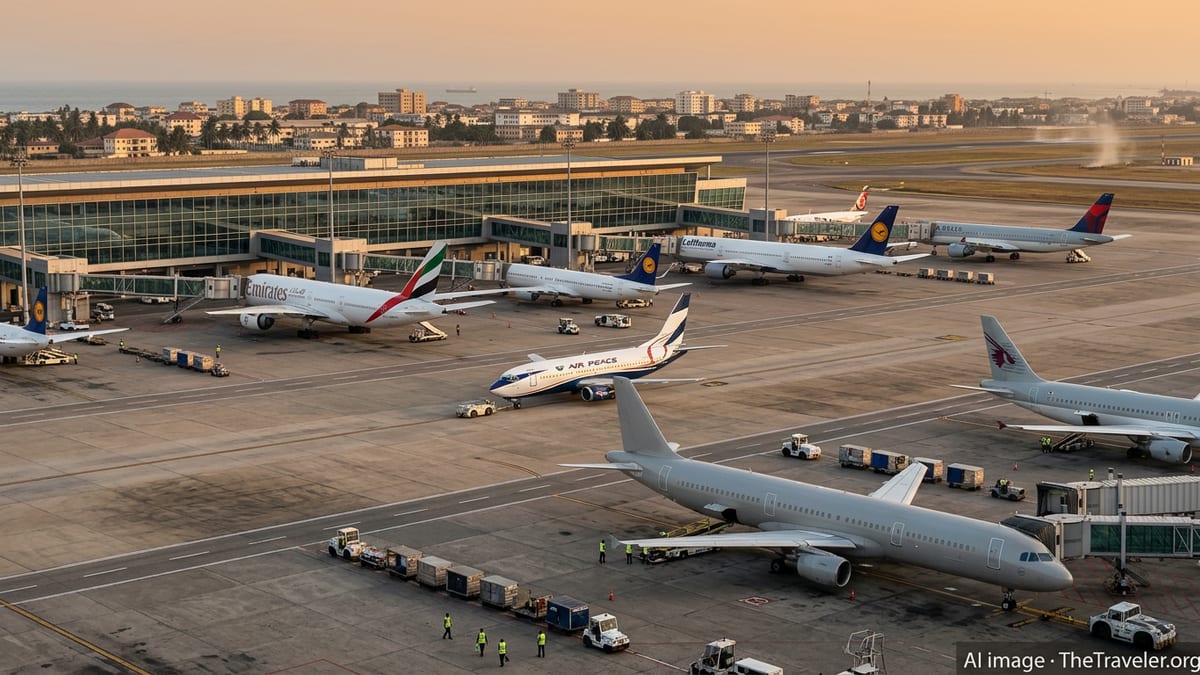
Air Peace Sets April 1 Date for New West Africa Schedules
Air Peace confirmed this week that its new regional schedules across West Africa will go live on April 1, 2026, deepening the Lagos-based carrier’s push to become a dominant player in short-haul travel within the Economic Community of West African States. The airline said the revised timetable will increase frequencies on key business and leisure routes while adding new connections between major coastal and inland capitals.
According to statements reported by regional media, the expanded program will see more consistent weekday and weekend rotations designed to support both corporate travelers and tourists who previously faced limited options or inconvenient timings between West African cities. The initiative is framed by the airline as part of a strategy to “strengthen connectivity and improve travel options within the sub-region,” with tourism and trade singled out as principal beneficiaries.
Industry observers note that the timing is significant. The new schedules arrive as governments across West Africa double down on tourism as a growth engine and as airports invest in terminal upgrades, expanded immigration capacity and new hotel infrastructure. For destinations seeking to convert domestic tourism into higher-spending regional arrivals, more reliable point-to-point air links are seen as a prerequisite.
Analysts also point out that Air Peace’s move positions a homegrown carrier at the center of intra-African travel flows, rather than leaving regional connectivity to be shaped overwhelmingly by long-haul airlines feeding traffic via hubs outside the continent. By tightening its network between West African capitals, the airline is attempting to capture a growing segment of travelers who want quick, same-day links for weekend getaways, conferences and events.
Global Giants Deepen Bets on African Tourism
While Air Peace builds out its regional footprint, global carriers are simultaneously sharpening their focus on Africa in ways that indirectly boost West African tourism. Emirates has highlighted Nigeria among the markets where it is working closely with tourism authorities to stimulate inbound demand, signing cooperation agreements with multiple national tourism boards to co-market destinations and expand capacity where feasible.
Lufthansa Group, which continues to refine its 2025 to 2026 schedules, has emphasized Africa as a growth region in its planning materials, with new and sustained services into key sub-Saharan gateways. Although much of the group’s expansion concentrates on long-haul links from European hubs, the added capacity is expected to filter travelers onward into West Africa via regional partners and interline agreements, increasing the number of potential visitors who can reach coastal cities and cultural centers with one or two connections.
Qatar Airways has also increased its African footprint in recent seasons, growing its network to 30 destinations on the continent and resuming previously suspended routes. The carrier’s strategy of offering multiple daily connections through Doha to African points means West African cities increasingly appear in long-haul itineraries originating in Europe, the Middle East, Asia and North America, driving both business and leisure traffic into the region.
Delta, for its part, maintains key links between the United States and Africa, including services into West African markets that act as a primary bridge for North American leisure travelers. Forward bookings for 2025 and early 2026, according to travel trade sources, indicate mounting interest in multi-country West Africa trips that combine heritage tourism, coastal relaxation and emerging city-break destinations as connectivity improves.
Tourism Boards Race to Capitalize on New Connectivity
Tourism authorities in Nigeria, Ghana, Senegal and other West African countries are moving quickly to align their strategies with the new wave of capacity and connectivity. Nigeria’s tourism planners have outlined ambitions to position the country as a major holiday destination in Africa, emphasizing investments in infrastructure, new resorts, creative industries and cultural festivals that can be packaged with improved air links.
For coastal destinations in particular, the ability to offer short, frequent flights from major regional hubs is seen as a way to unlock weekend and short-break markets. Officials in several countries are encouraging airlines to schedule early-morning and late-evening departures that allow travelers to maximize time on the ground without adding hotel nights, a pattern already proven in more mature tourism regions.
Hoteliers and tour operators are responding by designing itineraries that take advantage of Air Peace’s new network as well as the expanded reach of Emirates, Lufthansa, Qatar Airways and Delta. Operators report growing demand for itineraries that stitch together multiple West African cities on a single trip, such as combining art and music in Lagos with historic island fortresses in Ghana and beach escapes in neighboring states, enabled by faster regional jumps.
Destination marketers are also exploring joint promotions, recognizing that improved connectivity makes it easier to sell West Africa as a multi-country experience rather than a single-nation trip. As more carriers publish summer 2026 schedules, tourism boards are pushing for coordinated campaigns highlighting visa reforms, new hotel openings and upgraded airports alongside expanded flight options.
Economic Ripples Across Hotels, Creative Hubs and Small Businesses
Economists arguing for greater investment in aviation often point to tourism’s multiplier effect, and early modeling around West Africa’s 2026 flight additions suggests those impacts could be substantial. Increased arrivals typically feed into hotel occupancy, restaurant traffic, transport services, cultural attractions and nightlife, creating jobs that range from formal hospitality roles to informal sector opportunities.
In cities like Lagos, Accra and Dakar, a growing ecosystem of galleries, music venues and design-led spaces is already benefiting from more frequent visits by regional and international travelers. Event organizers say better flight options make it easier to attract performers, speakers and delegates, which in turn supports the local creative economy and generates media exposure that can inspire further visitor interest.
Smaller tourism-focused businesses also stand to gain. Operators offering niche experiences from culinary walking tours and surf lessons to wildlife excursions and craft markets depend heavily on reliable transport links. With additional services planned from April 2026 and a broader trend of capacity growth from major international airlines, these enterprises could see a larger and more diverse customer base.
However, experts caution that without parallel investments in safety, customer service and infrastructure, some destinations may struggle to convert increased airlift into sustainable tourism growth. Airport congestion, inconsistent ground transport and limited digital booking capabilities are cited as potential bottlenecks that governments and private investors will need to address quickly.
West Africa’s Role in a Broader Aviation Reboot
The acceleration of airline activity across West Africa comes as the continent’s aviation sector prepares to host key industry conversations in 2026. IATA’s Focus Africa conference, scheduled for late April in Addis Ababa, will bring together regulators, airlines and tourism bodies around themes of safety, connectivity and operational efficiency, all of which are central to leveraging new routes for economic development.
Within that wider context, Air Peace’s April 1 rollout of new regional flights and the continued engagement of carriers such as Emirates, Lufthansa, Qatar Airways and Delta highlight West Africa’s evolving role in global aviation. Rather than serving merely as an endpoint for long-haul services, the subregion is emerging as an interconnected market where travelers can move more fluidly between capitals and coastal gateways.
Aviation consultants say the coming summer and winter seasons will offer an early test of how effectively stakeholders can coordinate schedules, marketing and on-the-ground experiences to translate additional seat capacity into repeat visits and higher per-trip spending. If successful, the 2026 timetable changes could mark a turning point, encouraging further aircraft deployments and route launches in subsequent years.
For now, the convergence of Air Peace’s regional ambitions with the strategic interests of major global airlines points to a clear narrative: as connectivity improves, West Africa is poised to claim a larger share of Africa’s tourism story, with April 1, 2026 standing out as a symbolic start date for a new phase of regional travel.