

More news on this day
Air Premia has entered an interline partnership with Thai Airways that links the Korean hybrid carrier’s Americas network with Thai’s extensive Southeast Asia operations, marking a notable expansion of one‑stop travel options between North America and key destinations across the region.
Get the latest news straight to your inbox!
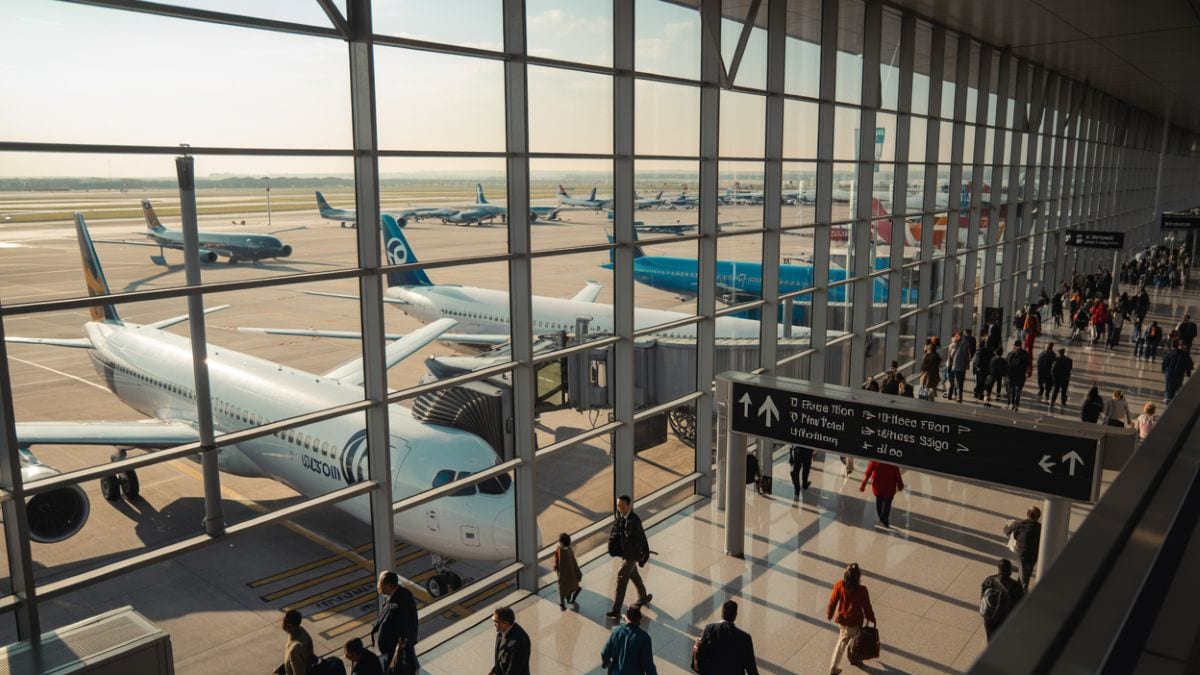
Image by Travel And Tour World
A new interline bridge between Seoul and Bangkok
Publicly available information indicates that Air Premia and Thai Airways have launched an interline partnership effective March 30, 2026, following an announcement from Seoul on March 26. Under the agreement, the two airlines will be able to sell connecting itineraries on a single ticket, combining Air Premia’s long haul services with Thai Airways’ regional and domestic network.
The move positions Seoul Incheon and Bangkok Suvarnabhumi as complementary transit hubs for travelers moving between the Americas and Southeast Asia. Air Premia, often described as Korea’s only hybrid service carrier, has been building a presence on long haul routes from Incheon to cities such as Los Angeles, providing a lower cost but full service alternative on transpacific sectors.
Thai Airways, Thailand’s flag carrier, brings an extensive portfolio of intra Asia connections into the partnership, including popular leisure and business destinations. Industry information shows that the carrier’s network spans major Thai cities, wider Southeast Asia and parts of South Asia, giving Air Premia customers more options beyond Seoul without the need to book separate tickets.
By choosing an interline structure rather than a deeper codeshare or alliance tie up, the two airlines have taken an incremental step that focuses first on connectivity and ticketing convenience. For travelers, the most immediate impact will be the ability to see combined routings and through fares when shopping for flights that involve both carriers.
Expanded reach across Southeast Asia and India
According to published coverage of the announcement, the partnership will connect Air Premia’s Americas routes to a series of Thai Airways destinations across Thailand, Southeast Asia and India. Within Thailand, itinerary options are expected to include major tourism centers such as Phuket and Chiang Mai, as well as other domestic gateways reachable from Bangkok.
Beyond Thailand, the cooperation extends access to cities including Kuala Lumpur, Singapore, Jakarta and Hanoi, which are among the busiest business and leisure markets in Southeast Asia. Travelers originating in North America on Air Premia services will be able to reach these destinations with a single reservation, checking in once and transferring at Incheon and Bangkok.
The network reach also stretches into the Indian subcontinent. Information released about the agreement highlights Indian points such as New Delhi, Mumbai and Chennai, which are important origin and destination markets for both business travel and visiting friends and relatives traffic. For those passengers, the new interline options may provide an alternative to traditional routings via the Gulf, Europe or larger Northeast Asian hubs.
By tapping into Thai Airways’ regional footprint, Air Premia adds geographic breadth without deploying its own aircraft on shorter routes across Southeast Asia and India. At the same time, Thai Airways gains additional feed from Air Premia’s transpacific services, particularly from North American cities already in the Korean carrier’s portfolio.
What the partnership means for travelers in the Americas
For travelers based in the Americas, the agreement is designed to simplify multi leg journeys into Southeast Asia. Instead of piecing together separate tickets on different websites or through multiple agents, passengers can book an end to end itinerary under one reservation, which typically offers benefits such as coordinated baggage handling and more streamlined rebooking in case of disruptions.
Air Premia’s model targets cost conscious travelers seeking a balance between low fares and comfort, using widebody Boeing 787 aircraft on long haul sectors. When paired with Thai Airways’ network, this model offers additional options for those who are flexible on airline choice but want convenient access to destinations like Phuket, Bali via Bangkok, or secondary cities across the region that may not be served nonstop from North America.
Travel industry observers note that interline agreements of this kind can be particularly attractive to long haul leisure travelers, small businesses and members of diaspora communities who travel less frequently and are more focused on total trip cost and simplicity than on elite status perks. For these customers, being able to search, price and ticket complex itineraries in a single step can be a significant advantage.
The partnership also adds a new competitor on some flows where large global carriers and alliances have dominated. While Air Premia and Thai Airways are not creating a formal joint venture, their coordinated connectivity may exert price and schedule pressure on carriers that route traffic via alternative hubs in Japan, Hong Kong, the Middle East or Europe.
Seamless journeys, ticketing and baggage handling
Interline partnerships are built around technical and commercial arrangements that allow two airlines to recognize each other’s tickets, handle baggage across carriers and settle financial transfers behind the scenes. In this case, public details indicate that Air Premia and Thai Airways will offer through check in and baggage transfer for eligible journeys covered by the agreement.
For passengers, that means bags can typically be tagged from the origin in the Americas through to the final destination in Southeast Asia or India, even if the trip involves multiple connections. Check in agents can issue all boarding passes at once, reducing the need to visit transfer desks at intermediate points such as Seoul or Bangkok.
The agreement is also expected to enable the display of combined itineraries in a range of global distribution systems and online booking platforms. As availability gradually loads into these systems, travelers and travel advisors should see more options that combine Air Premia long haul segments with Thai Airways regional flights, often priced with integrated fares rather than separate point to point tickets.
While the partnership does not automatically harmonize frequent flyer benefits, it may nonetheless prove attractive to travelers who prioritize itinerary convenience over mileage accrual. Each airline will continue to manage its own loyalty program, and travelers will need to check crediting rules and earning structures on a route by route basis.
Strategic positioning in a competitive transpacific market
The timing of the Air Premia and Thai Airways interline agreement comes as competition intensifies for long haul traffic between North America and Southeast Asia. Established players from North Asia, the Gulf and Europe have traditionally dominated this market, but a growing number of hybrid and newer full service carriers are seeking to carve out niche positions.
Air Premia has been gradually expanding beyond its initial focus on regional Asian routes into a broader transpacific role, leveraging Incheon’s status as a major connecting hub. Partnering with Thai Airways allows the carrier to offer a more compelling value proposition for passengers whose final destinations are not limited to Korea but extend to multiple points around the region.
For Thai Airways, which has been pursuing restructuring and network optimization, the arrangement adds another source of connecting traffic without the immediate need to add more of its own long haul capacity to North America. By tapping into Air Premia’s seats on key transpacific corridors, Thai can reinforce its position as a gateway to Thailand and Southeast Asia while maintaining focus on its core strengths.
As airlines across the Pacific continue to experiment with partnerships, interline agreements, and selective codeshares, the Air Premia and Thai Airways cooperation illustrates how mid sized carriers can work together to expand their global reach. For travelers, the result is a wider array of routing choices and price points at a time when demand for travel between the Americas and Southeast Asia remains strong.