

More news on this day
Air Punjab, Pakistan’s first provincial airline, is preparing to launch full commercial operations in April 2026, a move officials say will significantly enhance regional connectivity, stimulate domestic tourism and introduce a new, commercially driven model to the country’s aviation landscape.
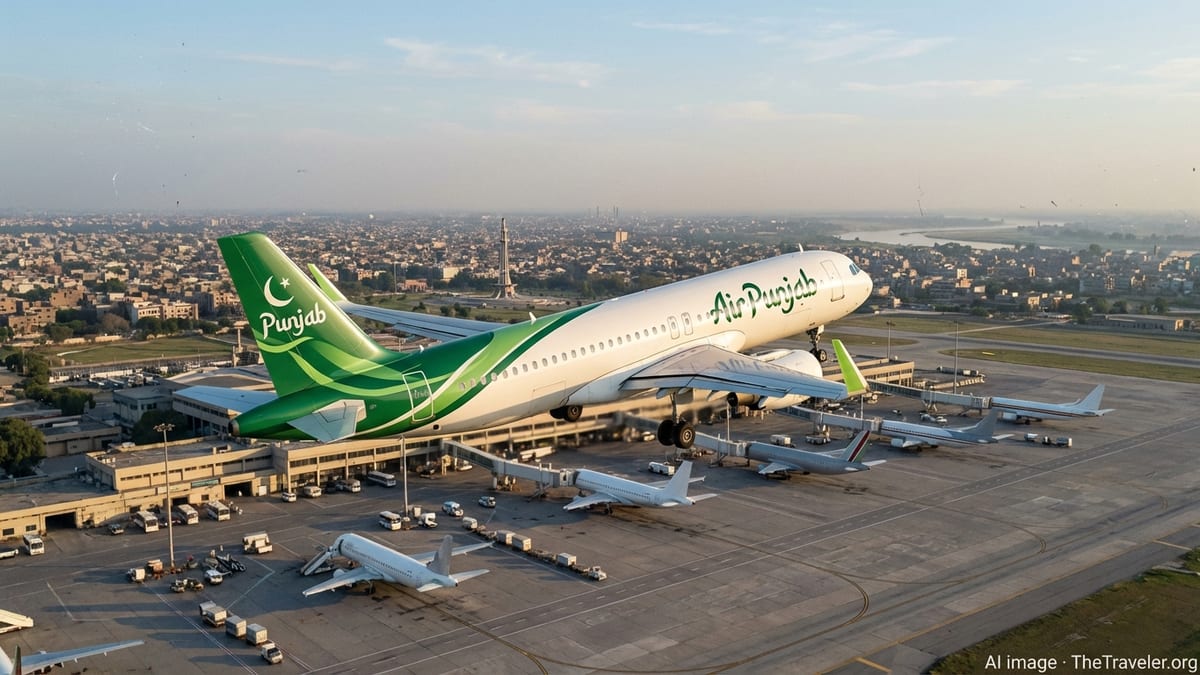
Provincial Flagship Airline Moves From Vision to Runway
The Air Punjab project, conceived under the Punjab government of Chief Minister Maryam Nawaz Sharif, has moved rapidly from policy approval to pre-launch readiness. Following cabinet approval of Air Punjab (Private) Limited in late 2025 and its incorporation with the national corporate regulator, the airline is now in the final stretch toward an April 2026 launch with full commercial operations.
Officials involved in the project describe Air Punjab as a flagship provincial initiative designed to fill gaps in Pakistan’s domestic air network while setting new benchmarks for service and governance. In contrast to earlier, centrally managed aviation ventures, the airline has been structured as a corporate entity with a commercial mandate, tasked with competing head to head with established private and national carriers.
The provincial government has positioned the launch as part of a wider transport modernisation drive that also includes high-speed rail and mass transit schemes. Within that agenda, Air Punjab is expected to serve as the airborne backbone linking Lahore and other major Punjabi cities with economic hubs across Pakistan.
Senior officials say the April start date reflects both regulatory progress and the conclusion of key recruitment processes initiated in late 2025, including the hiring of a chief executive, chief commercial officer and other senior managers. With the core team now being assembled, the airline is moving into what one official described as “the execution phase” of its launch plan.
Seven-Aircraft Fleet and Full Commercial Operations Model
At launch, Air Punjab is expected to operate a fleet of seven passenger aircraft, leased under a phased strategy designed to contain upfront costs while providing enough capacity to make a meaningful impact on domestic connectivity. Earlier working papers and committee reports indicated a focus on narrow-body jets such as Airbus A320s, which are already widely used on Pakistani routes and offer efficiencies in maintenance and crew training.
The provincial government has been keen to stress that Air Punjab will operate on full commercial principles rather than as a politically managed public service. Officials emphasise that the airline will be structured as a public-sector corporate entity or public-private partnership, with clear separation between the shareholder role of the government and the operational independence of professional management.
Under this model, the airline’s leadership is expected to take commercial decisions on route selection, pricing and fleet deployment, guided by standard industry metrics such as load factors, yield per seat and route profitability. Provincial subsidies, if any, are to be tied to transparent public service obligations, such as serving remote destinations that might otherwise be commercially marginal.
Analysts note that this approach reflects lessons from the struggles of Pakistan’s legacy national carrier and from regional examples where state-backed airlines have successfully adopted market-oriented governance structures. By starting with a lean, leased fleet and a clearer focus on performance, Air Punjab’s backers hope to avoid the cost overruns and governance issues that have plagued earlier ventures.
Domestic Routes to Anchor Pakistan’s Regional Connectivity
For at least its first two years, Air Punjab will concentrate on domestic routes, a strategic choice aimed at consolidating reliability and building brand recognition before moving into international markets. Initial schedules are expected to prioritise high-demand corridors such as Lahore to Islamabad and Karachi, while progressively adding links to cities including Multan, Faisalabad, Sialkot, Bahawalpur and other regional centres.
Aviation planners say the focus is on connecting Punjab’s economic heartlands with each other and with the rest of Pakistan, particularly in cases where rail or road journeys can be long and unpredictable. Short-haul flights of under one hour are being framed as efficient alternatives to intercity road trips that can stretch well beyond half a day in heavy traffic or adverse weather.
The provincial government has also flagged the potential reopening and upgrading of underused regional airports to support the airline’s network. Smaller cities with limited or irregular air links could see more frequent services once Air Punjab’s fleet and route portfolio expand, potentially drawing business travelers away from congested highways.
Industry observers caution, however, that the domestic market is already competitive, with several private carriers and a restructured national airline vying for passengers. Air Punjab’s challenge will be to differentiate itself through punctuality, dependable schedules and targeted connectivity that taps into demand not fully served by existing networks.
Boost for Domestic Tourism from Lahore to the Northern Valleys
Tourism stakeholders in Pakistan are watching the Air Punjab rollout closely, arguing that expanded domestic air capacity could be a turning point for the country’s underdeveloped but high-potential tourism industry. Faster and more reliable flights between Punjab’s major cities and gateways to the northern areas are expected to unlock new visitor flows to mountain destinations, cultural sites and religious shrines.
Tour operators say that better connectivity into hubs such as Islamabad, Gilgit and Skardu can shorten trip times for domestic tourists from Lahore, Faisalabad and Multan, making long-weekend getaways more feasible for middle-class families and young professionals. This, they argue, would mirror trends in other emerging markets where low- and mid-cost domestic airlines have been closely correlated with tourism surges.
The airline’s planners are also exploring opportunities to synchronise schedules with peak tourism seasons, including the summer months for northern valleys and the winter period for religious pilgrimage and cultural festivals in Punjab. Over time, Air Punjab’s entry into domestic pilgrimage and heritage tourism corridors within the province could support revitalisation of lesser-known historical towns and Sufi shrines.
Hotel operators, guesthouse owners and small businesses in potential tourism hotspots are positioning themselves for a possible uptick in visitors once the airline is fully operational. The expectation is that more seats and competitive fares will not only redistribute existing demand but generate new travelers who previously found long-distance domestic trips too time-consuming or expensive.
Economic Impact on Jobs, Investment and Regional Trade
Beyond tourism, the economic stakes of Air Punjab’s launch are significant. Establishing a new airline requires investments in maintenance, engineering, ground handling, catering, training and information technology, all of which create direct and indirect employment within the province. Officials involved in the project have spoken of thousands of jobs over the medium term, spanning from pilots and cabin crew to technicians and administrative staff.
Local aviation experts say the initiative will broaden the ecosystem for skilled professionals in Pakistan’s aviation sector, providing an additional employer alongside existing carriers and potentially slowing the outflow of talent to overseas markets. Competitive remuneration structures for pilots, engineers and other specialists are expected to be a critical factor in attracting and retaining staff.
The airline’s development is also drawing interest from private investors and financial institutions, particularly as the provincial government signals openness to public-private partnership structures and corporate governance practices aligned with capital market expectations. Leasing arrangements for aircraft, ground service contracts and ancillary revenue streams such as cargo and charter services all present opportunities for local and foreign partners.
Economists note that improved connectivity within and beyond Punjab could have knock-on effects on trade and commerce, especially for sectors where travel time is a constraint on business development. More frequent and affordable flights between industrial centres may accelerate deal-making, supply chain coordination and interprovincial collaboration, with cascading benefits for small and medium-sized enterprises.
Competition and Complementarity in Pakistan’s Evolving Aviation Market
Air Punjab will enter a domestic aviation market that is undergoing rapid change. Alongside established private carriers and a privatized national airline, several new entrants are planning or commencing operations in 2026, all vying for passengers in a price-sensitive environment marked by volatile fuel costs and currency pressures.
Industry analysts argue that Air Punjab’s provincial backing could be both an asset and a liability. On the one hand, support from the Punjab government may ease regulatory navigation, facilitate airport access and underpin investor confidence. On the other, the airline will need to demonstrate operational discipline and avoid perceptions of undue advantages or political interference that could distort competition.
Regulators and policymakers are expected to face pressure to ensure a level playing field, particularly in slot allocation at busy airports and in the enforcement of safety and service standards across all carriers. Healthy competition, if properly managed, could lead to better fares and service quality for passengers, while also expanding total demand by making air travel more accessible to new customer segments.
Some aviation observers see room for complementarity as well as rivalry. Partnerships in areas such as code-sharing, interline agreements and joint loyalty programmes could eventually emerge, allowing passengers to combine Air Punjab flights with those of other airlines for smoother domestic and international journeys. For now, however, the new carrier’s focus remains firmly on establishing its own identity and core network.
Operational Readiness, Governance and Public Expectations
As the April 2026 launch date approaches, Air Punjab’s management team faces a demanding checklist. This includes finalising its Air Operator Certificate, completing aircraft deliveries and cabin configurations, training flight and ground crews, and testing reservation and check-in systems. Any delays or missteps in these areas could immediately affect public confidence in the new carrier.
The airline’s governance framework is under close scrutiny, particularly given recent public debate in Punjab around the use of aviation assets and the perception of government extravagance. Officials have reiterated that no separate aircraft will be procured for VIP use under the Air Punjab banner, and that the fleet will be dedicated to commercial operations governed by clear performance and accountability metrics.
Transparency in procurement, recruitment and contract awards is seen as essential to sustaining support for the project. Independent audits, public reporting on performance indicators such as on-time arrivals and customer satisfaction, and visible adherence to international safety norms are among the measures experts recommend to build trust among passengers and taxpayers alike.
For many residents of Punjab and other provinces, Air Punjab is emerging as a test case for whether a provincial government can successfully sponsor a complex commercial enterprise without slipping into familiar patterns of patronage and inefficiency. The airline’s early months of operation, particularly during peak travel periods such as Eid holidays, will therefore be watched closely for signs of resilience or strain.
Opportunities and Risks in a High-Stakes Takeoff
With just weeks to go before scheduled launch, the tone among provincial officials is one of cautious optimism. They argue that the fundamentals are in place for a sustainable airline: a large and growing population base, dense economic corridors in need of faster connectivity, and a policy framework that seeks to blend public oversight with private-sector efficiency.
Nevertheless, the headwinds are real. Pakistan’s aviation environment remains exposed to currency volatility, high fuel costs and fluctuating demand. Even established carriers have struggled to consistently deliver profits in this context, and new entrants must navigate the added challenges of building brand recognition and customer loyalty from scratch.
For Air Punjab, success will hinge on execution after takeoff: delivering reliable schedules, competitive fares and courteous service while keeping a tight rein on costs and maintaining rigorous safety standards. If it can do so, the airline could become not only a symbol of provincial ambition but a practical catalyst for domestic travel and tourism growth across Pakistan.
If it falters, critics will point to the risks of state-backed ventures in commercial sectors and question whether precious public resources could have been better deployed elsewhere. The April 2026 launch therefore represents far more than a new logo on the tarmac; it is a high-stakes test of how Pakistan’s provinces can shape the future of national connectivity from the ground up.