

More news on this day
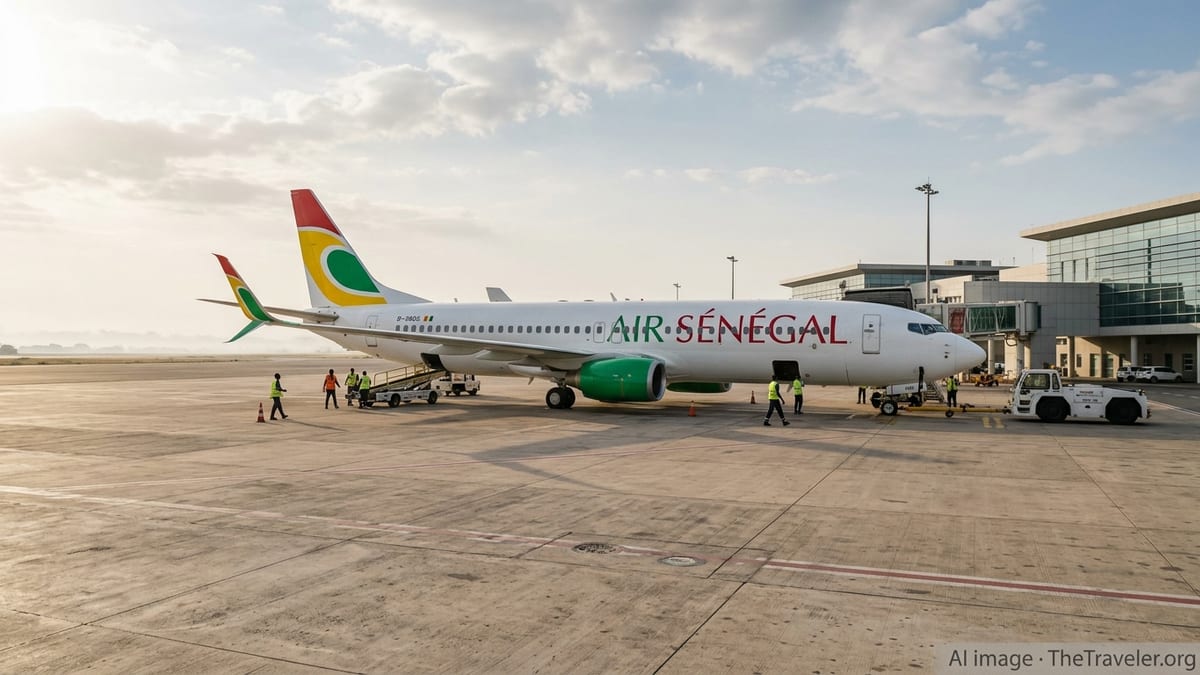
Air Sénégal is set to significantly reinforce its regional footprint after committing to a major narrowbody fleet expansion centered on new Boeing 737 aircraft, a move framed as key to restoring growth and boosting connectivity across West Africa and beyond.
Get the latest news straight to your inbox!
Strategic Fleet Bet on Boeing 737 for Regional Growth
Publicly available information shows that Air Sénégal has committed to a substantial order for Boeing 737-8 aircraft, with a multi-jet deal announced at the Dubai Airshow in November 2025. Industry coverage describes the agreement as the carrier’s first direct 737 MAX purchase and one of its largest fleet investments to date, underscoring a decisive shift toward a modern, fuel efficient narrowbody backbone.
The new aircraft will complement a mixed fleet that currently includes Airbus A330neo widebodies and single aisle jets used on medium haul services. Analysts note that the 737-8’s range and economics are designed to support both dense regional routes within West and Central Africa and selective medium haul links to Europe, the Middle East and possibly the Americas, all routed over the airline’s Dakar Blaise Diagne International Airport hub.
Reports indicate that the acquisition is part of a broader restructuring push by Senegal’s government and the airline’s management to reduce reliance on leased aircraft, improve on time performance and rebuild a network that saw several long haul and regional routes suspended in 2024. The new 737s are expected to arrive progressively from 2026, allowing Air Sénégal to phase out older equipment and standardize much of its short and medium haul operation.
Industry observers frame the Boeing deal as a signal of renewed confidence in the future of the national carrier after a period of financial strain and capacity cuts. With the order, Air Sénégal joins a growing group of African airlines using next generation 737s as the workhorse for regional expansion.
Dakar’s Hub Ambitions and West African Connectivity
The fleet expansion is closely tied to Senegal’s long stated ambition to develop Dakar into a competitive transfer hub for West Africa. Aviation trade publications highlight that the 737-8’s range of around 3,500 nautical miles allows Air Sénégal to connect Dakar with most major African capitals, key European gateways and select Middle Eastern destinations without changing aircraft type.
This capability positions the airline to rebuild and densify links to cities such as Abidjan, Bamako, Conakry, Banjul and Nouakchott, while also strengthening services to regional economic centers in Nigeria, Ghana and Morocco. According to recent network analyses, Air Sénégal previously relied on a mix of leased narrowbodies and turboprops on these routes, limiting frequencies and schedule reliability.
With additional 737 capacity, the carrier is expected to increase frequencies on core business and diaspora markets, which is seen as crucial to competing with pan African giants and Gulf carriers that already carry significant sixth freedom traffic over their respective hubs. More consistent schedules and better aircraft utilization are anticipated to make Dakar more attractive as a connecting point between southern Africa, the Sahel, Atlantic islands and Europe.
Sector analysts also point to potential benefits for tourism, as enhanced air access underpins Senegal’s efforts to promote coastal destinations such as Saly and Cap Skirring, as well as cultural tourism in Dakar and Saint Louis. Improved intra African air links could further support the African Continental Free Trade Area by making business travel within the region easier and more predictable.
Competitive Dynamics in Africa’s Single Aisle Market
The Air Sénégal order adds momentum to Boeing’s renewed push in Africa’s narrowbody segment, where Airbus A320 family aircraft have long held a strong position. Recent coverage notes that Ethiopian Airlines and other regional players have also committed to additional 737 MAX aircraft, framing Air Sénégal’s move as part of a wider fleet modernization trend on the continent.
Analysts highlight that airlines in West and Central Africa are increasingly under pressure to deploy more efficient jets because of volatile fuel prices, currency challenges and the need to meet tightening environmental expectations from regulators and corporate customers. The 737-8’s lower fuel burn per seat compared with previous generation narrowbodies is seen as a key lever for improving unit costs on high volume routes.
At the same time, the deal places Air Sénégal into a more competitive field, with larger carriers already operating sizeable next generation fleets and smaller rivals turning to leased aircraft to upgauge capacity quickly. Market commentary suggests that the Senegalese airline’s success will depend on how effectively it uses the new aircraft to build sustainable route structures rather than simply adding capacity.
Some analysts caution that the order alone does not resolve structural issues in West African aviation, such as high airport charges, fragmented regulation and limited progress on full implementation of open skies policies. However, they view Air Sénégal’s fleet decision as a necessary precondition for competing in a landscape where modern, right sized aircraft are becoming the norm.
Operational Modernization and Passenger Experience
Beyond route expansion, the new Boeing 737s are expected to play a central role in modernizing Air Sénégal’s onboard product. Publicly available specifications for similar 737-8 configurations indicate the potential for redesigned cabins with higher capacity, improved overhead storage, quieter engines and updated inflight connectivity, all of which align with passenger expectations on regional and medium haul flights.
Industry commentary suggests that a more consistent narrowbody fleet will simplify crew training, maintenance planning and spare parts management, areas where smaller African carriers often face high costs and operational disruptions. Moving away from a patchwork of leased aircraft toward a more standardized 737 platform is viewed as a step toward greater reliability and improved customer perception.
Travel trade reports note growing demand from both corporate and leisure passengers for seamless travel within West Africa, including same day returns and reliable onward connections to Europe and North America. The introduction of newer 737s with competitive cabin standards could help Air Sénégal differentiate itself in markets where travelers often choose foreign carriers because of perceived service and reliability gaps.
For airport stakeholders in Dakar and across the region, the added capacity is also expected to drive investment in ground handling, maintenance and training facilities linked to the 737 platform. This has potential spillover benefits for local employment and skills development in aviation services.
Risks, Timelines and Regional Impact
While the order marks a major milestone, analysts underline that its benefits will depend on smooth execution in the coming years. Delivery schedules, certification processes and any changes in regulatory oversight of the 737 MAX family remain closely watched factors that could influence how quickly Air Sénégal is able to deploy the new jets at scale.
Reports tracking African airline performance emphasize that the timing of aircraft arrivals in 2026 and beyond will intersect with broader economic trends, including demand for business travel tied to commodities, infrastructure projects and regional integration. Any slowdown in these areas could affect the speed at which new capacity can be absorbed profitably.
Despite these uncertainties, aviation market assessments generally portray the Air Sénégal Boeing 737 program as a significant development for West African connectivity. By bolstering Dakar’s role as a regional hub and providing more direct links between secondary cities, the expanded fleet is expected to support trade, tourism and labor mobility across a swath of countries that have historically been underserved by reliable air links.
For travelers, the most visible changes are likely to emerge gradually from 2026 onward, as additional 737 flights appear in schedules, older aircraft are retired and new route announcements highlight the airline’s ambition to connect West Africa more closely with itself and with the wider world.