

More news on this day
Air Serbia is set to expand its Adriatic network in summer 2026 by introducing a new seasonal direct route between Belgrade and Brač, giving Serbian travellers and regional visitors easier access to one of Croatia’s most picturesque islands.
Get the latest news straight to your inbox!
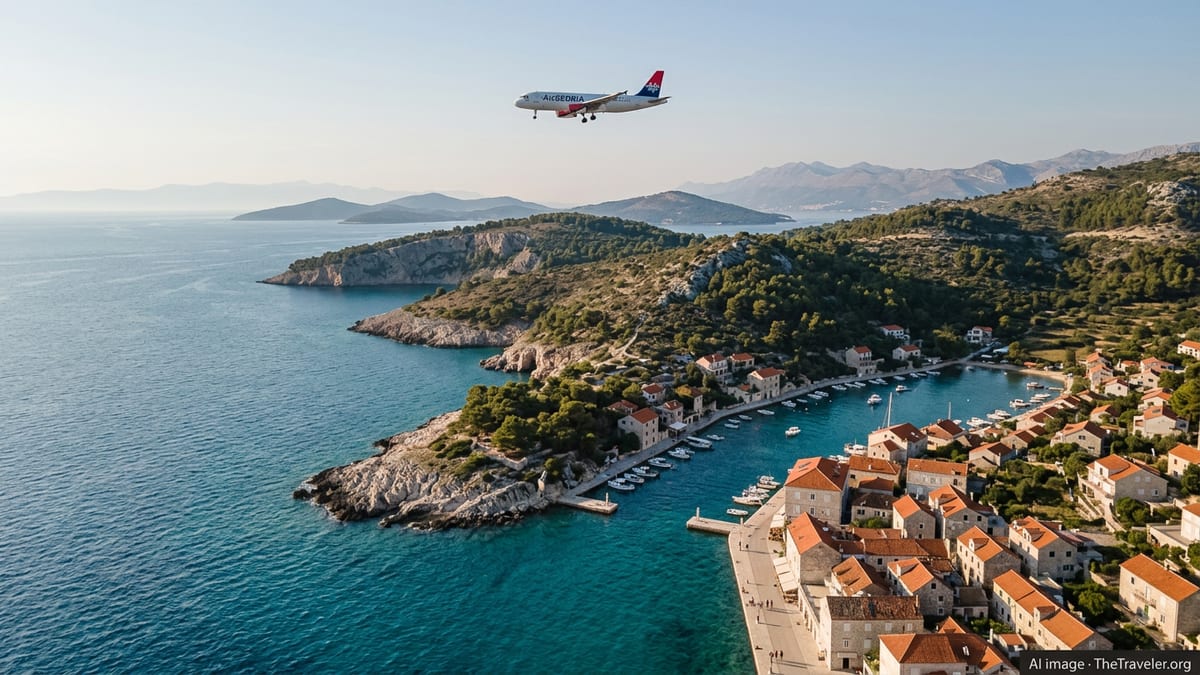
New seasonal link between Belgrade and Brač
Publicly available schedule data and regional aviation coverage indicate that Air Serbia will add Brač Airport to its network from June 2026 as part of its summer timetable. The service is planned as a nonstop connection from Belgrade Nikola Tesla Airport, positioning the Croatian island as a convenient leisure option for passengers across Air Serbia’s growing transfer network.
Information shared in regional media and enthusiast forums points to a launch date of 20 June 2026, with flights operating twice weekly through 12 September. The frequency aligns with typical summer-season planning for smaller island airports in the Adriatic, where operations are concentrated around peak leisure demand.
With this addition, Brač becomes one of several coastal Croatian destinations served by the Serbian carrier, complementing existing routes that connect Belgrade with other Adriatic cities. The new link supports Serbia’s outbound holiday market while offering travellers from Central and Eastern Europe a relatively short, one-stop journey to the island’s beaches via Belgrade.
The new Brač service is expected to be operated with regional aircraft suited to the airport’s shorter runway and limited infrastructure. Such equipment choices are common on island routes in the region and allow carriers to match capacity with highly seasonal demand.
Strengthening Air Serbia’s Adriatic and leisure strategy
According to published network overviews, Air Serbia has steadily expanded its presence in Mediterranean leisure markets in recent years, adding island destinations in Greece, Spain and Italy alongside Croatian coastal airports. The carrier has framed this expansion as part of a strategy to capture growing summer holiday traffic while using Belgrade as a transfer hub between Central Europe, the Balkans and key tourist hotspots.
The introduction of flights to Brač is consistent with this approach. By offering direct access to a smaller Adriatic island, the airline broadens its portfolio beyond major coastal cities and aims to appeal to travellers seeking quieter, more boutique destinations. At the same time, the route adds another option for package tour operators and independent travellers building multi-stop itineraries across the region.
Industry analyses of Air Serbia’s recent network moves have highlighted the airline’s focus on seasonal flexibility. Routes to Mediterranean islands are typically scheduled for peak months, allowing capacity to be redeployed in winter to markets with stronger year-round demand. The Belgrade–Brač service fits this pattern, with its limited operating window tailored to the island’s tourism calendar.
The Brač addition also supports Belgrade’s position as a transfer hub. Passengers originating from other cities in Air Serbia’s network, including points in Western Europe, the Middle East and the wider Balkans, gain a new one-stop option to reach the Croatian island without relying solely on coastal gateways such as Split.
What the new route means for Brač Island
Brač, known for its clear waters, pine-fringed coves and traditional stone villages, has traditionally been accessed via ferry services from mainland Croatia, particularly from Split. While the island already has an airport, scheduled services have often been limited or highly seasonal, which has constrained the growth of direct international arrivals.
The arrival of Air Serbia in summer 2026 is expected to increase direct air access and raise the island’s profile among travellers from Serbia and beyond. For visitors connecting through Belgrade from other markets, the new route offers a more streamlined journey that bypasses the need to route through larger Croatian airports and onward ferries during the busiest weeks of the season.
Tourism observers note that additional air links can help diversify Brač’s visitor base, attracting travellers who may not have considered the island previously due to perceived complexity in reaching it. At the same time, the small scale of the operation, with only a few weekly flights, suggests a measured approach aimed at supporting local tourism without overwhelming the island’s infrastructure.
Local tourism stakeholders are likely to watch how the new connection influences length of stay and spending patterns, especially among guests arriving on short breaks who can take advantage of the more direct access. Accommodation providers, restaurants and activity operators could benefit from increased visibility in markets where Air Serbia and its partners promote the island as a new option.
Broader trends in regional air connectivity
The planned Belgrade–Brač route reflects a broader trend in Central and Eastern Europe, where airlines are increasingly targeting smaller leisure destinations to differentiate their networks. Rather than focusing solely on major coastal hubs, carriers are turning to islands and secondary airports that offer distinctive experiences and less congested environments.
In recent seasons, Air Serbia has added or announced a series of summer routes to Mediterranean islands and resort cities, as shown in industry databases and airline communications. This expansion sits alongside higher-profile long-haul developments, such as new intercontinental links planned for 2026, underscoring the airline’s dual focus on regional leisure and wider connectivity.
For Croatia, the new service forms part of a gradual increase in international air links to its islands, complementing routes operated by other European carriers to destinations such as Brač, Hvar via nearby airports, and the wider Dalmatian coast. The emphasis on seasonal services allows airlines to adjust capacity to suit fluctuating tourism flows while testing emerging markets without long-term commitments.
As airlines throughout Europe fine-tune their summer 2026 schedules, the Belgrade–Brač connection illustrates how national carriers and regional players are seeking to capture niche demand. By pairing a growing hub like Belgrade with a smaller island airport, Air Serbia aims to strengthen its position in the competitive Adriatic leisure market while offering travellers a new way to reach one of Croatia’s more tranquil coastal escapes.