

More news on this day
Air Serbia is adding a new seasonal route between Belgrade and the Croatian island of Brac for the summer 2026 schedule, strengthening leisure links between Serbia and one of the Adriatic’s most popular holiday regions.
Get the latest news straight to your inbox!
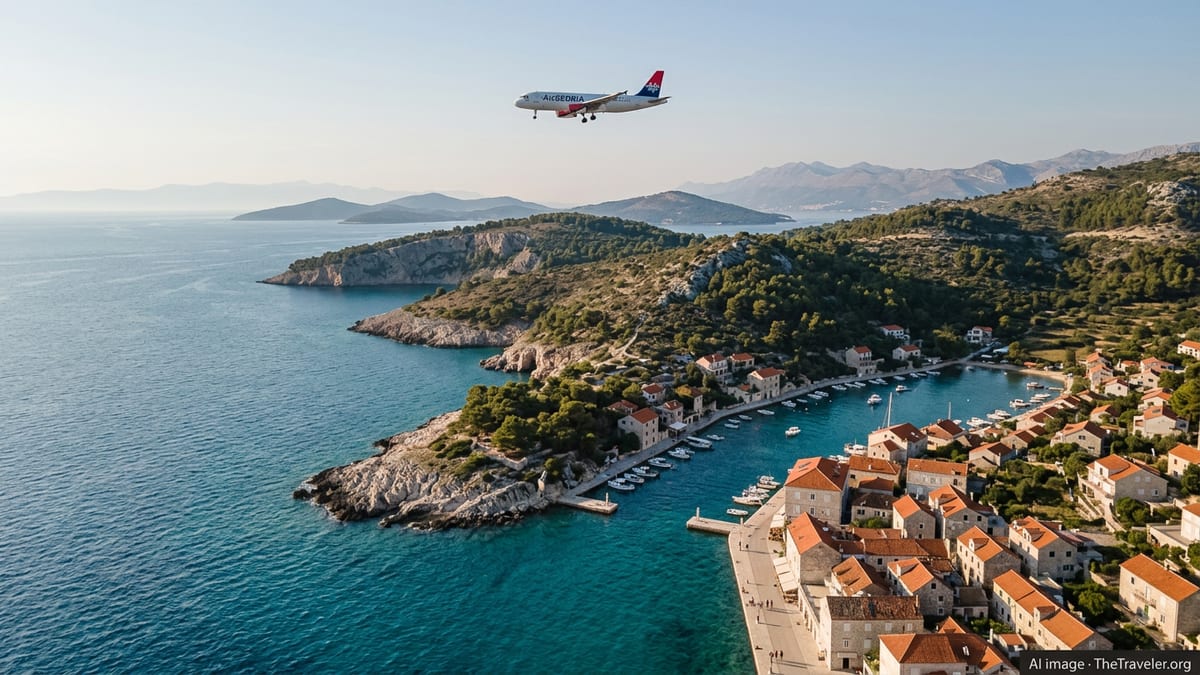
Twice-weekly summer service from June to September
Publicly available timetable data shows that flights between Belgrade Nikola Tesla Airport and Brac Airport are scheduled to operate twice weekly, on Wednesdays and Saturdays. Services are planned to run from 20 June 2026 through 12 September 2026, covering the core peak of the Adriatic holiday season.
Industry coverage indicates that the route will be marketed primarily to leisure travellers from Serbia and the wider region, offering a direct alternative to reaching the island via Split or ferry connections from the mainland. The summer-only timing reflects demand patterns on the Croatian coast, where traffic is heavily concentrated between late June and early September.
Operational information points to relatively short sector times on the new route, positioning it as a quick weekend or short-break option as well as part of longer stays on the island. The schedule on midweek and weekend days is expected to appeal both to tour operators and independent travellers planning flexible itineraries.
Capacity on the route is likely to be adjusted across the season depending on demand, a pattern already seen on other Air Serbia leisure services. Observers note that the twice-weekly set-up provides a baseline that can support package offerings while limiting exposure to shoulder-season volatility.
Brac joins expanding Croatian network
The decision to serve Brac follows a period of gradual expansion by Air Serbia in the Croatian market. According to published route maps and timetable summaries, the airline already flies from Belgrade to Split and Dubrovnik during the summer season, alongside year-round operations to Zagreb by other carriers that help feed regional traffic flows.
By adding Brac to its portfolio, Air Serbia broadens access to the central Dalmatian islands, an area that has seen a steady rise in visitor numbers from Central and Eastern Europe. Travel industry reports describe Brac as one of Croatia’s best-known islands, with the resort of Bol and its Zlatni Rat beach regularly featured in tourism campaigns across the region.
Analysts note that the new service positions Belgrade as another convenient gateway to Croatia’s islands, complementing existing access through major coastal airports such as Split and Dubrovnik. This could support multi-stop itineraries in which travellers combine city breaks in Belgrade with seaside stays in Dalmatia.
Market observers also point out that a direct Belgrade–Brac link may stimulate additional inbound tourism to Serbia, as Croatian and wider European visitors gain a simple connection to the Serbian capital via the island. In practice, the route is expected to move traffic in both directions, reflecting increasingly integrated tourist flows across the Western Balkans.
Part of wider summer 2026 growth strategy
The Brac launch fits into a broader network expansion by Air Serbia for the 2026 summer season. Airline fleet and route data show that the carrier has been gradually increasing its number of destinations from Belgrade, supported by recent fleet additions and a strategy focused on both point-to-point and transfer traffic.
Recent seasons have seen a particular emphasis on leisure routes around the Mediterranean and Adriatic, reflecting strong demand from the Serbian outbound market and connecting passengers from Central and Eastern Europe. Industry analysis suggests that adding another Croatian island reinforces this focus, while diversifying the carrier’s seasonal offering beyond already competitive coastal airports.
Travel analysts highlight that new short-haul leisure routes can also help balance Air Serbia’s growing long-haul network by feeding passengers into Belgrade from secondary holiday destinations. Brac’s role as a niche but high-profile resort destination aligns with this approach, creating opportunities for connecting traffic onward to destinations served from Belgrade.
Airline schedule comparisons indicate that the Brac flights are being slotted into existing operational waves at Belgrade Nikola Tesla Airport, allowing for onward connections to regional cities without the need for significant structural changes to the timetable.
Boost for Brac’s tourism and regional connectivity
For Brac, the new service is expected to enhance accessibility from markets that do not have direct links to the island today. Tourism-focused reports note that the island has traditionally relied on ferry services and indirect air access via Split, which can add time and complexity for visitors coming from Central and Eastern Europe.
By introducing a nonstop link to Belgrade, the island gains access not only to Serbian travellers but also to passengers connecting from wider Air Serbia destinations. This could bring incremental arrivals from cities in the Balkans, Central Europe and potentially beyond, depending on fare levels and scheduling.
Local tourism observers anticipate that the additional capacity will be particularly attractive to independent travellers seeking shorter breaks, as well as to organised groups looking for seamless charter-style arrangements using scheduled services. The Wednesday and Saturday pattern lines up with common holiday turnaround days used by regional tour operators.
Regional tourism bodies have been promoting combined itineraries that include both Croatian coastal destinations and inland city experiences in neighbouring countries. A direct Belgrade–Brac connection provides another practical option for such cross-border trips, supporting efforts to market the Adriatic and the Western Balkans as a single, connected tourism region.
Competitive landscape on the Adriatic
The launch of Belgrade–Brac comes amid steadily intensifying competition for Adriatic leisure traffic. Airlines across Central and Eastern Europe have been adding seasonal capacity to Croatian coastal airports, with low-cost and network carriers alike targeting peak summer demand.
Aviation analysts note that serving a smaller island airport such as Brac allows Air Serbia to differentiate its offer compared with carriers that focus mainly on larger coastal hubs. The route gives the airline a distinctive product for customers who prefer to arrive directly on the island instead of traveling onward by road or ferry from the mainland.
At the same time, the relatively limited scale of Brac Airport means that careful capacity management will be necessary. Publicly available information on previous seasonal services to the island shows that airlines often tailor frequencies and aircraft types to match infrastructure and demand constraints.
For travellers, the new Belgrade–Brac link adds another option in an increasingly crowded market of summer routes to the Adriatic. With tickets for the 2026 season expected to be made available alongside Air Serbia’s broader summer schedule, passengers will be able to compare the new island connection with established services to Split, Dubrovnik and other coastal gateways when planning their holidays.