

More news on this day
Serbia and Croatia are set to deepen their tourism ties this summer as Air Serbia launches a new seasonal route linking Belgrade with Croatia’s Brač Island, creating a direct bridge between the Serbian capital and one of the Adriatic’s most laid-back beach destinations.
Get the latest news straight to your inbox!
A New Direct Gateway to the Dalmatian Islands
According to information shared in regional aviation and travel coverage, Air Serbia will operate direct flights between Belgrade and Brač twice weekly, on Wednesdays and Saturdays, from 20 June to 12 September 2026. The service is expected to run during the height of the Mediterranean summer, coinciding with peak demand for coastal getaways across the Balkans.
The new route effectively shortens the journey from Serbia to Brač, which until now typically required a combination of flights to Split or other Croatian airports, followed by ferry or catamaran connections. For many Serbian travelers, the new schedule will turn what was once a multi-step journey into a single, short hop from Belgrade Nikola Tesla Airport to Brač Airport near Bol.
The connection also enhances regional accessibility to Brač via Belgrade as a transfer hub. With Air Serbia’s expanding short-haul network across Central and Eastern Europe, the route is poised to attract passengers from neighboring markets who can now reach the Croatian island with a one-stop connection through the Serbian capital.
Industry observers note that the decision fits into a broader strategy of targeting leisure destinations that combine strong regional appeal with growing international recognition, positioning Belgrade as a practical gateway to the Adriatic coast.
Tourism Cooperation Between Serbia and Croatia
The Belgrade–Brač route adds a new dimension to tourism cooperation between Serbia and Croatia, two markets that have seen increasing cross-border leisure travel in recent years. Travel data and tourism board reporting indicate that Serbian visitors are among the most frequent foreign guests on the Croatian coast, particularly along the Dalmatian islands and mainland resorts.
By placing a direct flight into Brač, rather than only serving larger Croatian hubs, Air Serbia is aligning with efforts by Croatian coastal regions to distribute visitor flows beyond the most heavily trafficked destinations. This can support smaller island economies while offering Serbian travelers a more relaxed alternative to busier hotspots such as Split or Dubrovnik.
The route also complements existing air links between Belgrade and other Croatian cities, including Split and Dubrovnik, which various carriers have developed in response to summer demand. Together, these connections show how aviation has become a practical tool for softening borders and encouraging shared tourism growth along the Adriatic.
Stakeholders from both countries are expected to monitor the inaugural season closely. Successful load factors and positive traveler feedback could encourage an extension of the operating window in future summers or an increase in weekly frequencies as demand develops.
Brač: An Island Tailor-Made for a "Dream Summer Getaway"
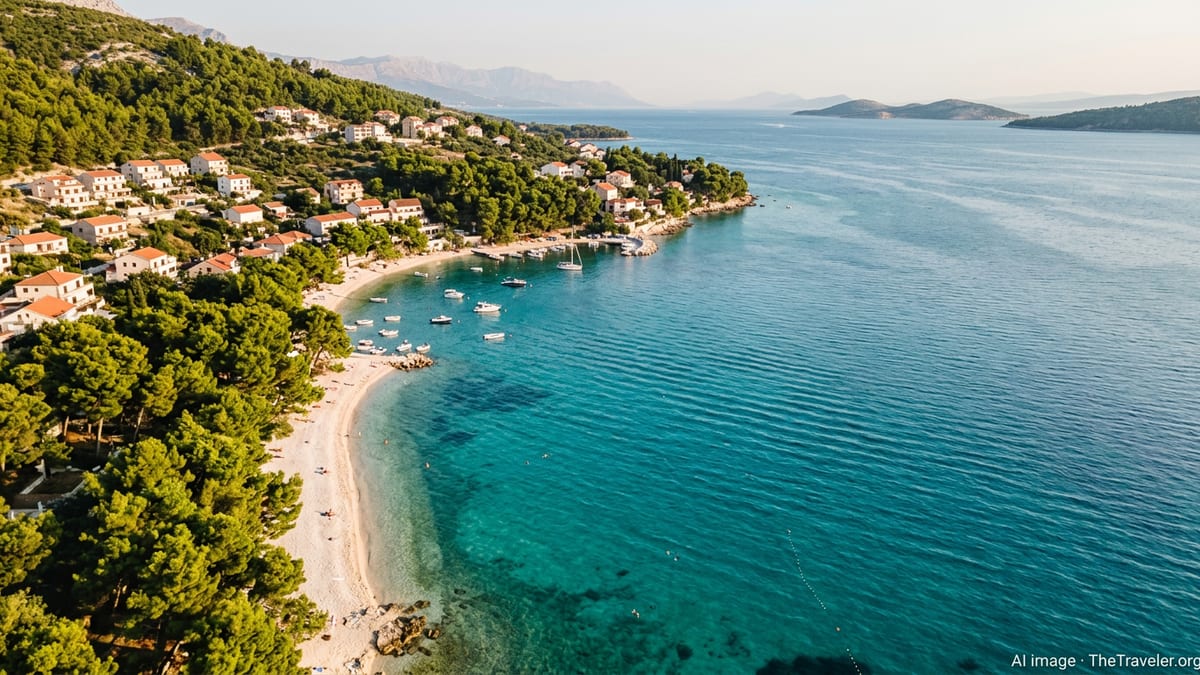
For travelers in Serbia and the wider region, Brač offers a distinctly different pace from some of the Adriatic’s high-profile party and cruise ports. The island is known for its pine-fringed beaches, limestone cliffs, and traditional stone villages, with tourism materials frequently highlighting its blend of low-key charm and high-quality coastal infrastructure.
One of Brač’s most recognizable landmarks is the Zlatni Rat beach near Bol, a narrow spit of golden shingle that shifts shape with currents and wind. While Zlatni Rat often appears in international travel rankings, much of the island remains comparatively uncrowded, with small coves, cycling routes, and inland hiking paths that appeal to families and independent travelers.
Local hospitality businesses on Brač have increasingly targeted regional guests as a reliable segment, particularly from Croatia’s neighboring countries. Direct air access from Belgrade is likely to strengthen that strategy by making short, spontaneous trips more practical and reducing reliance on long road journeys at peak-season border crossings.
For Air Serbia, tying its brand more closely to destinations like Brač allows the airline to market complete summer experiences rather than just point-to-point flights, reinforcing its positioning as a carrier that connects urban centers to nature-focused holiday escapes.
Strengthening Belgrade’s Role as a Regional Hub
The Brač service arrives as Air Serbia continues to expand its network from Belgrade, adding new European leisure routes and developing long-haul links to North America and beyond. Public timetables and airline communications show that the carrier has been steadily increasing both capacity and seasonal offerings, aiming to turn Belgrade into a more competitive transfer hub for the broader Balkans.
By connecting Belgrade directly with Brač, the airline is not only catering to origin-and-destination traffic between Serbia and Croatia but also leveraging onward connections from cities across Central and Eastern Europe, the Caucasus, and the Middle East. Travelers from these markets could now see Brač as a more accessible summer option via a single connection in Belgrade.
Aviation analysts following the region point out that short seasonal routes of this kind can serve as valuable test beds. If Belgrade proves an effective funnel for visitors heading to lesser-served Adriatic islands, airlines may be encouraged to look beyond traditional gateway cities and diversify their coastal portfolios along the eastern Mediterranean.
The route also underscores a broader trend in which mid-sized carriers in Central and Southeast Europe are using targeted leisure links to compete with larger network airlines and low-cost operators. Carefully chosen seasonal destinations like Brač can help maximize aircraft utilization during peak months while enhancing the attractiveness of a carrier’s schedule to both tour operators and independent travelers.
What Travelers Can Expect This Summer
For passengers planning a summer escape, the twice-weekly pattern is designed to suit week-long and extended weekend stays. Wednesday departures favor flexible travelers and remote workers seeking quieter midweek arrivals, while Saturday flights align with traditional changeover days at coastal accommodations.
Travel industry reports suggest that demand for Adriatic island holidays remains strong, particularly among families and couples looking for warm weather, swimmable seas, and authentic local food within a short flight of major regional cities. Brač’s relatively compact size and established tourism infrastructure allow visitors to combine beach time with village visits, wine tasting, and outdoor activities without long internal transfers.
As always with seasonal operations, travelers are encouraged to pay close attention to published schedules and booking windows, as peak summer seats on island routes can sell quickly. With the Belgrade–Brač connection, however, Serbia-based holidaymakers and connecting passengers alike have a new, more direct line to an island that has long been on many Adriatic wish lists.