

More news on this day
Australia and French Polynesia are set to be directly linked once again, as Air Tahiti Nui prepares to launch non-stop Boeing 787-9 Dreamliner flights between Sydney and Papeete in December 2026, restoring a long-dormant route after a 17-year hiatus.
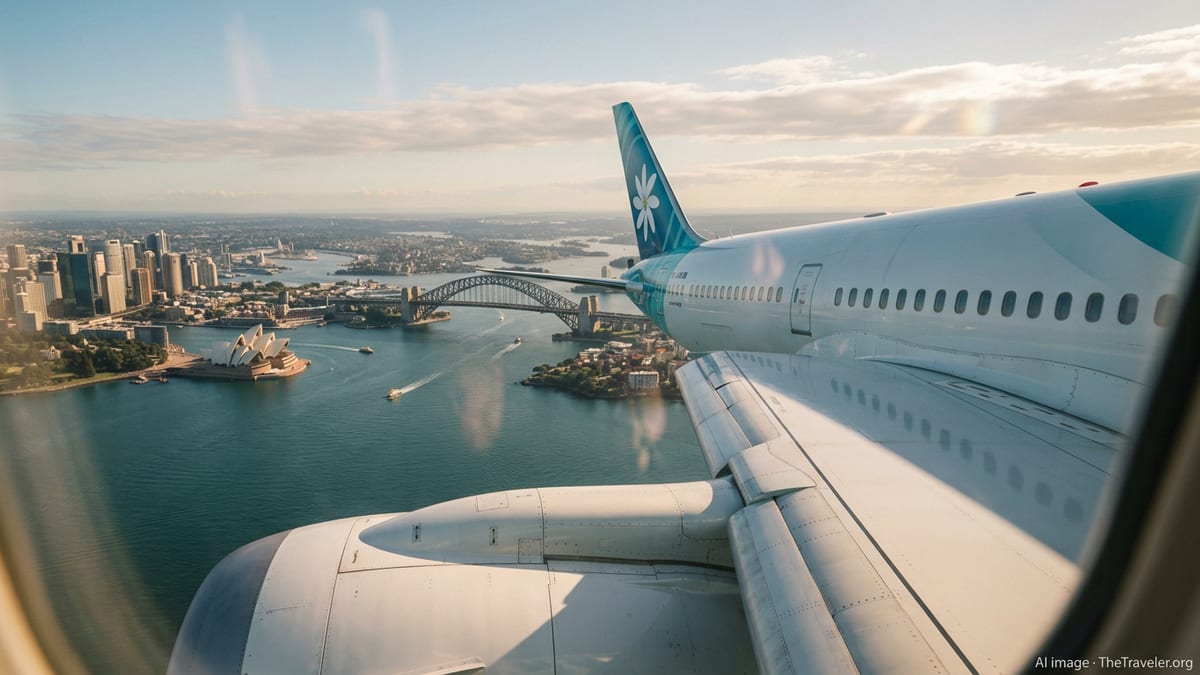
Direct Sydney–Papeete Flights Scheduled From December 14, 2026
Air Tahiti Nui has confirmed it will inaugurate a new non-stop service between Sydney and Papeete on December 14, 2026, marking the carrier’s return to the Australian market after nearly two decades away. The launch creates a rare direct air bridge between Australia and French Polynesia, significantly shortening journey times for leisure and VFR (visiting friends and relatives) travellers across the South Pacific.
The service will initially operate twice weekly between Sydney and Faa’a International Airport in Papeete, according to schedules filed by the airline and airport announcements. The outbound sector from Tahiti is set to take around eight hours and forty minutes, while the return to Papeete will be slightly shorter, reflecting prevailing winds on the trans-Pacific route.
For Sydney Airport, the addition of Air Tahiti Nui strengthens its long-haul portfolio and expands its South Pacific network beyond established links to destinations such as Auckland, Nouméa and Papeete via connecting hubs. For French Polynesia, the route opens a direct channel to one of its fastest-growing tourism source markets, adding capacity at a time when premium island escapes remain in high demand among Australian travellers.
Boeing 787-9 Dreamliner at the Heart of the Rebooted Route
The Sydney–Papeete flights will be operated by Air Tahiti Nui’s Boeing 787-9 Dreamliner fleet, configured with 294 seats. The aircraft features 30 Poerava Business Class seats in a 2-2-2 layout, 32 Mānava Premium Economy seats arranged 2-3-2, and 232 Moana Economy seats in a 3-3-3 configuration, aligning with the airline’s existing long-haul product.
The deployment of the 787-9 underscores Air Tahiti Nui’s focus on efficiency and passenger comfort on what is expected to be a largely leisure-driven market. The Dreamliner’s modern cabin environment, lower cabin altitude and enhanced humidity levels are expected to appeal to honeymooners, families and high-end holidaymakers heading to Tahiti’s resorts and overwater bungalows.
By standardising its long-haul operations around a single aircraft type, the airline can also simplify scheduling and maintenance as it reshapes its global network. The Sydney service will join existing 787-9 routes from Papeete to Los Angeles, Paris via Los Angeles, Auckland and Tokyo Narita, enabling a range of one-stop itineraries for passengers connecting beyond French Polynesia.
Strategic Shift as Airline Refocuses Its Long-Haul Network
The decision to enter the Sydney market follows a broader rebalancing of Air Tahiti Nui’s long-haul strategy. In recent months the carrier has announced the suspension of its Papeete–Seattle flights from late January 2026, after earlier discontinuing its Seattle–Paris tag service in early 2025. Those moves have freed long-haul capacity that can now be redeployed to markets viewed as offering stronger tourism potential and more stable demand.
Sydney’s scale, high propensity for international travel and strong premium leisure segment make it an attractive candidate for that redeployed capacity. Tourism officials in both New South Wales and French Polynesia have been keen to deepen ties, and a non-stop air link is seen as critical to unlocking growth, particularly among short-break and luxury travellers who may have been deterred by previous multi-stop itineraries.
The new route also fits with wider efforts across the South Pacific to diversify tourism flows and reduce over-reliance on a small number of gateways. By adding Sydney to its network map, Air Tahiti Nui positions itself as a key connector between Australia and French Polynesia, and potentially onwards to North America and Europe via its established hubs.
Tourism Industry Anticipates Boost for Both Australia and Tahiti
Industry stakeholders in both destinations are forecasting a meaningful tourism uplift once the route is fully established. Travel trade reports suggest that Australian interest in French Polynesia has been steadily growing, driven by social media exposure, demand for high-end island stays and a desire for alternatives to more traditional honeymoon hotspots closer to home.
For French Polynesia, Australian visitors typically skew towards higher-spend segments, with longer average stays and a preference for upscale accommodation. Non-stop air access is expected to make it easier for resorts in Tahiti, Moorea and Bora Bora to package shorter, more flexible itineraries that appeal to time-poor but affluent Sydney-based travellers.
On the Australian side, tourism operators see opportunities to promote twin-centre holidays that combine urban time in Sydney with a Tahitian island escape, particularly for inbound visitors from North America and Europe who route through the city. The new flights give travel agents fresh product to market ahead of the Southern Hemisphere summer of 2026–27, when the service comes online.
Renewed Connectivity After a 17-Year Gap
Air Tahiti Nui’s return to Sydney closes a 17-year chapter in which direct links between Australia and French Polynesia were absent. During that period, travellers typically relied on connections through Auckland, Los Angeles or other hubs, increasing total journey times and adding complexity to trip planning.
The resumption comes at a moment when airlines across the region are reassessing network choices made during and immediately after the pandemic. With international travel patterns normalising and premium leisure traffic proving resilient, carriers are increasingly willing to test point-to-point routes that connect specific high-yield city pairs, rather than forcing all demand through a handful of global hubs.
For Australian travellers, the restoration of a non-stop link to Tahiti simplifies access to one of the Pacific’s most aspirational destinations. For French Polynesia, it represents a renewed bet on the Australian market and a symbolic reconnection with a major neighbour at a time when the South Pacific is working to strengthen intra-regional ties.