

More news on this day
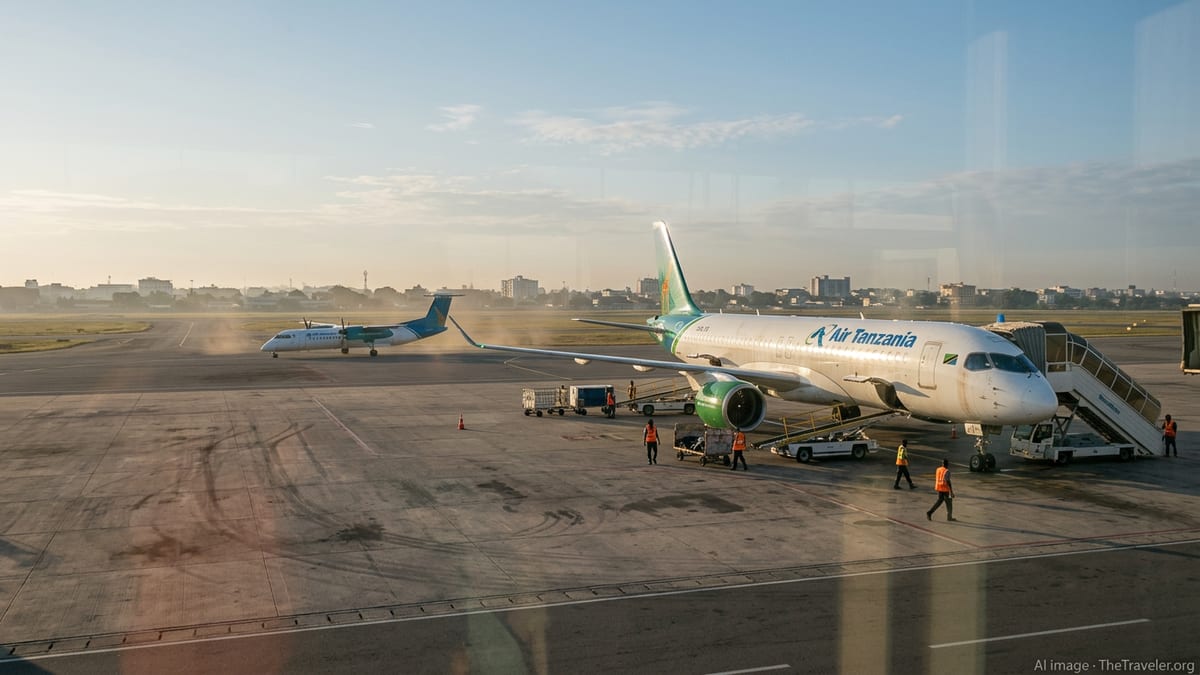
Air Tanzania is accelerating its growth plans with the addition of eight new aircraft, a move expected to significantly expand capacity on key East African routes and underpin the country’s ambition to position tourism as a leading engine of economic growth.
Strategic Fleet Growth to Meet Surging Demand
The expanded fleet, which brings Air Tanzania’s total aircraft to the high teens, marks the latest phase of a state-backed rebuild of the national carrier designed to improve regional connectivity and support the wider economy. The airline has steadily diversified its mix of single-aisle jets, turboprops and widebodies to match Tanzania’s varied domestic and cross-border markets.
Industry documents from Tanzania’s transport ministry place the carrier’s core fleet at four Airbus A220-300s, several Boeing 737 Max 9 narrowbodies, three Boeing 787-8 Dreamliners, a dedicated Boeing 767-300 freighter and multiple De Havilland Dash 8 turboprops. The latest batch of eight aircraft, which includes additional regional jets and turboprops, is intended to reinforce high-demand leisure and business corridors across the East African Community and beyond.
Aviation analysts note that Air Tanzania’s rapid fleet modernisation has narrowed the gap with regional rivals and positioned Dar es Salaam as a stronger hub for both point-to-point journeys and multi-stop itineraries. By standardising around new-generation types, the airline aims to reduce maintenance costs, improve fuel efficiency and offer a more consistent passenger experience.
New Capacity on Key East African Tourism Routes
The extra aircraft are expected to be deployed across a mix of domestic trunk routes and regional sectors linking Tanzania with neighbouring markets such as Kenya, Uganda, Rwanda, Burundi and the Democratic Republic of Congo. These corridors are crucial for distributing tourists arriving in Dar es Salaam, Zanzibar and Kilimanjaro onward to national parks, beach destinations and emerging secondary cities.
Additional frequencies on routes connecting Dar es Salaam and Zanzibar with Nairobi, Entebbe and Kigali are seen as early priorities, alongside improved links to Kinshasa and other fast-growing business centres. More seats and better schedules on these sectors could reduce fare volatility, cut travel times and make multi-country itineraries across East Africa significantly more attractive for international visitors.
The timing aligns with the East African Community’s coordinated drive to grow visitor numbers under joint marketing initiatives that promote the region as a single tourism destination. As land borders and visa policies gradually ease, capacity additions from airlines such as Air Tanzania help translate policy ambitions into practical travel options.
Tourism, Jobs and Wider Economic Impact
Tourism already accounts for a sizeable share of Tanzania’s gross domestic product, and the government has repeatedly identified aviation as a critical enabler of future growth. More direct flights to key safari gateways such as Kilimanjaro and Mwanza, as well as beach hubs like Zanzibar and Tanga, are expected to reduce the reliance on lengthy road transfers and improve the overall visitor experience.
Officials also highlight the employment and skills benefits that come with a larger national fleet. Each additional aircraft requires pilots, cabin crew, engineers and ground staff, as well as support roles in catering, security and airport services. Training partnerships with local institutions are being expanded to ensure that the human capital pipeline keeps pace with fleet growth.
Beyond tourism, the expanded network strengthens links for trade and investment. More bellyhold cargo capacity on passenger flights, together with the airline’s dedicated freighter, gives exporters of fresh produce, fish and high-value goods more options to reach markets across Africa and the Middle East. Improved connectivity is also expected to make it easier for Tanzanian businesses to participate in regional value chains.
Improving Reliability and Regional Competitiveness
For travellers within East Africa, one of the most immediate effects of the new aircraft should be better reliability and schedule resilience. With a larger and more modern fleet, Air Tanzania has greater flexibility to cover maintenance rotations and operational disruptions without resorting to widespread cancellations or downgrades, a persistent challenge for many African carriers.
The airline’s focus on newer aircraft types such as the Airbus A220-300 and Boeing 737 Max 9 also helps it compete on comfort and efficiency. These jets typically offer quieter cabins, improved air quality and better fuel burn per seat, which in turn can support more sustainable growth and potentially more competitive fares on dense regional routes.
At the same time, turboprops like the Dash 8-400 remain central to the strategy of feeding traffic from smaller domestic markets into Dar es Salaam and other hubs. The combination of modern jets on longer sectors and efficient turboprops on shorter legs reflects a hub-and-spoke approach tailored to Tanzania’s geography and infrastructure.
Positioning Dar es Salaam as a Regional Hub
The fleet expansion aligns with broader plans to elevate Julius Nyerere International Airport in Dar es Salaam as a primary gateway for East and Southern Africa. By offering more destinations and higher frequencies, Air Tanzania aims to capture transit traffic that might otherwise flow through Nairobi, Addis Ababa or Johannesburg.
Stronger partnerships with neighbouring flag carriers and regional operators are expected to complement the new capacity, allowing for improved schedule coordination and smoother connections. Memoranda of understanding under discussion in the region typically cover areas such as codesharing, joint marketing and shared maintenance facilities, all of which can help carriers deploy their fleets more efficiently.
As the eight new aircraft progressively enter service, aviation observers will be watching passenger numbers, load factors and on-time performance for signs that the strategy is paying off. If successful, Air Tanzania’s latest expansion could contribute to a more competitive and connected East African aviation landscape, while reinforcing Tanzania’s status as one of the region’s most compelling tourism destinations.