

More news on this day
Archer Aviation’s new patent lawsuit targeting UK-based Vertical Aerospace over its Valo air taxi design is rippling through the advanced air mobility sector, raising questions for major US and UK carriers that have bet on electric air taxis to speed tourists between airports and city centers on both sides of the Atlantic.
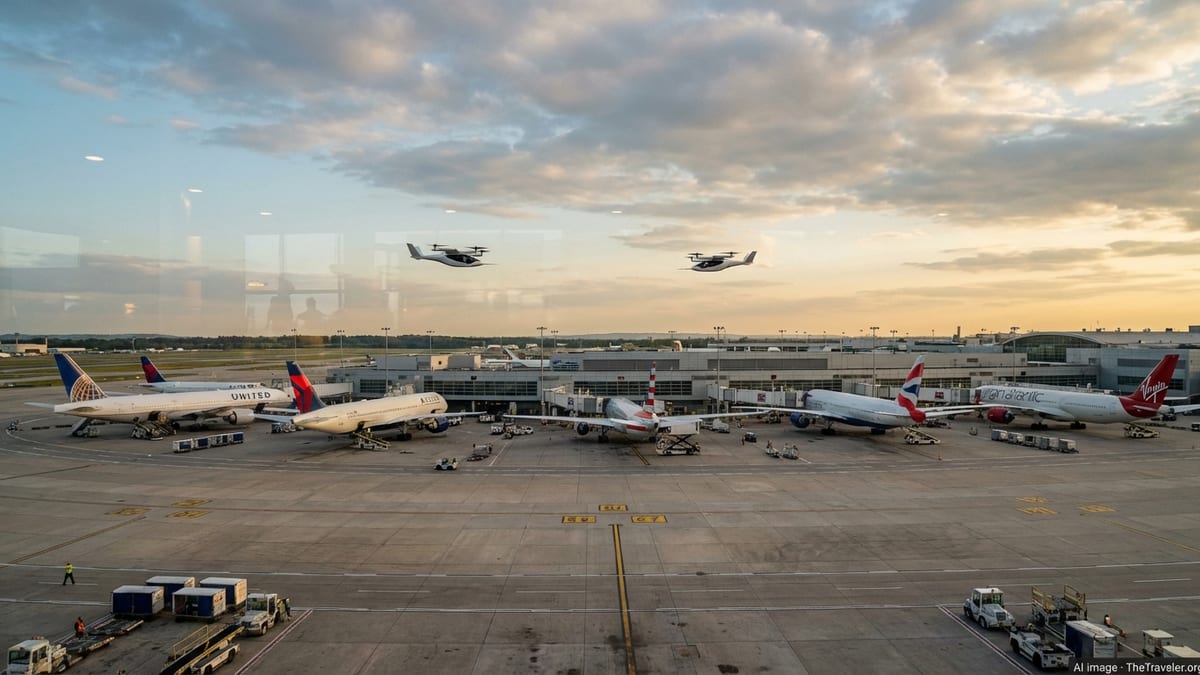
Archer Targets Vertical’s New Valo Design
Archer Aviation has filed a patent infringement complaint in the US District Court for the Eastern District of Texas, alleging that Vertical Aerospace’s newly unveiled Valo air taxi copies both the distinctive industrial design and key flight control technologies of Archer’s Midnight aircraft. The move escalates a simmering rivalry between the US and UK eVTOL champions at a critical moment, as both race to secure certification and commercial routes in major tourism markets.
The complaint centers on Archer’s design and utility patents, which cover the Midnight’s sleek V-tail, fuselage and wing configuration, as well as its distributed electric propulsion and flight control systems. Archer argues that the Valo’s overall visual impression and underlying control architecture are “highly similar” to its own, giving Vertical an unfair shortcut to market without equivalent research and development investment.
Vertical has rejected the allegations as baseless and insists that Valo is an evolution of its own technology. But the legal action lands just as the company has been showcasing a full scale Valo mock up and touting potential city pair routes, including in key tourism hubs such as Miami and South Florida, making the dispute more than an abstract intellectual property fight.
US Legacy Carriers Bet on Archer’s Midnight
Archer’s legal strike comes against the backdrop of deepening ties with major US airlines. United Airlines has committed to a large order for Midnight aircraft and has been working with Archer on planned air taxi networks around airports like Newark Liberty and New York’s broader metropolitan system. Flight trials and certification milestones in the past two years have brought those concepts closer to reality, with Archer targeting limited commercial services later this decade.
Delta Air Lines, while not an Archer customer, has backed rival US eVTOL maker Joby Aviation and is exploring premium airport to city transfers for high value travelers. Together, the two US network giants see electric air taxis as a way to cut notorious surface commute times in congested gateways such as New York, Los Angeles and Atlanta, positioning the technology as an add on to long haul flights rather than a replacement for them.
For American Airlines, the competitive pressure is growing even if it has been less vocal about specific air taxi partners. As United and Delta move closer to operational trials, the carrier risks being perceived as slower to adopt next generation connectivity, particularly among business and leisure travelers who value time savings between terminal and downtown hotel. The Archer Vertical dispute will be watched closely in Fort Worth as a bellwether of how quickly the broader advanced air mobility ecosystem can clear regulatory and legal hurdles.
In the near term, however, none of these carriers rely on eVTOL links for their core international tourism flows. Transatlantic traffic between the US and Europe still moves overwhelmingly on conventional jets, and any delays to air taxi entry into service would mainly affect premium ground connectivity and marketing narratives rather than basic seat capacity.
British Airways, Virgin Atlantic and the UK Angle
On the UK side, the implications of the lawsuit are more nuanced. Vertical Aerospace is one of the country’s highest profile advanced air mobility start ups, headquartered in Bristol and positioning itself as a future provider of low emission regional and urban flights. Its earlier VX4 design underpinned partnerships with several airlines, including Virgin Atlantic, which once held options for a large eVTOL order as part of a planned UK air taxi network branded in Virgin colors.
That relationship has already shifted. Virgin Atlantic has since pivoted away from Vertical and toward US based Joby Aviation, a move that significantly reduced Vertical’s notional future order book and signaled growing skepticism about the company’s timelines. The fresh legal pressure from Archer may deepen doubts among would be airline partners and investors, even as Vertical continues to target certification in the latter half of the decade.
British Airways has not placed the same high profile bets on a single eVTOL manufacturer, instead focusing on broader sustainability initiatives, sustainable aviation fuel development, and fleet renewal for its long haul operations. For BA and fellow IAG carriers, the unfolding US lawsuit is a useful case study in the legal risks baked into early stage aircraft programs, but it does not directly threaten current passenger offerings.
For UK tourism, the more important factor will be whether British regulators and airport operators can keep pace with infrastructure and safety frameworks for advanced air mobility. Vertiports at London Heathrow, Gatwick or regional gateways like Manchester could eventually enable air taxis to shuttle visitors into city centers, but those projects remain in planning and pilot stages rather than firm, near term commitments.
Will Transatlantic Tourism Feel the Shockwaves
The Archer Vertical clash has sparked speculation about broader consequences for transatlantic travel, especially given United’s financial backing of Archer and the historic association between Vertical and Virgin Atlantic. Yet analysts caution that the immediate impact on passenger numbers between the US and UK is likely to be minimal. Air taxis are still in the test and demonstration phase, and mass market deployment is years away.
What could be affected is the pace at which premium, high visibility use cases materialize. Archer has positioned Midnight as a flagship transport option for major global events, including shuttling spectators and VIPs to venues during the 2028 Los Angeles Olympics. Vertical and other manufacturers have floated similar visions around future sporting events and tourism peaks in Europe. A drawn out patent fight could slow certification efforts, divert management attention, and complicate fundraising for smaller players such as Vertical.
Any delay in bringing eVTOL services online in London, Manchester, or regional UK cities would deprive tourism boards of a headline grabbing symbol of innovation. The same holds in US gateway cities that have marketed air taxis as part of their future ready visitor experience. But in practical terms, visitors will continue to rely on trains, rideshare and traditional airport express services, which are fully capable of absorbing demand growth for the remainder of this decade.
Where tourism could feel a subtler effect is in perception. Travelers increasingly weigh sustainability when choosing airlines and destinations. High profile disputes in the zero emissions air taxi sector risk undercutting the industry’s message of clean, collaborative innovation, especially if they reinforce an image of fragmented, litigious competition rather than coordinated progress.
Next Steps for Regulators and Investors
The lawsuit arrives as regulators in the US and UK refine certification pathways and operational frameworks for eVTOL aircraft. In Washington, the Federal Aviation Administration has been incrementally expanding its engagement with manufacturers, granting key certifications and backing pilot programs that involve major airlines and city authorities. In the UK, the Civil Aviation Authority is running sandbox initiatives and early trials to explore how advanced air mobility can be integrated into complex, crowded airspace.
Legal uncertainty adds another layer to those regulatory efforts. If Archer succeeds in enforcing a broad reading of its patents, rival designs may need costly redesigns or licensing arrangements, potentially slowing time to market and concentrating power in a smaller number of well financed manufacturers. A decisive win for Vertical, by contrast, could embolden other start ups to push ahead more aggressively, but might also prompt a rush to secure defensive intellectual property portfolios rather than deeper technical collaboration.
For investors, the case underscores how intertwined the fortunes of aircraft developers and their airline partners have become. United’s backing of Archer, Delta’s alliance with Joby, and Virgin Atlantic’s switch away from Vertical all show that legacy carriers are choosing sides in an industry that has not yet reached commercial maturity. Those choices will shape which air taxi brands tourists encounter first at airports from Los Angeles to London.
For now, the Archer Vertical showdown is a high stakes skirmish in a still speculative market. Transatlantic leisure and business travelers can expect their flights on United, Delta, American, British Airways and Virgin Atlantic to operate as usual, even as the next generation of short hop connections above their heads becomes the subject of an intense legal dogfight.