

More news on this day
Air Transat is expanding its 2026 network with a fresh wave of leisure-focused routes connecting Toronto and Montreal to Iceland, Morocco and London Gatwick, reinforcing the carrier’s strategy of steering capacity toward transatlantic and sun destinations as it retreats from the United States market.
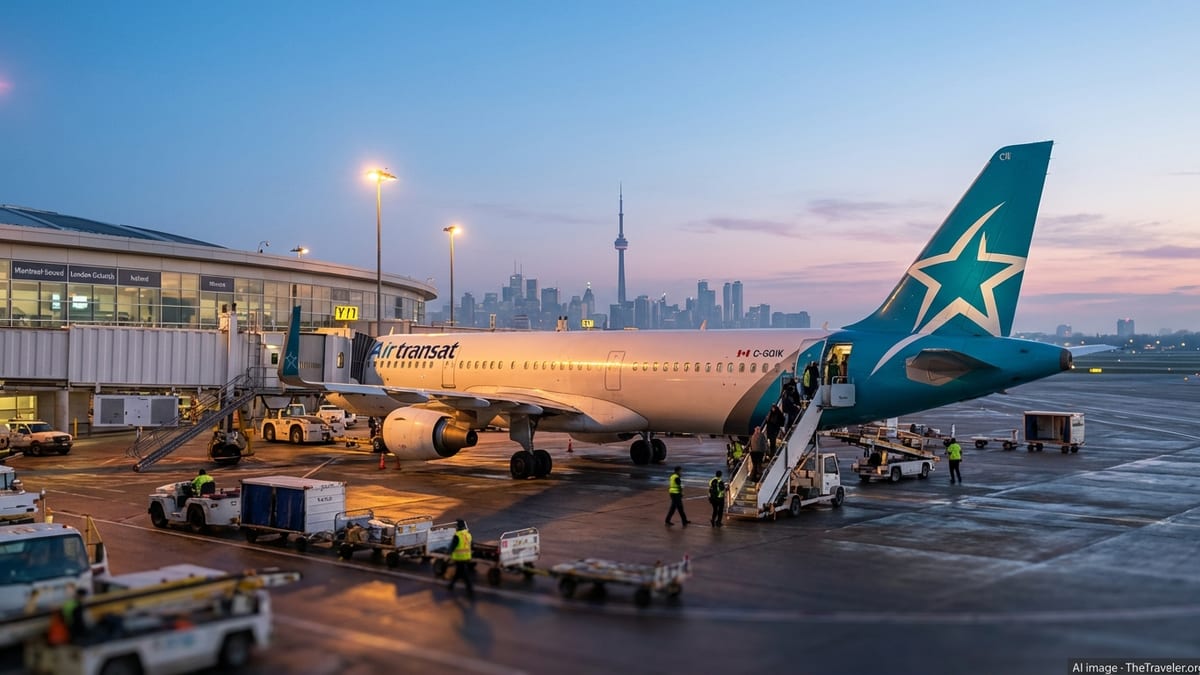
New 2026 Routes Put Europe and North Africa in Closer Reach
The Montreal-based leisure airline has outlined several additions and upgrades to its 2026 schedule that build on recent network announcements. From Montreal, Air Transat is introducing or strengthening links to Reykjavik in Iceland and to Morocco, while new and existing services via London Gatwick and other European gateways will expand one-stop options deeper into the continent. The carrier is positioning these routes as a way to meet sustained demand from Canadian travelers for culturally rich, outdoors-oriented destinations beyond traditional sun hotspots.
Reykjavik joins a growing list of seasonal routes that Air Transat is adding for summer 2026, complementing new and expanded flights already announced to destinations such as Accra and Dakar. Iceland continues to rank highly with Canadian travelers seeking nature-focused trips anchored around hiking, hot springs and road touring, and the new link from Montreal is expected to capture both short breaks and longer itineraries that combine Iceland with onward travel to mainland Europe.
Morocco’s appeal within the airline’s network has also increased as Air Transat broadens its presence in North Africa. Building on the success of its Montreal–Marrakesh service and wider growth in the region, the 2026 schedule is designed to make the country more accessible to travelers from across Canada, including those originating in Toronto and connecting through Montreal. The airline is highlighting Morocco’s mix of culture, coastline and desert experiences as a strong complement to its more traditional European leisure portfolio.
At the same time, London Gatwick is playing a larger role as a transatlantic bridge in Air Transat’s planning. New Canada–Gatwick services in 2026, including recently announced transatlantic flights from Ottawa, will dovetail with the airline’s domestic and regional network to give travelers in Toronto and Montreal additional one-stop options into the United Kingdom and Europe’s secondary cities.
Toronto Gains New International Options as Domestic Link Strengthens
For Toronto, the 2026 schedule underscores Air Transat’s gradual build-up of international choices beyond its well-established southern routes. New and upgraded services to destinations such as Cartagena and Medellín are being marketed alongside enhanced connectivity to Europe and North Africa via hubs like Montreal and London Gatwick. While Toronto does not yet match Montreal’s breadth of non-stop transatlantic routes, the airline is clearly using its largest Canadian market to feed a broader leisure network.
Air Transat has already turned its domestic Montreal–Toronto corridor into a year-round, high-frequency operation, with up to 10 weekly flights. That move is central to its 2026 strategy: by knitting the two cities together more tightly, the airline can funnel Toronto-origin passengers onto Montreal’s growing roster of flights to Iceland, Morocco and other long-haul holiday destinations, while also making it easier for Montreal travelers to access Toronto-origin routes into Latin America and the Caribbean.
The carrier’s focus on narrowbody Airbus aircraft, particularly the A321LR, is helping to underpin these developments. The type allows Air Transat to serve long, thin routes such as secondary European and North African cities directly from Canada with the right mix of range and efficiency, while also supporting higher utilization on domestic and regional sectors. For Toronto, that translates into a schedule that can flex to follow seasonal demand, with more transatlantic and sun choices in peak months and a reliable core of services in shoulder seasons.
Industry observers note that Toronto’s place in the 2026 program reflects a wider trend among Canadian leisure carriers: using domestic connectivity not just as a local shuttle, but as a strategic tool to aggregate demand into specialized long-haul routes that might not be viable from a single city alone.
Montreal Remains the Launchpad for Iceland and Morocco
Montreal continues to function as Air Transat’s principal long-haul launchpad, and that status is reinforced in the 2026 timetable. The airline’s new Reykjavik operation and its expanding Morocco program are both centered on Montreal, leveraging the city’s strong origin-and-destination demand and its role as a connecting hub for the carrier’s Quebec and Ontario network.
As the exclusive Canadian operator on several of its Africa routes, Air Transat is using Montreal to carve out niche markets where competition is limited and leisure demand is rising. Iceland and Morocco are part of that pattern: both destinations are attracting travelers interested in authentic cultural experiences and outdoor adventure, but neither requires the kind of high-frequency, year-round service associated with major business hubs. The Montreal base allows Air Transat to tailor capacity around peak travel seasons while still offering enough connectivity for year-round planning.
The airline is also using Montreal to test and grow new markets before potentially rolling them out more widely. The strength of bookings to Reykjavik and Moroccan cities in 2026, for example, will influence whether Air Transat looks at additional Canadian gateways or increased frequencies in later seasons. Montreal’s sizable Francophone customer base, its links to Europe and Africa and its established role in the airline’s tour-operator business make it a natural incubator for such routes.
For travelers, the result is a wider choice of non-stop or single-connection itineraries from Montreal to destinations that once required complex multi-airline routings. Coupled with the domestic shuttle to Toronto and other Canadian cities, the 2026 schedule is positioned to make Iceland and Morocco far easier to reach for a broad swath of Canadian holidaymakers.
Strategic Shift Away From U.S. Routes toward Long-Haul Leisure
The 2026 network plan, including the emphasis on Toronto, Montreal, Iceland, Morocco and London Gatwick, comes as Air Transat finalizes a marked shift away from the United States market. The airline has confirmed that it will end its remaining U.S. routes by early summer 2026, exiting its last Florida services at a time when demand for southbound cross-border travel has softened.
By contrast, Canadian demand for overseas leisure trips has remained robust, particularly to Europe, the Caribbean, Central America and select African destinations. Air Transat is using this trend to justify reallocating aircraft and crews to new or expanded long-haul leisure routes, where it can differentiate itself on vacation-focused service and bundled tour offerings rather than competing head-to-head with larger carriers on short-haul transborder sectors.
The decision to pivot capacity in this way is also tied to the airline’s fleet renewal program. As more fuel-efficient narrowbody aircraft join the fleet, Air Transat gains greater flexibility to deploy them on medium- and long-distance routes that were previously the domain of widebodies. This is a key factor behind its ability to serve cities like Reykjavik or Moroccan gateways from Montreal, as well as to explore seasonal or secondary European routes from Canadian cities including Ottawa and Quebec City via London Gatwick.
Analysts say that by leaning into its strengths as a leisure specialist and concentrating on destinations like Iceland, Morocco and the United Kingdom, Air Transat aims to create a network that is both more profitable and more resilient to shifts in individual regional markets. The 2026 additions centered on Toronto and Montreal are an early test of that strategy’s long-term sustainability.
What the New Routes Mean for Canadian Travelers
For Canadian travelers, the practical impact of Air Transat’s 2026 changes will be a wider array of point-to-point holiday options and more seamless connections across the Atlantic. Residents of Toronto, Montreal and surrounding regions will see additional choices for non-stop or one-stop journeys to Iceland’s capital, Morocco’s cultural and coastal cities and London Gatwick, as well as easier access to onward European and African destinations through tour packages and partner links.
Travel agencies and tour operators are expected to benefit as well, with new inventory to sell during both summer and shoulder seasons. Destinations like Reykjavik and key Moroccan cities lend themselves to curated itineraries that combine urban stays with nature excursions, something that aligns closely with Air Transat’s package-focused business model. The airline’s ability to bundle flights, accommodations and ground services is likely to be a central selling point as it promotes the new 2026 program.
The emphasis on Montreal and Toronto as twin pillars of the network could also encourage more Canadians to consider mixing city breaks with longer, multi-country journeys. A traveler from Toronto, for instance, might fly domestically to Montreal, connect to Reykjavik for a week in Iceland and then continue on to mainland Europe before returning via London Gatwick. Air Transat’s schedule design for 2026 appears intended to make such open-jaw and multi-stop trips easier to plan on a single ticket.
As airlines globally adapt their networks to evolving demand, Air Transat’s 2026 expansion centered on Toronto, Montreal, Iceland, Morocco and London Gatwick illustrates how a leisure-focused carrier can reposition itself by doubling down on long-haul holiday routes while stepping back from more crowded, less profitable markets.