

More news on this day
Canada’s Air Transat will end all flights to the United States by June 2026, cutting its remaining routes to Florida as Canadian demand for U.S. leisure travel continues to slump and airlines redeploy capacity to more profitable markets.
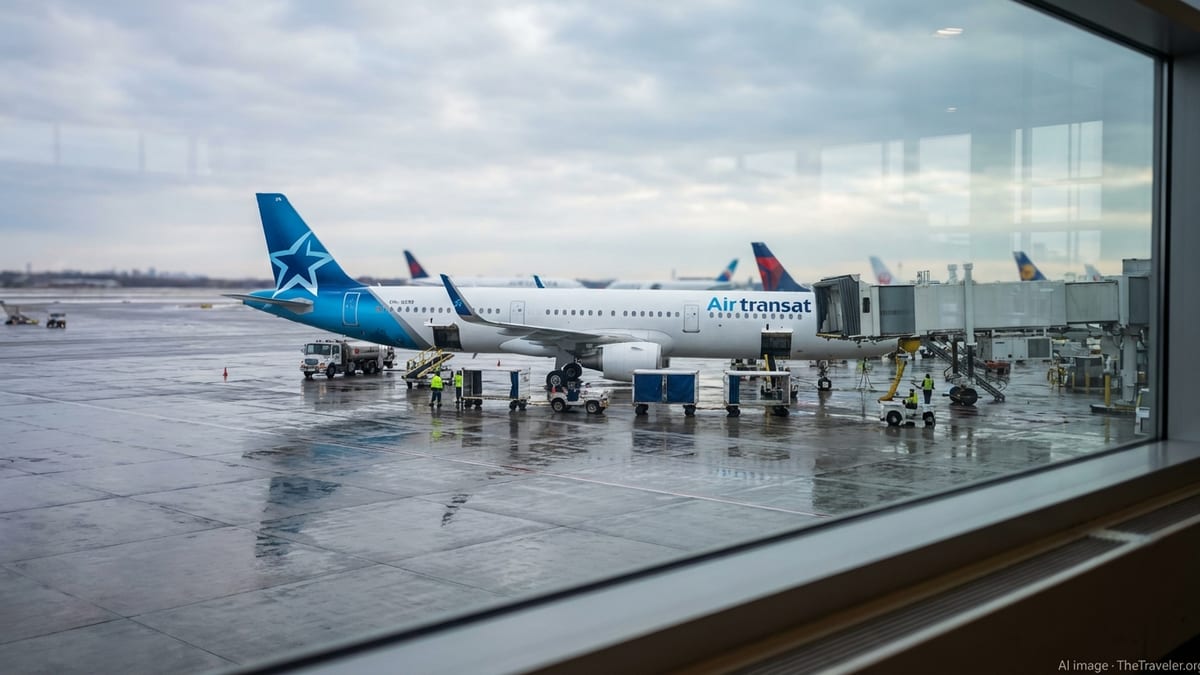
Final U.S. Flights to Florida Set to End by Early Summer
Montreal-based Air Transat is preparing to withdraw fully from the United States, confirming that its last remaining U.S. routes to Florida will wind down in May and June 2026. The move will mark the carrier’s complete exit from a market it once served with a modest network of sun and city destinations, capping a multiyear retrenchment in transborder flying.
According to schedule filings and industry data, service between Montreal and Orlando is slated to end in early May, while flights linking Montreal and Quebec City with Fort Lauderdale will continue into late May and mid-June before being removed from the airline’s Northern summer timetable. By the middle of June, Air Transat’s U.S. presence will fall to zero, at least for the 2026 summer season.
The decision follows a step-by-step drawdown of American routes that accelerated through 2025 and into 2026. At its peak last year, the leisure-focused carrier operated nine routes into the United States, but that number has been steadily reduced as demand weakened and competition intensified on key corridors.
Florida Focus: Orlando and Fort Lauderdale Lose Canadian Leisure Links
The most visible impact of Air Transat’s retreat will be felt in Florida, long a favored winter escape for Canadian travelers. Orlando and Fort Lauderdale are the airline’s final two U.S. gateways, both set to disappear from its network as the carrier reshapes its strategy for the 2026 summer schedule.
Flights from Montreal to Orlando, a core family and theme-park route, will conclude in early May, ahead of the busy northern summer holiday period. Services from Quebec City to Fort Lauderdale are scheduled to end by late May, while the Montreal to Fort Lauderdale link is due to operate into mid-June before being discontinued. Together, the three routes have been Air Transat’s last remaining direct connections to the U.S. sunbelt.
While the cuts remove a familiar option for budget-conscious snowbirds and vacationers, the airline notes that its U.S. footprint has become increasingly marginal in recent years. Transborder services now account for roughly 1 percent of Air Transat’s summer capacity, a fraction of its extensive program to Mediterranean, Caribbean, Mexican and South American destinations.
Declining Transborder Demand Pressures Canadian Carriers
Air Transat’s withdrawal is unfolding against a broader backdrop of weakening travel flows between Canada and the United States. Industry statistics show a sustained drop in cross-border journeys through late 2025 and early 2026, with both air and car trips declining as Canadians rethink their vacation priorities.
Recent data from Statistics Canada indicates that Canadian-resident return trips from the United States in early 2026 have fallen sharply compared with a year earlier, with double-digit percentage declines in total volumes. The steepest drops have been in road traffic, but air travel has also contracted, leaving airlines with softer load factors and growing pressure to redeploy aircraft to stronger markets overseas.
Executives and analysts point to a mix of economic and political factors behind the slump. A weaker Canadian dollar, higher travel costs, and lingering uncertainty around cross-border relations have all eroded the appeal of U.S. getaways. At the same time, there has been a noticeable shift in consumer sentiment, with many Canadians opting to keep their holidays closer to home or to seek better value in Europe, the Caribbean and Latin America.
Strategic Pivot Toward Europe, the Caribbean and Latin America
Air Transat has framed its decision as part of a deliberate strategy to concentrate on markets where it believes it has a competitive edge. The airline, which has built its brand around leisure flying rather than corporate travel, is doubling down on transatlantic and “sun” destinations that are delivering stronger yields and more resilient demand.
In recent network updates, the carrier has highlighted an expanded program from Montreal and Toronto to Mediterranean and Atlantic-coast cities, alongside increased frequencies to established holiday favorites in the Caribbean and Mexico. New routes to destinations such as Agadir, along with added capacity to Berlin, Lima and Istanbul, underline its ambition to pivot toward long-haul leisure corridors where Canadian travelers are still spending.
Executives describe the U.S. exit as a proactive capacity management move rather than an act of retreat born solely of weakness. By withdrawing from a small, underperforming segment, Air Transat frees up aircraft and crews to support growth on routes where it faces less direct competition from large network carriers and where tour-operator partnerships, package holidays and ancillary sales can be more effectively leveraged.
Part of a Wider Canadian Pullback from the U.S. Market
Air Transat is not alone in paring back its American footprint. Other Canadian airlines have also reduced transborder flying as demand has softened and strategic priorities have shifted. WestJet has announced the suspension or reduction of more than a dozen routes between Canadian cities and U.S. destinations for the 2026 summer season, including links from Western Canada to major East Coast hubs.
Air Canada has trimmed capacity on several cross-border routes, particularly to secondary U.S. airports, while reallocating aircraft to domestic trunk lines and long-haul services. Smaller carriers have adjusted their own networks, with some cutting back on seasonal runs to U.S. leisure destinations and others modestly expanding in niche business markets.
Taken together, the moves amount to a structural recalibration of Canadian airline exposure to the U.S. market. What began as tactical adjustments to underperforming routes has evolved into a more coordinated repositioning, with capacity flowing toward destinations where exchange rates, political sentiment and on-the-ground travel experiences are perceived as more favorable for Canadian customers.
Impact on Travelers and Florida’s Tourism Economy
For travelers, Air Transat’s departure from the United States will mean fewer nonstop options and potentially higher fares on remaining carriers, particularly during peak winter and school holiday periods. Passengers in Montreal and Quebec City who once relied on Air Transat’s direct flights to Florida may need to connect via Toronto, Ottawa or U.S. hubs operated by American, U.S. low-cost or other Canadian carriers.
Travel agents say the changes will likely push some budget and package travelers to alternative sun destinations. Where clients previously booked Orlando or Fort Lauderdale, agents report growing interest in all-inclusive resorts in Mexico, the Dominican Republic and Cuba, as well as in culturally focused trips to southern Europe and South America. The convenience of direct flights and package deals is becoming a key factor in destination choice.
Florida’s tourism industry, which has long courted Canadian visitors as a reliable winter market, is watching the trend closely. While the state continues to attract large numbers of Americans and international visitors, a sustained decrease in Canadian arrivals, particularly from Quebec and Eastern Canada, could weigh on hotel occupancy, car rentals and attraction revenues outside peak domestic U.S. holidays.
Winter 2026–27 Flying Remains Under Review
Air Transat has left the door open to a potential seasonal return to the United States, emphasizing that its 2026–27 winter program to Florida has not yet been finalized. In previous years, the airline has routinely built up additional southbound capacity in the colder months, responding to strong demand from Canadian “snowbirds” seeking long stays in warmer climates.
Industry observers note, however, that any restoration of U.S. service would depend on a meaningful rebound in demand, more favorable economic conditions and a clearer sense of political stability across the border. For now, planners are focusing on markets where bookings have remained solid or strengthened, especially long-haul leisure segments where Air Transat can differentiate on price, onboard product and holiday packaging.
Until a decision is made, travelers planning winter 2026–27 trips will need to monitor schedules carefully and consider alternative carriers or itineraries. The uncertainty underscores how quickly airline networks can shift in response to evolving market dynamics, leaving traditional travel patterns open to disruption.
Signals of a Longer-Term Shift in Canadian Travel Patterns
The end of Air Transat’s U.S. routes by June 2026 is more than a footnote in airline scheduling. It is a symbol of a deeper realignment in how Canadians travel and where airlines see sustainable growth. As transborder demand has softened, domestic tourism within Canada has climbed, and overseas leisure travel has shown surprising resilience, especially to destinations perceived as offering good value and distinctive cultural experiences.
Analysts caution that the shift may not be entirely permanent; air travel patterns have historically proven cyclical, with routes returning once economic and political winds change. Still, they argue that the current retrenchment reflects a structural reassessment rather than a temporary slump, with carriers like Air Transat using this period to streamline operations and fortify their strongest markets.
For now, the skies between Canada and the United States will be a little quieter, particularly along the well-worn corridors to Florida’s beaches and theme parks. As Air Transat prepares to operate its final U.S. flights in May and June, the carrier is betting that its future lies less in shuttling Canadians to American resorts and more in connecting them with a wider world of sun, sand and city breaks beyond the U.S. border.