

More news on this day
A fresh wave of air travel gridlock rippled across parts of the United States today, with airports in Illinois, New York, New Jersey and North Carolina reporting 226 flight cancellations and 934 delays, stranding thousands of passengers and heavily impacting operations at Delta Air Lines, United Airlines, Lufthansa and JetBlue.
Get the latest news straight to your inbox!
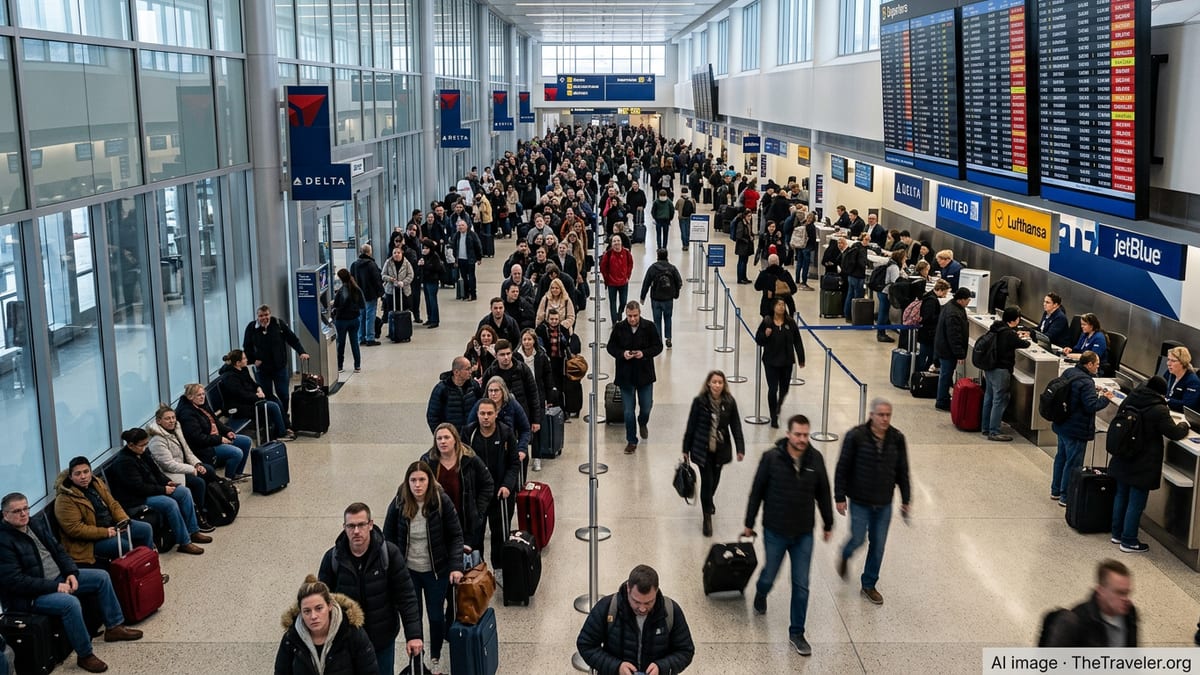
Key Hubs From Chicago to New York Bear the Brunt
The latest disruptions are concentrated at some of the country’s busiest airports, including Chicago O’Hare in Illinois, New York’s JFK and LaGuardia, Newark Liberty in New Jersey, and Charlotte and Raleigh-Durham in North Carolina. Together, these hubs handle hundreds of thousands of passengers daily, so even modest schedule changes quickly cascade into widespread congestion and missed connections.
Operations data reviewed today show 226 flights terminated outright across these four states, with a further 934 departures and arrivals facing significant delays. The pattern reflects mounting operational stress on U.S. and transatlantic networks, where tight aircraft rotations and high load factors leave airlines with little spare capacity when weather, airspace constraints or technical issues arise.
Travelers at these hubs described long queues at customer service desks and crowded gate areas as airlines worked to rebook disrupted passengers. With many flights running nearly full, re-accommodating travelers often means moving them to services departing one or even two days later, especially on popular business and transatlantic routes.
Major Carriers See Schedules Unravel
Among the hardest hit by today’s gridlock are Delta Air Lines, United Airlines, Lufthansa and JetBlue, all of which maintain dense schedules through the affected airports. Delta and United, with large hub operations at Chicago, New York area airports and key Southeastern gateways, have seen waves of rolling delays that in many cases turned into same-day cancellations as crew duty limits and aircraft positioning became unworkable.
Lufthansa’s disruptions have primarily affected long-haul transatlantic services connecting German hubs with New York and other East Coast gateways. Even a small number of cancellations in this segment can strand large numbers of passengers, as widebody flights carry several hundred travelers and often operate just once daily on specific routes.
JetBlue, meanwhile, is confronting pressure on its core East Coast network, especially at New York’s JFK and Newark Liberty. The carrier relies heavily on tight turnarounds and high aircraft utilization; when early flights are delayed, the knock-on effect can ripple across the rest of the day, leaving evening departures especially vulnerable to termination if they can no longer depart within curfew or crew time limits.
What Is Driving Today’s Flight Disruptions
While each canceled or delayed flight has its own cause, today’s pattern reflects a familiar mix of factors: pockets of adverse weather, air traffic flow restrictions in congested Northeast airspace, and the lingering effects of earlier delays that leave aircraft and crew out of position. Once morning departures slip, subsequent flights using the same planes and crews often start the day already behind schedule.
Industry analysts note that U.S. airlines are operating with leaner buffers than in the past, aiming to maximize aircraft utilization and keep costs down. That strategy works smoothly when conditions are normal, but it can amplify the impact of even modest disruptions in regions with heavy traffic and complex airspace such as the New York metropolitan area and key Midwestern and Southeastern hubs.
Compounding these operational challenges is sustained strong demand for travel. With planes frequently departing near capacity, there are fewer spare seats available to quickly rebook travelers from canceled flights. As a result, passengers are more likely to face lengthy waits, overnight stays, or re-routings through multiple hubs to reach their destinations.
What Passengers Should Do If Their Flight Is Interrupted
Travelers flying today through Illinois, New York, New Jersey or North Carolina are being urged to treat their itinerary as fluid until they are physically on board. The most immediate advice from aviation experts is to monitor your flight status frequently through airline apps and airport displays, as schedules can change multiple times in the hours before departure.
Passengers whose flights are canceled should rebook through digital channels as quickly as possible, using airline apps or websites to secure alternative itineraries before airport customer service queues build. Many carriers now allow travelers to change affected tickets without additional change fees during operational disruptions, though fare differences may still apply on some routes or dates.
For those facing long delays, it is important to keep records of boarding passes, delay notifications and receipts for meals or hotels. While U.S. regulations do not require airlines to compensate passengers for most weather-related delays or cancellations, carriers have their own customer service commitments that may include meal vouchers, hotel accommodations or travel credits when disruptions are within the airline’s control.
Looking Ahead: Expect Continued Strain on Busy Corridors
With demand for both domestic and international travel remaining strong, aviation forecasters warn that days like today may become increasingly common when weather or airspace constraints collide with already tight schedules. The interconnected nature of U.S. air travel means a cluster of cancellations in one region can quickly affect flights thousands of miles away.
For passengers planning trips over the coming days, flexibility remains the most valuable asset. Choosing earlier flights in the day, allowing extra connection time at major hubs, and having backup routing options in mind can all improve the odds of arriving on time, even when the system is under pressure.
As airlines work to restore schedules after today’s disruptions, travelers passing through Illinois, New York, New Jersey and North Carolina should anticipate residual delays, full flights and limited last-minute options. Industry observers say the episode is yet another reminder that in an era of tightly stretched airline operations, even a few hundred cancellations can be enough to snarl travel plans for thousands.