

More news on this day
AirAsia is moving to capture surging demand in Southeast Asia with the launch of daily flights between Kuala Lumpur and Batam, a short but strategically important hop that industry observers view as a fresh catalyst for trade, tourism, and cross-border connectivity in the ASEAN region.
Get the latest news straight to your inbox!
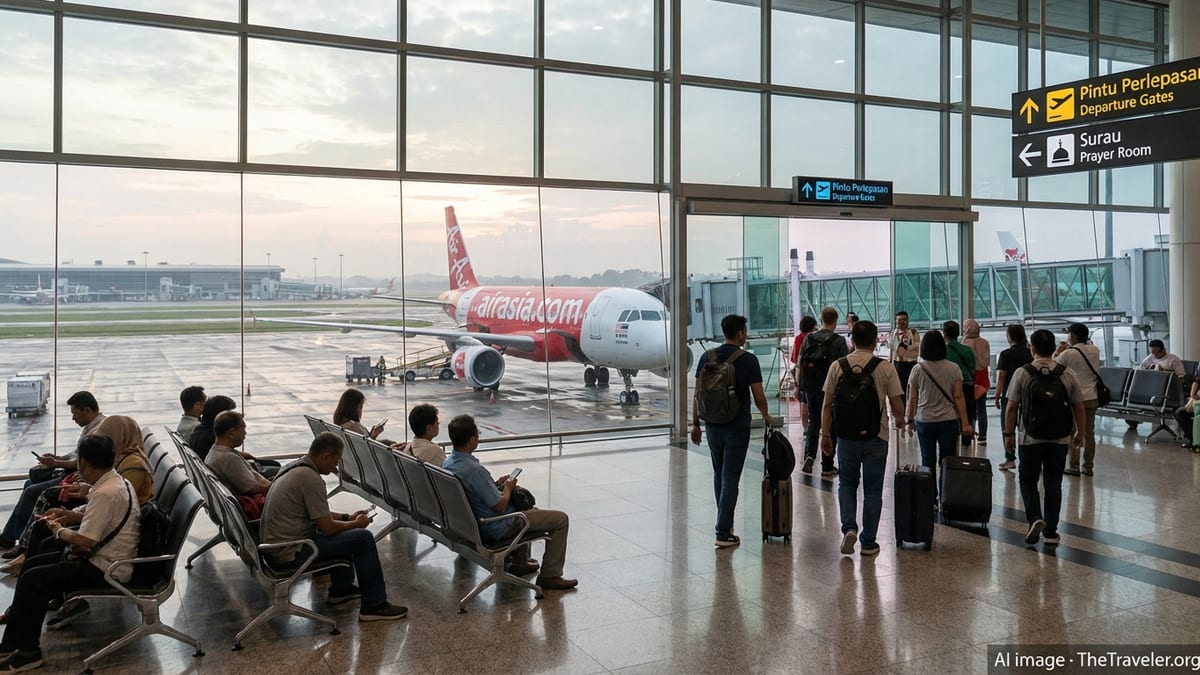
New Daily Link Between Kuala Lumpur and Batam Takes Off
The new service connects Kuala Lumpur International Airport with Hang Nadim International Airport on Batam Island, one of Indonesia’s fastest-growing industrial and tourism hubs. Publicly available scheduling data indicates that the Kuala Lumpur–Batam route is being ramped up to a combined 18 weekly frequencies from March 13, 2026, when all operators are included, with AirAsia joining existing carriers to meet growing demand.
AirAsia is positioning the daily Kuala Lumpur–Batam operation as part of a broader expansion strategy in Malaysia–Indonesia markets. Recent timetable filings and aviation databases show the airline steadily adding capacity across key secondary Indonesian cities, a move designed to reinforce Kuala Lumpur’s role as a regional low-cost gateway.
The Kuala Lumpur–Batam sector is a short flight of under 90 minutes, but analysts note that its significance lies less in distance and more in network effect. By tapping into AirAsia’s extensive onward connections from Kuala Lumpur, the new daily service effectively plugs Batam into a much wider web of routes spanning Southeast Asia, South Asia, and parts of East Asia.
Operational details published by airports and aviation data providers point to narrowbody aircraft being deployed on the route, in line with AirAsia’s all-single-aisle fleet strategy. This allows the airline to keep costs low while offering schedule reliability and frequency suited to both business and leisure travelers.
Batam’s Rising Role as a Cross-Border Trade and Tourism Hub
Batam’s emergence as a key node in regional aviation reflects its fast-growing role in manufacturing, logistics, and leisure travel. The island, part of Indonesia’s Riau Islands province, sits just south of Singapore and has long been a favored destination for cross-border workers, investors, and short-stay holidaymakers from Malaysia and Singapore.
Hang Nadim International Airport has been steadily expanding its international footprint, and recent data shows that Kuala Lumpur is now set to become its busiest international destination by weekly frequency in 2026, led in part by the new and expanded services operated by AirAsia and other carriers. This shift underscores Batam’s ambition to position itself as an accessible alternative to larger regional hubs while maintaining strong links to them.
Tourism agencies in both Malaysia and Indonesia have been promoting joint itineraries that link Kuala Lumpur’s urban attractions with Batam’s resorts, golf courses, and emerging MICE (meetings, incentives, conferences, exhibitions) facilities. Publicly available promotional materials and campaign rollouts highlight the use of new and expanded air links to encourage multi-destination trips within the archipelago and the wider ASEAN region.
Industry watchers note that Batam’s development as a special economic and industrial zone is increasingly interwoven with its tourism appeal. Improved air access from Kuala Lumpur is expected to support both business travel tied to manufacturing and logistics, and short leisure breaks for Malaysian and international visitors transiting through Kuala Lumpur.
Strengthening Malaysia–Indonesia Connectivity in a Competitive Market
The Kuala Lumpur–Batam route also adds another layer to the dense aviation corridor between Malaysia and Indonesia, one of the busiest country pairs in Southeast Asia. Existing services between Kuala Lumpur and other Indonesian cities such as Pontianak, Medan, and various points in Sumatra have already underscored the importance of air travel for cross-border commerce and labor mobility.
According to coverage in regional business media and aviation-focused outlets, AirAsia’s move into the Kuala Lumpur–Batam market is viewed as a response to growing competition among carriers linking Malaysia and Indonesia. Other airlines have recently opened or expanded direct services between secondary cities and Kuala Lumpur, signaling a broader capacity build-up that targets both price-sensitive travelers and corporate passengers.
Analysts point out that for Indonesia, additional low-cost connectivity to Kuala Lumpur offers more direct access to financial and services sectors, as well as medical and educational facilities that are popular among Indonesian travelers. For Malaysia, the route helps anchor Kuala Lumpur’s status as a convenient transfer hub for Indonesian passengers heading to longer-haul destinations in North Asia, the Indian subcontinent, and beyond.
In this environment, the new daily link to Batam is expected to intensify competition on fares while broadening schedule choices. Aviation data shows that capacity on Malaysia–Indonesia routes has been trending upward alongside strong recovery in passenger numbers since regional borders reopened, and the latest additions suggest that airlines are betting on continued structural growth rather than a one-off rebound.
ASEAN Aviation Boom Drives Network Expansion
AirAsia’s Kuala Lumpur–Batam expansion comes amid a wider upswing in Southeast Asian aviation. Reports on network developments across the region show carriers rapidly adding routes from Kuala Lumpur to markets including Vietnam, Thailand, India, and South Korea, often with a mix of resumed services and brand-new city pairs.
AirAsia and its affiliates have been prominent players in this rebound, using their low-cost model to restore and grow capacity across the ASEAN bloc. Publicly available route announcements highlight a strategy centered on connecting secondary and tertiary cities directly to major hubs like Kuala Lumpur, thereby reducing travel times and extending the airline’s reach into under-served markets.
The broader trend is supported by economic data pointing to rising intra-ASEAN trade, investment, and tourism flows. As supply chains diversify within the region and middle-class consumer spending increases, demand for affordable, high-frequency air links has continued to rise. The addition of daily flights between Kuala Lumpur and Batam fits neatly into this pattern, aligning with forecasts that regional traffic will increasingly be driven by short- and medium-haul journeys between neighboring states.
Industry commentary suggests that the next phase of growth in ASEAN aviation will hinge on improved airport infrastructure, streamlined cross-border procedures, and continued liberalization under regional air service frameworks. Within this context, new and expanded routes such as Kuala Lumpur–Batam are seen as practical manifestations of policy goals aimed at knitting Southeast Asia together through more seamless mobility.
Implications for Business, Tourism, and Regional Travelers
The launch of the daily Kuala Lumpur–Batam service is projected to have tangible benefits for different traveler segments. For business passengers, particularly those involved in electronics, shipbuilding, logistics, and services based in Batam’s industrial zones, the route offers a quicker, more predictable link to corporate offices, banks, and governmental institutions concentrated in and around Kuala Lumpur.
For leisure travelers, easier access to Batam via Kuala Lumpur opens more options for short breaks, resort stays, and combined itineraries that include other Malaysian or regional destinations connected by AirAsia’s network. Travel agencies have begun featuring more packages that combine flights through Kuala Lumpur with stays on Batam, according to publicly visible marketing materials and online listings.
Regional travelers transiting through Kuala Lumpur may also benefit from more efficient connectivity. With AirAsia integrating the Kuala Lumpur–Batam leg into its broader network, passengers can often connect on a single ticket between Batam and other points in the region, simplifying itineraries that might otherwise require separate bookings or ferry transfers via Singapore.
As airlines across Southeast Asia continue to rebuild and reshape their route maps, developments such as AirAsia’s daily Kuala Lumpur–Batam flights are drawing attention as indicators of where demand is growing fastest. For policymakers and industry stakeholders focused on deepening ASEAN integration, the steady addition of such links signals that the region’s aviation boom is transitioning into a more mature phase, characterized by denser networks and more choices for travelers.