

More news on this day
Vietnam’s south-central coast is emerging as one of Asia’s most closely watched tourism hotspots, as new data on airport cleanliness at Cam Ranh and a pipeline of luxury beach resorts draw growing numbers of passengers from major carriers including AirAsia, Vietnam Airlines, Japan Airlines, Korean Air, Emirates, Qatar Airways and Thai Airways.
Get the latest news straight to your inbox!
Cam Ranh’s Cleanliness Recognition Puts Vietnam in the Global Spotlight
Cam Ranh International Airport, the gateway to the beach resorts south of Nha Trang, has recently been highlighted in international rankings for its high standards of cleanliness, placing it among the world’s top-performing airports on this metric. Evaluations by global air transport rating organizations have cited terminal upkeep, restroom hygiene and overall passenger environment as factors driving the facility’s strong scores for 2025.
The recognition distinguishes Cam Ranh from many regional competitors and reinforces Vietnam’s broader push to improve service quality at key tourist gateways. Publicly available information indicates that the airport’s cleanliness standing now compares favorably with leading hubs in East Asia and the Middle East, sharpening its appeal for full-service and low-cost carriers looking for reliable secondary entry points into Vietnam.
This focus on cleanliness is also resonating with travelers who increasingly prioritize sanitation and environmental standards when choosing destinations. Industry commentary notes that in the post-pandemic environment, airports and resorts able to demonstrate rigorous hygiene protocols and visible cleanliness gains are seeing stronger demand and higher repeat visitation.
Major Airlines Increase Capacity as Demand for Vietnam Climbs
AirAsia has been steadily rebuilding and expanding its regional network, with fresh announcements of new routes to Vietnam from neighboring markets such as the Philippines, underscoring the carrier’s confidence in sustained travel demand to the country. Recent schedules show additional services linking Manila with Hanoi and Da Nang from March 2026, positioning Vietnam as a key growth destination within AirAsia’s post-merger strategy under the unified AirAsia Group brand.
Full-service carriers are also deepening their presence. Vietnam Airlines has been ramping up capacity across domestic and regional trunk routes, while selectively restoring international connections from Japan, South Korea and Thailand in line with recovering demand. Market analyses of central Vietnam’s aviation sector point to particularly strong appetite from Northeast Asia, with multiple daily flights into nearby airports such as Da Nang and Cam Ranh driven by Korean and Japanese outbound tourism.
Premium long-haul carriers including Emirates and Qatar Airways continue to channel higher-spending travelers into Vietnam via their Gulf hubs, connecting Europe and the Middle East with cities such as Hanoi and Ho Chi Minh City. From there, connecting flights on Vietnam Airlines and other regional operators are funneling visitors onward to beach destinations along the south-central coast, where Cam Ranh’s improved visibility on cleanliness rankings is enhancing its attractiveness as a final stop.
Thai Airways and regional competitors from Bangkok are providing additional connectivity, effectively turning Thailand and the Gulf into major transit platforms that feed traffic into Vietnam’s resort regions. Analysts note that this web of connections is accelerating passenger flows into secondary coastal destinations that just a decade ago attracted far fewer international arrivals.
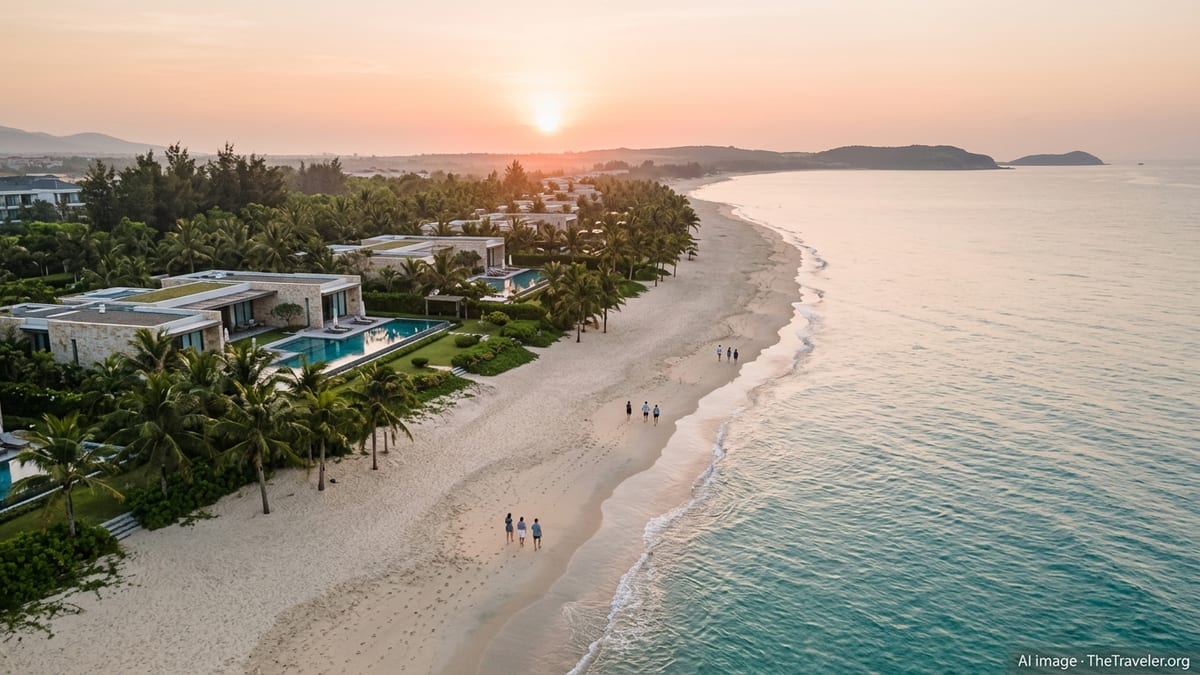
Luxury Resorts Multiply Along Cam Ranh’s Pristine Coastline
The beaches stretching between Cam Ranh airport and Nha Trang have become a focal point for high-end resort development, backed by international brands and local investors positioning the area as a more tranquil alternative to Vietnam’s busier beachfront cities. Properties such as Mövenpick Resort Cam Ranh and Ana Mandara Cam Ranh have secured sustainability-focused certifications, including repeated Green Globe awards and recognition in global rankings of sustainable hotels and resorts.
These accolades highlight resort-level commitments to energy efficiency, waste reduction and regular beach-cleaning programs, adding environmental credibility to the area’s already strong natural appeal. Green Globe documentation and resort sustainability reports emphasize recurring coastal clean-up activities, resource management initiatives and community engagement, reinforcing the perception of Cam Ranh’s shoreline as one of Vietnam’s better-maintained resort corridors.
At the same time, a new wave of luxury and upper-upscale projects is entering the market or moving through the development pipeline, from family-focused properties nominated for international awards to boutique resorts emphasizing wellness, spa offerings and seclusion. Trade publications and hospitality industry briefings describe unprecedented growth in room inventory along this stretch of coast, driven by expectations of continued international airlift and rising spending power among regional travelers.
Travel media recognition is amplifying the trend. Listings in regional luxury awards and roundups of Vietnam’s best beach resorts increasingly feature Cam Ranh properties alongside longer-established names in destinations like Phu Quoc and Da Nang, signaling that the region is firmly on the radar of affluent leisure travelers.
Cleanliness, Sustainability and Experience Drive Visitor Choices
Travel trend reports across Asia-Pacific indicate that visitors are aligning destination choices with perceived cleanliness, sustainability credentials and overall experience quality. Cam Ranh’s strong cleanliness ratings at the airport level, combined with resort-led environmental initiatives on the beachfront, are giving the area a competitive edge with these increasingly discerning segments.
Surveys and booking data cited in regional tourism analyses suggest that travelers from Japan, South Korea and Europe show particular sensitivity to hygiene and environmental performance when choosing long-haul holidays. For these markets, an airport recognized for cleanliness and a cluster of sustainably certified resorts presents a persuasive value proposition, especially when coupled with direct or one-stop flight options on familiar flag carriers and well-known low-cost brands.
The result is a virtuous cycle: higher cleanliness standards and visible environmental stewardship draw more premium visitors, whose spending power in turn supports further investment in infrastructure, training and sustainable operations. Industry observers argue that this dynamic is helping Vietnam pivot away from a purely volume-driven tourism model toward one that emphasizes quality and higher yield per visitor.
Cam Ranh’s experience is also shaping conversations in other Vietnamese destinations that face challenges around congestion and beach pollution. As domestic stakeholders assess how best to manage growth, Cam Ranh’s combination of airport-level cleanliness recognition, targeted airline partnerships and resort-driven sustainability may serve as a template for more balanced, resilient tourism development.
Vietnam’s South-Central Coast Positions Itself for Long-Term Growth
With new and returning routes from carriers such as AirAsia, Vietnam Airlines, Korean Air, Japan Airlines, Thai Airways, Emirates and Qatar Airways, Vietnam’s south-central coast is better connected than ever to key source markets across Asia, the Middle East and beyond. Capacity additions to Hanoi, Da Nang and Ho Chi Minh City, combined with domestic feeder services into Cam Ranh, are steadily integrating the region into wider regional travel circuits.
Hospitality investors appear to be betting that this improved accessibility, underpinned by strong cleanliness and sustainability narratives, will support long-term growth in international arrivals. Recent resort expansions, award nominations and green certifications along Cam Ranh’s beachfront indicate confidence that demand will continue to rise, particularly among higher-spending family and couples segments seeking resort-style stays.
Analysts caution that maintaining the momentum will require sustained investment in infrastructure, environmental protection and service quality to ensure that cleanliness rankings and sustainability credentials remain credible as visitor numbers climb. However, the combination of positive international recognition, growing airline interest and a robust pipeline of luxury projects suggests that Cam Ranh and the wider south-central coast are well placed to remain at the forefront of Vietnam’s evolving tourism landscape.
As global travelers look beyond traditional hotspots in search of cleaner, more carefully managed beach destinations, the convergence of air connectivity, resort investment and environmental performance around Cam Ranh is positioning Vietnam as one of the region’s standout growth stories.