

More news on this day
Australia’s Top End is set to lose its short-lived AirAsia links to Asia as the carrier confirms it will suspend flights from Darwin to both Bali and Kuala Lumpur in late April 2026, redirecting capacity into stronger-performing Melbourne routes instead.
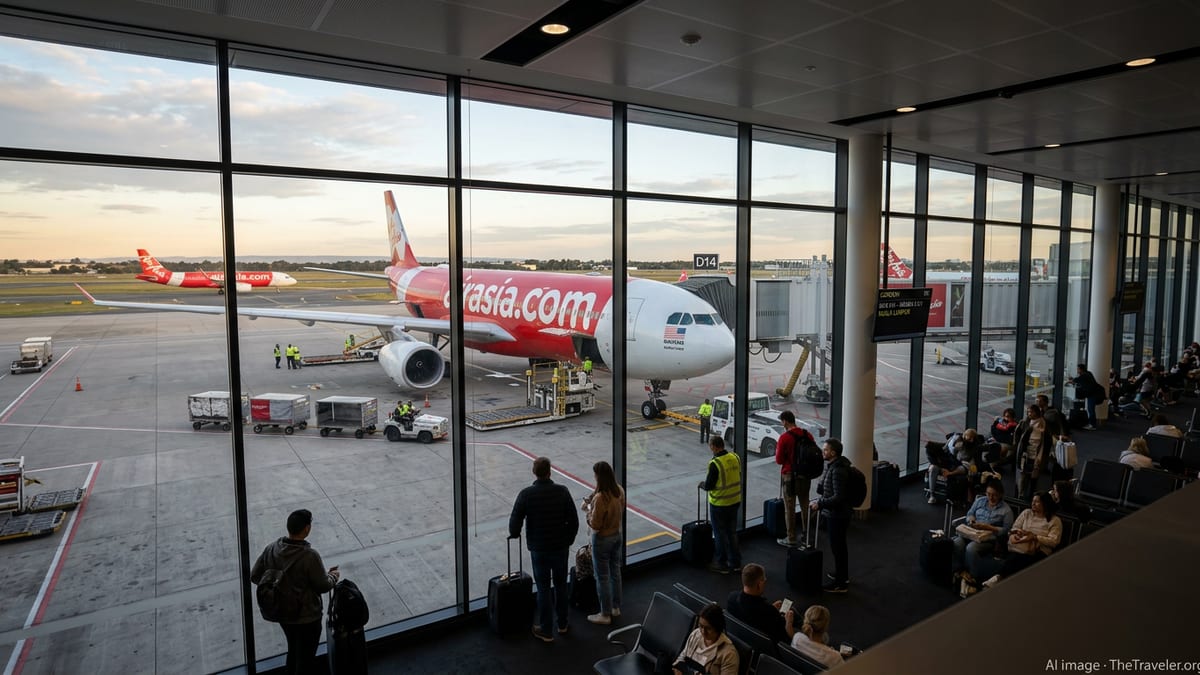
Darwin Services to End After Brief Return
AirAsia and its Indonesian affiliate will exit Darwin in late April 2026, less than a year after the Northern Territory capital celebrated the airline’s return to the market. The Kuala Lumpur to Darwin route, operated by AirAsia from Malaysia, and the Denpasar to Darwin route, operated by Indonesia AirAsia, are both scheduled to operate for the last time in the final week of April.
According to published schedules and aviation route data, the final Kuala Lumpur to Darwin service is set for 27 April 2026, while Darwin’s remaining Bali flights under the AirAsia brand will cease around 27 to 28 April. The move will leave Darwin without any AirAsia-operated international links and comes on top of wider competitive pressures on the Top End market from full-service and low-cost rivals.
The withdrawal is a setback for Darwin International Airport, which had positioned the Bali flights as a key leisure and visiting-friends-and-relatives link for Territorians, as well as a gateway to broader Asian connections via AirAsia’s Bali and Kuala Lumpur hubs. Industry observers note that the relatively small local catchment and seasonal demand have historically challenged the sustainability of long-haul and international low-cost operations from Darwin.
Passengers already booked on flights beyond the withdrawal date are being contacted by the airline with re-accommodation or refund options. AirAsia has publicly acknowledged the disruption the decision will cause, while emphasising that the changes reflect a broader recalibration of its Australia network toward higher-demand city pairs.
Melbourne Gains New Bali Route and Added Capacity
While Darwin loses out, Melbourne is the big winner from AirAsia’s latest network rejig. The airline has confirmed a new route linking Melbourne Airport and Bali’s Denpasar Airport, scheduled to launch on 21 March 2026. The service is expected to add around 130,000 seats per year between Victoria and the popular Indonesian holiday island.
The Bali launch builds on AirAsia’s existing Kuala Lumpur to Melbourne operations, which are being reinforced as the group concentrates on higher-volume, higher-yield corridors. Together, the Kuala Lumpur and Bali flights will give Melbourne-based travellers expanded options for both direct island breaks and one-stop itineraries across Southeast and North Asia using AirAsia’s connecting network.
For Victoria’s tourism industry, the additional Bali capacity is expected to support inbound travel from Indonesia and beyond, particularly among value-conscious leisure travellers and students. Bali remains one of the most popular outbound destinations for Australians, and Melbourne’s larger population base and strong Indonesian community provide a deeper pool of demand than Darwin.
Aviation analysts say the shift reflects AirAsia’s preference for concentrating aircraft on thick routes where planes can achieve high load factors year-round. Melbourne’s larger catchment, strong outbound holiday market and established ties with Southeast Asia make it a natural beneficiary as the airline reallocates capacity from smaller, more volatile markets.
Strategic Pivot in AirAsia’s Australian Network
The decision to cut Darwin while boosting Melbourne is part of a broader strategy by AirAsia to refine its post-pandemic footprint in Australia. After rebuilding capacity to key cities such as Sydney, Melbourne and Perth, the group has tested secondary markets, including Darwin, but appears increasingly focused on routes with proven, sustainable demand.
Darwin’s Bali and Kuala Lumpur services returned in 2025 amid optimism that pent-up travel demand would support the relaunched routes. However, industry data suggest that while early bookings were encouraging, maintaining strong year-round performance in a relatively small market proved challenging once the initial novelty wore off and competitive fare pressure intensified.
By contrast, AirAsia reports consistently high load factors on its main Australian gateways, with long-haul affiliate AirAsia X highlighting strong performance to and from Australia across the broader network. Shifting aircraft from underperforming sectors to high-demand routes such as Melbourne to Bali and Kuala Lumpur allows the group to maximise aircraft utilisation and revenue at a time of elevated fuel and operating costs.
The move also aligns with AirAsia’s network philosophy of funnelling traffic through major hubs in Kuala Lumpur and Bali, where the airline can offer extensive onward connections. Melbourne’s enhanced connectivity via these hubs is expected to appeal to travellers heading to destinations such as Bangkok, Tokyo, Seoul and various secondary cities in Southeast Asia.
Impact on Northern Territory Travellers and Tourism
For residents of the Northern Territory, the end of AirAsia services will narrow the range of low-cost options to reach Bali and Southeast Asia. Travellers from Darwin are likely to rely more heavily on domestic connections via major east coast or Perth hubs, or on alternative carriers operating seasonal or charter services when available.
Tourism operators in the Top End have expressed concern that losing direct low-fare links will dampen inbound visitor growth from Indonesia, Malaysia and other Asian markets, particularly among budget-conscious travellers. Direct international services not only support holiday visitation but also visiting-friends-and-relatives traffic, student mobility and small business travel.
Some analysts point out that Darwin has long experienced cycles of international expansion and retrenchment as airlines test new routes and adjust capacity based on performance. While AirAsia’s exit reduces choice in the short term, it may also create opportunities for other carriers or charter operators to step into specific niches, especially during peak Northern Territory tourism seasons.
Local stakeholders are expected to continue lobbying airlines and government for measures that improve the economics of serving Darwin, including marketing partnerships and support for route development, in a bid to restore direct links to Bali and beyond over the medium term.
What Travellers Should Know and Watch Next
AirAsia customers booked to or from Darwin on flights after late April 2026 are advised to check their reservations and communications from the airline for updated options. Rebooking via Melbourne, Perth or other gateways, or shifting to alternative carriers, may be necessary for affected itineraries.
For Melbourne-based travellers, the new Bali service and strengthened Kuala Lumpur connectivity will open up more seat inventory and fare competition ahead of the 2026 mid-year holiday period. The additional capacity could place downward pressure on prices during off-peak weeks, even as demand over school holidays and long weekends remains robust.
Industry watchers will be closely monitoring how quickly AirAsia’s extra Melbourne capacity is absorbed by the market and whether further frequency increases or new Australian routes follow as the airline adds more aircraft in the coming years. The carrier has previously signalled interest in deepening its presence in Australia, albeit with a disciplined focus on routes that consistently deliver strong load factors and yields.
For now, the contrasting fortunes of Darwin and Melbourne in AirAsia’s latest network update underscore the shifting dynamics of Australia’s international aviation landscape, where airlines are increasingly selective about where they deploy each seat, and smaller markets can quickly gain or lose critical connections based on performance.