

More news on this day
AirAsia is set to launch new daily direct flights between Kuala Lumpur and Batam from March 13, 2026, a move expected to significantly improve cross-border connectivity, stimulate tourism and support wider economic growth across Southeast Asia.
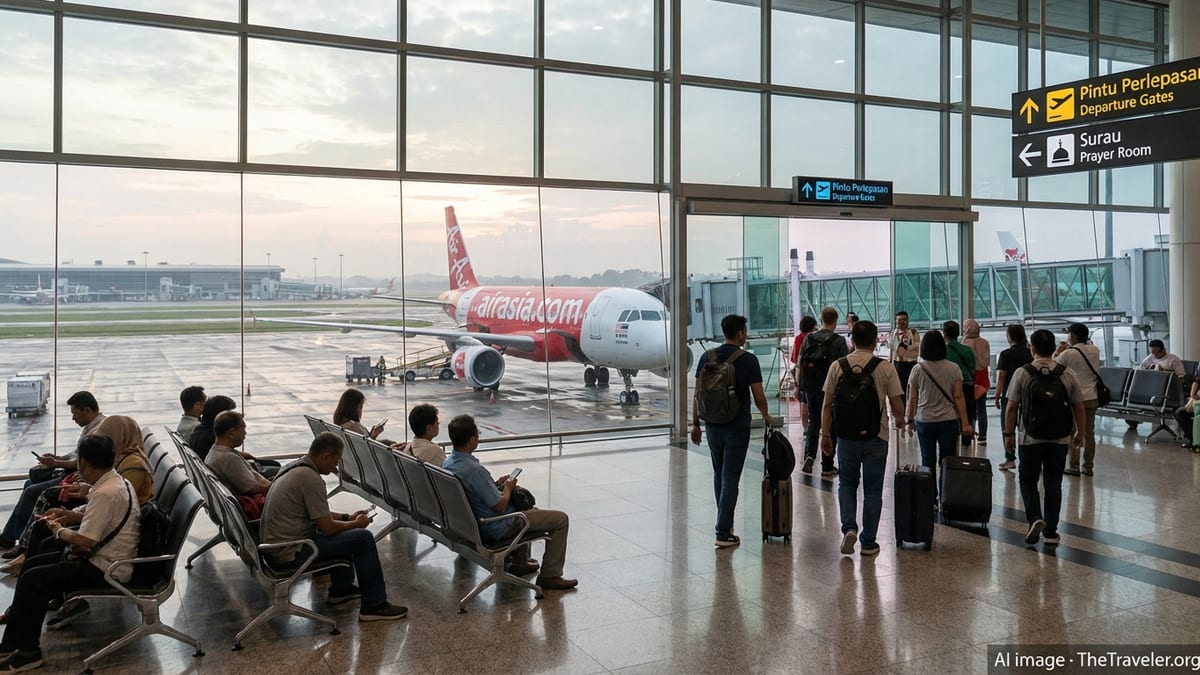
New Daily Link Between Two Growing Gateways
The new service will connect Kuala Lumpur International Airport with Hang Nadim International Airport in Batam, offering seven flights a week on the busy Malaysia–Indonesia corridor. The route eliminates the need for time-consuming transits via other Indonesian cities or Singapore for many travelers, giving both leisure and business passengers a faster and more predictable option.
AirAsia has indicated that it expects to carry more than 22,000 passengers on the route within the first three months of operation, underscoring robust underlying demand. The carrier already serves 19 routes between Malaysia and Indonesia and transported nearly three million passengers across the corridor in 2025, positioning the Kuala Lumpur–Batam link as a natural extension of its regional network strategy.
For Batam, which has long relied on sea links and indirect air connections, the direct daily flights are seen as a milestone in strengthening its status as an international gateway in the western part of Indonesia. For Kuala Lumpur, the route further consolidates its role as a major Southeast Asian hub, channelling traffic onward to long haul markets in Asia, the Middle East and Europe.
Shorter Journeys for Business, Tourism and Visiting Families
Local authorities and tourism stakeholders on both sides of the Strait have welcomed the announcement, highlighting the time savings for corporate travelers, investors and skilled workers who regularly shuttle between the two cities. Direct flights are expected to make face to face meetings, project coordination and cross border assignments more efficient, with fewer connection risks and schedule disruptions.
Leisure travelers are also set to benefit. Batam’s beaches, golf courses and resorts have become a popular weekend destination for residents of major Malaysian cities, while Kuala Lumpur’s shopping districts, cultural attractions and culinary scene continue to draw Indonesian visitors. The daily schedule allows flexible short breaks, extended holidays and last minute trips, appealing to both budget conscious backpackers and families.
The route is particularly important for people traveling to visit friends and relatives, a segment that often faces higher costs and longer door to door times when forced to connect through multiple airports. With competitive introductory fares denominated in both Malaysian ringgit and Indonesian rupiah, the new service is likely to broaden access for travelers across different income brackets.
Boost for Batam’s Tourism and Local Economy
Batam’s tourism sector has been recovering strongly, with the city recording around 1.6 million international arrivals in 2025 and Malaysia identified as one of its fastest growing source markets. Direct connectivity from Kuala Lumpur is expected to lift those numbers further by making it easier for Malaysian travelers, as well as transit passengers from other regions, to add Batam to their itineraries.
City and provincial officials have framed the AirAsia route as a strategic step in efforts to diversify Batam’s economy beyond manufacturing and logistics. More international flights can generate additional demand for hotels, restaurants, transport services and local tour operators, while also encouraging new investment in supporting infrastructure.
Airport operator representatives in Batam have described the service as part of a broader plan to position Hang Nadim International Airport as a key regional hub. Increased passenger flows can help justify upgrades to terminal facilities and airside capacity, in turn making the destination more attractive to other carriers evaluating new routes in western Indonesia.
Strengthening Malaysia–Indonesia and ASEAN Connectivity
The Kuala Lumpur–Batam launch fits into a wider trend of airlines reinforcing short haul routes within Southeast Asia to capture a growing middle class and rising intra regional tourism. By tightening the air bridge between Malaysia and Indonesia, the new service supports closer trade, cultural exchange and labor mobility within the Association of Southeast Asian Nations.
For Malaysia, the route complements national ambitions tied to upcoming tourism campaigns and reinforces Kuala Lumpur’s positioning as a convenient stepping stone between ASEAN and long haul markets. For Indonesia, improved access to Batam aligns with broader plans to distribute international visitor flows beyond traditional gateways, while still leveraging the island’s proximity to Singapore and major shipping lanes.
Industry analysts note that point to point low cost routes such as Kuala Lumpur–Batam can have an outsized impact on regional integration by lowering travel costs and reducing friction for frequent cross border journeys. As more passengers take advantage of the daily flights, the route is expected to deepen commercial ties and people to people links between the two neighbors.
Passenger Experience and Market Outlook
AirAsia plans to operate the route with single aisle aircraft in an all economy configuration, consistent with its low cost model. Travelers can expect the carrier’s standard unbundled offering, with base fares complemented by optional add ons such as checked baggage, seat selection and in flight meals, allowing passengers to tailor their costs according to trip length and purpose.
The schedule is designed to provide convenient same day arrivals, enabling business meetings, onward connections and weekend breaks without overnight layovers. Travel agents in both countries anticipate strong initial demand driven by promotional fares, followed by steady growth as passengers adjust their routines to the new nonstop option.
Looking ahead, aviation stakeholders in the region will be watching load factors and booking patterns closely. If the daily Kuala Lumpur–Batam operation performs in line with expectations, it could pave the way for capacity increases or additional routes linking Batam to other Malaysian and regional cities, further weaving the island into Southeast Asia’s expanding air travel network.