

More news on this day
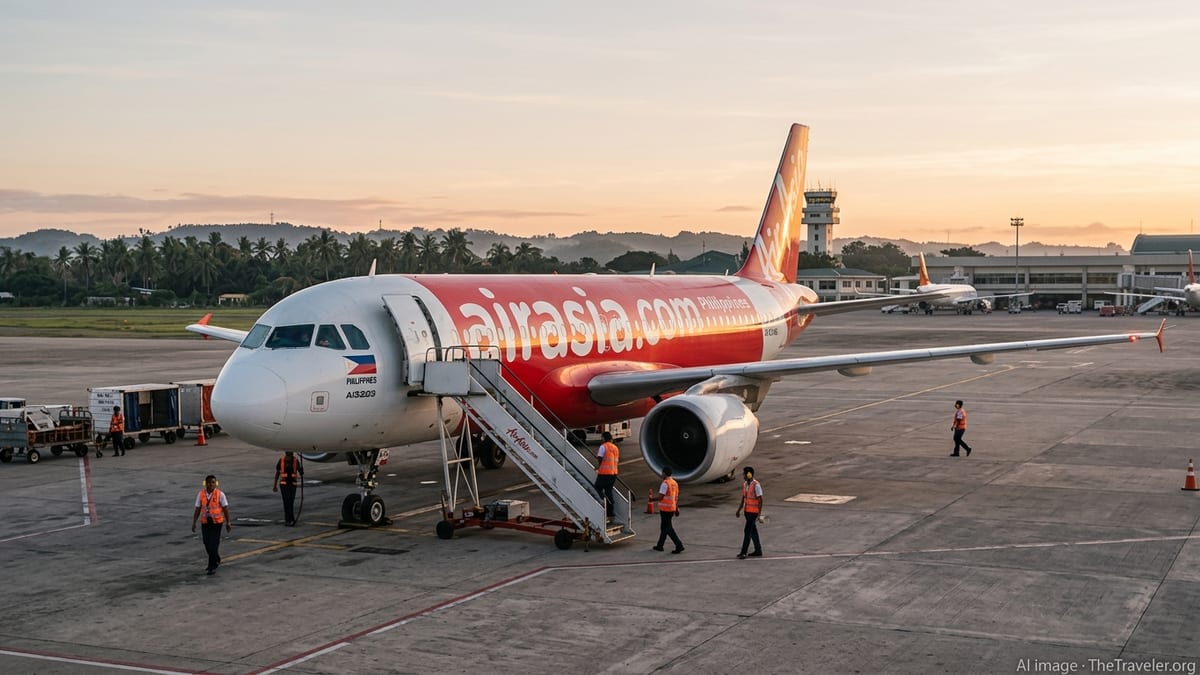
AirAsia Philippines is set to expand its Cebu hub with a new direct route to Bangkok, a move that strengthens regional connectivity within Southeast Asia and is expected to support tourism and local economies in both the central Philippines and Thailand.
Get the latest news straight to your inbox!
Daily Cebu–Bangkok Service Set to Begin in June
Publicly available information from the AirAsia Philippines newsroom indicates that the carrier will inaugurate direct flights between Cebu and Bangkok on June 11, 2026. The new service will operate daily, linking Mactan-Cebu International Airport with Bangkok’s Don Mueang Airport, one of the Thai capital’s key low-cost aviation gateways.
According to published coverage, the planned schedule has departures from Cebu in the early morning, with arrival in Bangkok expected around mid-morning, allowing travelers to maximize their time in the Thai capital. The return leg is structured to facilitate same-day onward connections within Thailand and to other international destinations served from Bangkok.
The launch of this route comes as Cebu continues to position itself as a major international gateway for the Visayas and Mindanao regions. The additional connectivity to Bangkok adds to an expanding list of regional destinations accessible directly from Cebu, reducing the need for passengers to connect via Manila.
Cebu’s Growing Role as an International Hub
In the past year, AirAsia Philippines has moved to strengthen Cebu as one of its primary operating bases, with earlier announcements detailing new domestic and international services from the city. Company releases describe Cebu as central to its growth strategy in the Philippines, with ambitions to channel more traffic from secondary cities to major Southeast Asian gateways.
The new Cebu–Bangkok service supports that strategy by opening another direct link to a major ASEAN capital. Travelers from Visayas and Mindanao who previously had to route through Manila to reach Thailand will have an option to depart closer to home, potentially cutting travel time and costs. This aligns with broader trends across the region, where airlines are developing secondary hubs to relieve congestion at capital city airports.
The expansion of Cebu’s route network has coincided with infrastructure and tourism initiatives across the island province. Recent events, including regional tourism forums and investment in transport links, have highlighted Cebu’s role as a meeting point for business and leisure travelers, making additional international air services a logical next step.
Boost to Tourism and Local Economies
The direct Cebu–Bangkok route is expected to generate benefits on both ends of the corridor. Tourism industry analyses frequently point to Thailand and the Philippines as two of Southeast Asia’s most popular destinations, and improved air links between them typically lead to higher visitor flows, increased hotel occupancy, and more spending in local businesses.
For Central Visayas, easier access from Bangkok could encourage Thai visitors and travelers from Europe or South Asia who transit via Thailand to add Cebu to their itineraries. This is likely to bring additional demand for resorts, dive operations, food establishments, and tour services across Cebu and neighboring islands such as Bohol and Negros.
In Thailand, the route offers Filipinos a direct path into one of the region’s most visited cities, where tourism, retail, education, and healthcare sectors all benefit from increased arrivals. Stakeholders in both countries anticipate that more convenient travel options can support small and medium enterprises that rely on cross-border tourism, from independent travel agencies to local transport providers.
Strengthening ASEAN Regional Connectivity
The Cebu–Bangkok launch also reflects a broader pattern of airlines deepening links within the Association of Southeast Asian Nations. Industry observers note that secondary city pairings, such as Cebu with Bangkok, are increasingly viewed as growth markets, complementing established trunk routes between capital cities.
AirAsia Group has long positioned itself as a key player in low-cost travel around ASEAN, and new routes from Cebu form part of a network that connects Philippine cities to hubs in Thailand, Malaysia, and beyond. Enhanced point-to-point services are viewed as supportive of regional integration goals, making it easier for residents, migrant workers, students, and tourists to move between member states.
By offering daily frequencies, the new route is designed to be attractive both for leisure trips and for regional business travel, including meetings, incentives, conferences, and exhibitions. Regular schedules can also underpin partnerships with local tour operators and travel platforms, which rely on predictable capacity to package and market cross-border itineraries.
Competitive Low-Cost Market and Passenger Options
The introduction of Cebu–Bangkok flights adds another dimension to an already competitive low-cost market in Southeast Asia. Analysts point out that travelers in the region have become highly price-sensitive and responsive to promotional fares, which are a common feature of network expansion campaigns by carriers such as AirAsia Philippines.
Seat sales and bundled travel offers tied to the new route are expected to stimulate demand in the early months of operation. Public information regarding recent promotions has shown that discounted fares from Cebu are commonly used to introduce new destinations and encourage first-time international travelers.
For passengers, the added competition and capacity can translate into more choice in scheduling and pricing, particularly during peak holiday periods. While Manila remains the country’s primary international gateway, the emergence of Cebu as a strong alternative allows travelers from central and southern Philippines to bypass domestic connections and start their regional journeys closer to home.