

More news on this day
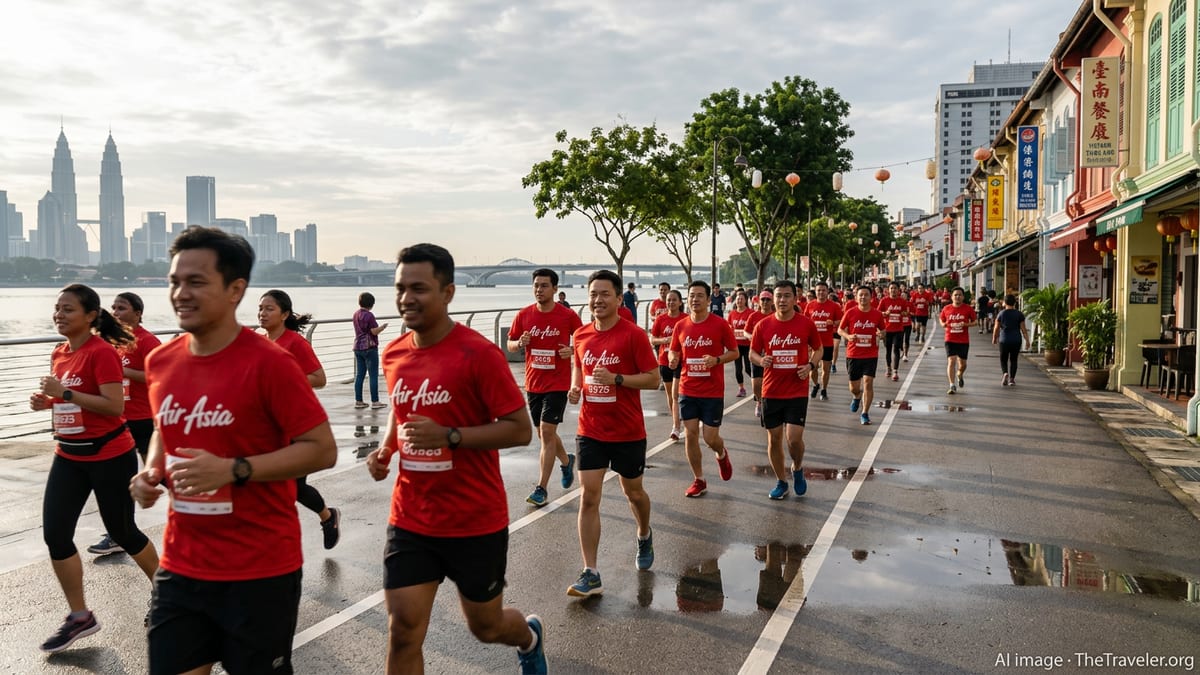
AirAsia’s RedRun 2026 series is positioning itself as a high-energy new way to explore Asia, with a calendar of themed runs that tie together Vietnam, Indonesia, Malaysia, Thailand and Taiwan into one fitness-focused travel circuit.
Get the latest news straight to your inbox!
From Single-City Fun Run to Regional Travel Series
Publicly available event documents for AirAsia’s RedRun brand show that what began as a localized fun run concept has evolved into a broader campaign that closely links running with regional travel. The 2025 edition already featured promotional activity in Malaysia, including a Penang event tied to AirAsia’s lifestyle and booking platform. For 2026, the RedRun concept is being framed as a cross-border series that plugs directly into the airline group’s short-haul network across Southeast Asia and Northeast Asia.
The airline’s broader strategy of consolidating its various country units under a unified brand and leveraging its RedQ headquarters outside Kuala Lumpur appears to support this kind of multi-destination initiative. Recent operational updates highlight a renewed focus on core Asian routes and stronger connectivity between key leisure cities, which in turn provides a practical backbone for a roving running series that encourages participants to combine race entries with weekend breaks or extended trips.
While full official details of each 2026 stop have yet to be released, promotional materials and timing around recent RedRun campaigns indicate that the series will be marketed as a cohesive calendar rather than isolated events. That approach allows runners to pick a single destination race or build a personal “tour” that follows the series through multiple countries over several months.
Vietnam and Indonesia: Coastal Courses and Culture-Focused Weekends
Vietnam is expected to play a central role in RedRun 2026, capitalizing on expanding low-cost connectivity to cities such as Da Nang and Hanoi. Airline schedule data and recent route announcements show increasing capacity into Vietnam during 2026 from across the AirAsia network, positioning beachside and riverside courses as natural candidates for a marquee run. For traveling runners, that translates into the possibility of early-morning races followed by afternoons exploring lantern-lined streets, cafes and coastal viewpoints.
In Indonesia, the series is likely to tap into the enduring appeal of Bali and other high-profile leisure destinations already well served by AirAsia flights. Thematically, organizers are expected to emphasize sunrise starts, oceanfront stretches and routes that highlight a mix of village scenery and resort coastlines. For international participants, the airline’s multi-city offerings and frequent services from Kuala Lumpur and key regional hubs provide a straightforward gateway for combining a race weekend with a longer island holiday.
Both Vietnam and Indonesia stops are being presented within marketing narratives as ideal for runners who prioritize scenery and atmosphere over purely urban routes. The focus on coastal views, local food experiences and accessible price points for accommodations underpins the pitch that these races are as much about immersion in place as they are about finishing times.
Malaysia and Thailand: Hub-Based Convenience Meets Big-City Energy
Malaysia, home to AirAsia’s RedQ headquarters and major operations at Kuala Lumpur International Airport’s Terminal 2, is a natural anchor for the RedRun 2026 calendar. Earlier editions of the event already used Malaysian cities as testbeds, and publicly shared regulations from the 2025 series point to a template of festival-style race villages, side activities and integrations with the airline’s digital ecosystem. For 2026, observers expect Malaysia to host one of the flagship events, leveraging strong domestic and regional connectivity.
For traveling runners, Malaysia’s central geographic position in Southeast Asia means shorter flight times from many neighboring countries, as well as straightforward onward connections to the rest of the RedRun circuit. The combination of large-capacity airports, a concentration of budget accommodations and an established tourism infrastructure makes it a logical base for those planning multiple races in a single season.
Thailand is also poised to be a crowd-pleasing stop, supported by busy leisure routes into Bangkok and other tourist hotspots. The country’s reputation as a destination for food, nightlife and cultural sightseeing dovetails with the RedRun positioning as a fitness experience that does not require sacrificing the classic city-break feel. Timetables for 2026 from various AirAsia-branded carriers show increasing links between Thai gateways and secondary cities around the region, which can help participants extend their trip beyond the race itself.
Across Malaysia and Thailand, organizers are likely to emphasize big-city energy: night markets, rooftop viewpoints and dense streetscapes that give runners a different kind of backdrop compared with coastal stages elsewhere in the series. The ease of flying in and out for a long weekend is expected to remain a key selling point.
Taiwan and the Push Into Northeast Asia
Taiwan’s inclusion in the RedRun 2026 narrative reflects AirAsia’s ongoing efforts to strengthen its presence in Northeast Asia, with services into Taipei and other Taiwanese cities listed in route overviews for the group. For a running series built around accessible travel, Taiwan offers a compelling mix of urban and natural scenery within short distances, from riverfront park systems in Taipei to nearby mountains and coastal areas reachable by public transport.
For visiting runners from Southeast Asia, Taiwan provides a change of climate, cuisine and cityscape while remaining within a manageable flight time. Publicly available tourism profiles emphasize efficient metro networks, night markets and a strong café culture, all of which fit neatly into the idea of a race weekend that balances exertion with relaxed exploration.
Positioning Taiwan as the northeastern anchor of the RedRun 2026 series also gives the campaign a broader pan-Asian footprint. The destination’s existing popularity with independent travelers, combined with a dense calendar of local events and festivals, could help the series attract both dedicated runners and casual participants who are primarily motivated by the travel experience.
Booking, Community Appeal and the Rise of “Fly to Run” Travel
The RedRun 2026 concept arrives at a moment when airlines across Asia are increasingly promoting experiences rather than just seats, and publicly available marketing materials from AirAsia highlight a growing emphasis on lifestyle branding. Integrations with the airline’s digital platforms, as outlined in recent promotions, suggest that registration, travel booking and ancillary services will be designed to sit within a single ecosystem, simplifying planning for participants.
Travel observers note that regional carriers have been experimenting with running events, music festivals and food-focused campaigns as ways to spur off-peak travel and deepen loyalty. A multi-stop running series that spans Vietnam, Indonesia, Malaysia, Thailand and Taiwan fits squarely within that pattern, appealing to a demographic that is willing to travel for hobbies and experiences but remains price-sensitive.
For local tourism partners in host cities, an event series tied to a large low-cost network promises a predictable influx of visitors who tend to stay in budget and mid-range accommodations, patronize neighborhood restaurants and explore beyond traditional sightseeing circuits. While specific economic impact estimates for RedRun 2026 have not yet been published, comparable destination races in the region have been associated with increased weekend occupancy rates and higher spending on food, retail and local transport.
As more details of the RedRun 2026 calendar emerge, the series is being framed as an opportunity for travelers to design their own “fly to run” season, hopping between coastal routes, urban skylines and new cultural experiences, all within a few hours’ flight on a single airline group.