

More news on this day
AirAsia is set to reignite one of its most tourism-focused corridors in Southeast Asia, with the relaunch of direct flights between Penang and Phuket amid a sharp rebound in regional travel demand.
Get the latest news straight to your inbox!
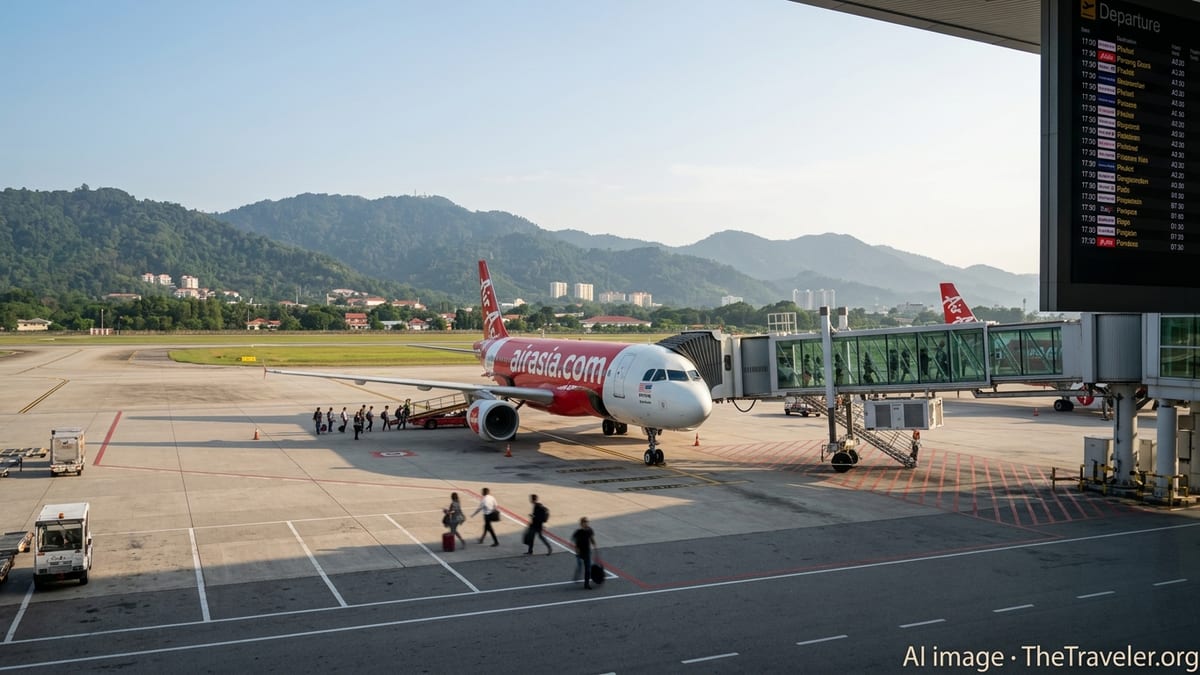
Route Relaunch Connects Two High-Growth Tourism Hubs
Publicly available schedules show that AirAsia will resume flights on the Penang–Phuket route from 13 March 2026, initially operating four times weekly with Airbus A320 aircraft. The move restores a direct link between two of the region’s most recognisable leisure destinations, several years after the route last appeared in the airline’s network.
Penang has consolidated its position as one of Malaysia’s leading urban-island gateways, combining a UNESCO-listed historic centre, a strong culinary reputation and a growing portfolio of international hotels. Phuket, meanwhile, remains one of Thailand’s most visited destinations, drawing beachgoers, wellness travellers and nightlife tourists from across Asia and beyond.
Industry coverage indicates that AirAsia is positioning the reinstated service as part of a broader strategy to deepen connectivity within the Association of Southeast Asian Nations, allowing travellers to pair established hotspots via short flights. The Penang–Phuket link effectively plugs a gap in point-to-point access at a time when travellers are prioritising convenience and non-stop options over complex connections.
Timetables and capacity data suggest that the four-weekly schedule gives the airline flexibility to scale up to daily operations if demand continues to climb through the second half of 2026. Aviation analysts note that such a phased approach allows carriers to test market resilience while managing cost and yield in a still-normalising operating environment.
Surging Regional Demand Fuels Point-to-Point Revival
The Penang–Phuket relaunch comes against a backdrop of robust recovery in Southeast Asian air travel, particularly on short-haul leisure routes. Data cited in regional tourism reports show Malaysia emerging as one of Thailand’s top source markets in 2025, with millions of Malaysians crossing the border for beach holidays, shopping breaks and food-focused trips.
At the same time, outbound demand from Thailand into Malaysia has been lifted by targeted marketing campaigns around heritage, food tourism and events. Coupled with favourable exchange rates for some source markets and a wider return of international visitors, carriers have found renewed incentive to restore and expand cross-border secondary-city links that were paused or reduced during the pandemic years.
Analysts tracking airline schedules describe a wider pattern of network rebuilding that emphasises direct connections between regional hubs rather than relying solely on capital-city gateways. The return of Penang–Phuket sits alongside new or resumed links from Penang to destinations such as Qingdao and Johor Bahru, signalling Penang’s growing significance as a northern Malaysia aviation base.
For AirAsia, which has long branded itself as a pan-Asean low-cost leader, these developments support a strategy of stimulating demand through dense intra-regional connectivity and competitively priced fares. Observers note that the airline’s expanding network out of secondary hubs is designed to capture travellers who are increasingly comfortable stitching together multi-stop itineraries within the region.
Medical Tourism Meets Beach Escapes on a Single Ticket
Travel industry commentary highlights a distinctive feature of the Penang–Phuket corridor: its potential to blend medical tourism with traditional beach and leisure travel. Penang’s reputation as a medical-tourism hub, with internationally accredited hospitals and specialist clinics, has drawn patients from across Southeast Asia and the Middle East seeking cost-effective treatment and check-ups.
By contrast, Phuket’s appeal has historically centred on resort stays, coastal activities and wellness experiences, from yoga retreats to spa-focused holidays. The reinstated AirAsia service allows travellers to combine both propositions within a single trip, flying for treatment in Penang before recuperating at a resort in Phuket, or vice versa.
Travel advisors surveyed in regional media suggest that such dual-purpose itineraries are becoming more common as consumers look to maximise the value of their journeys. A direct air link makes it easier for tour operators and online agencies to package medical consultations, procedures and post-treatment stays with beach breaks, particularly for travellers arriving on long-haul flights into Kuala Lumpur, Bangkok or Singapore.
The corridor also strengthens two-way flows linked to conferences, incentives and events, with Penang’s meetings and exhibitions sector benefitting from smoother access to Phuket-based corporate and leisure groups. In turn, Thai operators gain more predictable traffic from Malaysian travellers seeking quick, repeat visits to Phuket.
Penang’s Expanding Air Network Underscores Competitive Push
The timing of the Penang–Phuket resumption coincides with a broader expansion of air connectivity at Penang International Airport. Local announcements in March 2026 highlighted three new routes for the month alone, including direct services from Phuket, Qingdao and Johor Bahru, reflecting concerted efforts to diversify the island’s access points.
Penang tourism planners have promoted the airport as a strategic northern gateway not only for holidaymakers but also for business travellers and members of the Malaysian diaspora returning from abroad. The addition of new direct links supports ambitions to grow visitor arrivals while easing pressure on Kuala Lumpur as the country’s primary international entry point.
In this context, AirAsia’s decision to position Penang as a hub for routes into Thailand and greater East Asia aligns with state-level goals to attract higher-spending visitors and lengthen average stays. Industry observers note that better connectivity tends to encourage travellers to use Penang as a base for onward regional exploration, increasing demand for accommodation, dining and ground transport.
The airline’s competitive low-cost model may also put pricing pressure on rival carriers operating out of nearby airports, prompting further adjustments to capacity and route planning across the northern Malaysia and southern Thailand corridor. Over time, this competition could translate into more choice and sharper fares for consumers.
Implications for Travellers Planning Southeast Asia Itineraries
For travellers piecing together multi-country journeys, the revived Penang–Phuket service adds another practical building block. The four-weekly frequency provides new options for looping between Malaysia and Thailand without backtracking through capital cities, particularly for those interested in pairing Penang’s urban heritage and food scene with island time in Phuket.
Budget-conscious visitors stand to benefit from the route’s low-cost positioning, which can reduce the overall price of an itinerary that might also include stops in Kuala Lumpur, Bangkok or other Asean cities served by AirAsia. The ability to travel light on short segments and purchase add-ons as required appeals to digital-first travellers comfortable mixing airlines and booking channels.
Travel planners, however, continue to advise flexibility in scheduling, given the broader aviation industry’s sensitivity to fuel prices, currency movements and geopolitical developments. While current indicators point to sustained demand for regional leisure and medical travel, capacity and timings remain subject to adjustment as carriers fine-tune their networks.
As Southeast Asia’s aviation market moves further into its post-pandemic phase, the Penang–Phuket relaunch stands as a barometer of confidence in cross-border, short-haul tourism. Its performance over the coming seasons is likely to influence how aggressively airlines, including AirAsia, pursue similar secondary-city pairings across the region.