

More news on this day
AirAsia is reinforcing its position in the fiercely competitive Malaysia–China market with the resumption of direct Kuala Lumpur–Wuhan flights from May 22, 2026, a move that underscores surging demand and the carrier’s bid to dominate affordable travel between the two countries.
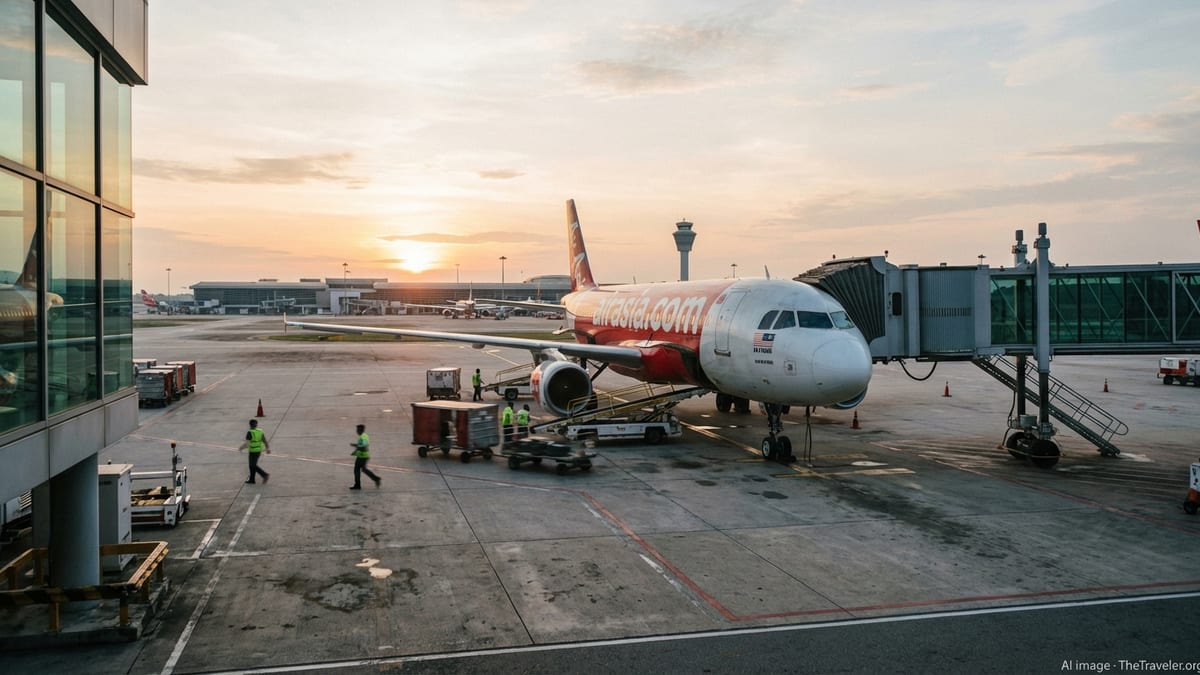
Four Weekly Flights Reconnect Kuala Lumpur and Central China
AirAsia Malaysia will operate four weekly services on the relaunched Kuala Lumpur–Wuhan route, restoring a direct link to one of central China’s most important economic and education hubs. The service, using narrowbody aircraft from the airline’s single-aisle fleet, is scheduled to begin on May 22, 2026.
The airline said the flight will provide convenient evening departures from Kuala Lumpur with onward connectivity across its regional network, including key destinations in Southeast Asia and Australia. The return leg from Wuhan is timed to facilitate same-day connections for travellers heading beyond Malaysia’s capital.
The route previously demonstrated strong performance before the pandemic, with average load factors above 80 percent, according to figures shared by AirAsia. The company expects that pent-up demand, combined with visa-free travel arrangements and competitive pricing, will support a rapid ramp-up once operations resume.
Wuhan, a major transportation hub on the Yangtze River, is seen as a strategic addition to AirAsia’s Chinese portfolio, complementing existing links to coastal gateways and major tourism centres. Industry analysts note that reconnecting secondary Chinese cities is critical for airlines seeking sustained growth in the region.
Market Leadership in Low-Cost Malaysia–China Travel
With the return of Kuala Lumpur–Wuhan, AirAsia estimates it will maintain a market share of close to 30 percent among Malaysian low-cost carriers serving China, cementing its leadership in the budget segment on this corridor. The airline has been progressively rebuilding its China network, reinstating suspended routes while adding frequencies on established services.
China has long been one of AirAsia’s cornerstone markets, driven by a mix of outbound Malaysian tourism, inbound Chinese visitors and growing student and business travel. The Kuala Lumpur–Wuhan route is expected to attract all three segments, with particular emphasis on education and commerce ties given Wuhan’s status as a university and industrial powerhouse.
AirAsia executives describe the move as a vote of confidence in the long-term prospects of Malaysia–China travel, even as airlines navigate currency volatility and evolving competitive pressures. By focusing on dense, price-sensitive markets and feeding traffic through Kuala Lumpur, the carrier aims to defend its position against both full-service rivals and emerging low-cost competitors.
The resumption also dovetails with Malaysia’s broader tourism objectives ahead of Visit Malaysia Year 2026, which targets a significant increase in visitor arrivals from China. Additional low-fare capacity is expected to support tour operators, hospitality players and small businesses reliant on Chinese travellers.
Promotional Fares Target Price-Sensitive Travellers
To stimulate early bookings, AirAsia has launched promotional all-in one-way fares starting from RM399 from Kuala Lumpur to Wuhan and from CNY608 from Wuhan to Kuala Lumpur. The introductory sale runs until March 15, 2026, for travel between May 22 and October 24, 2026.
The pricing strategy is typical of AirAsia’s approach in competitive markets, using sharp introductory fares to quickly build load factors and generate awareness in both origin and destination cities. Seats are available via the airline’s mobile app and digital channels, reflecting the group’s emphasis on direct distribution and ancillary sales.
Travel agents in both countries are expected to capitalise on the offer by bundling flights with accommodation and ground arrangements, particularly for first-time visitors to central China. The fare level positions the route as a budget-friendly option for Malaysians comparing China with alternative medium-haul destinations such as Japan and South Korea.
Industry watchers note that yield management will be critical as the initial promotional period ends and demand patterns stabilise. For now, however, AirAsia appears focused on re-establishing scale and frequency in China, even if that means accepting thinner margins during the ramp-up phase.
Strengthening Kuala Lumpur’s Role as a Regional Hub
The reinstated Wuhan service is also intended to deepen Kuala Lumpur’s role as a connecting hub between China, Southeast Asia and Australia. Passengers flying from Wuhan will be able to transfer onto AirAsia services to destinations such as Bali, Phuket, Jakarta and key Australian cities, using Kuala Lumpur as a one-stop gateway.
This hub-and-spoke model has become central to the group’s strategy, especially as it integrates short and medium-haul operations under a unified brand. By funnelling traffic through its main base, AirAsia can improve aircraft utilisation, smooth seasonal peaks and offer more competitive departure options than point-to-point rivals.
For Kuala Lumpur International Airport, additional China capacity is expected to support passenger growth and enhance its profile as a regional transfer centre. Airport officials and tourism authorities have been actively courting airlines to restore and expand Chinese connections, viewing them as essential to long-term growth.
The Wuhan route fits into a broader trend of Malaysian carriers ramping up services to secondary Chinese cities, complementing traditional gateways like Beijing, Shanghai and Guangzhou. As more of these links return, travellers gain access to a wider range of itineraries, and both countries benefit from deeper economic and cultural exchange.
Symbolic Milestone in Post-Pandemic Network Rebuild
Beyond its commercial implications, the return of Kuala Lumpur–Wuhan carries symbolic weight for both AirAsia and the wider region. Wuhan, which came to global prominence at the onset of the Covid-19 pandemic, has since repositioned itself as a resilient and fast-growing urban centre, with aviation connectivity playing a central role in its recovery.
For AirAsia, reinstating the route marks another milestone in a multi-year effort to rebuild its international network to pre-pandemic levels and beyond. The airline has been steadily reactivating aircraft, rehiring staff and reopening bases as border restrictions ease and passenger confidence returns.
Analysts caution that geopolitical tensions, currency movements and fuel costs remain key risks for carriers exposed to the China market. However, the underlying demand drivers for travel between Malaysia and China remain robust, from tourism and education to trade and investment flows.
As airlines across Asia scramble to secure aircraft and airport slots, moves like AirAsia’s Wuhan resumption signal that competition for Chinese travellers is entering a new phase. For budget-conscious passengers on both sides of the South China Sea, the renewed link promises more choice, lower fares and a wider range of travel possibilities in 2026 and beyond.