

More news on this day
AirAsia Malaysia is reinstating its Kuala Lumpur–Wuhan service from May 22, 2026, reopening a key air bridge between Malaysia and central China as travel demand rebounds across the region.
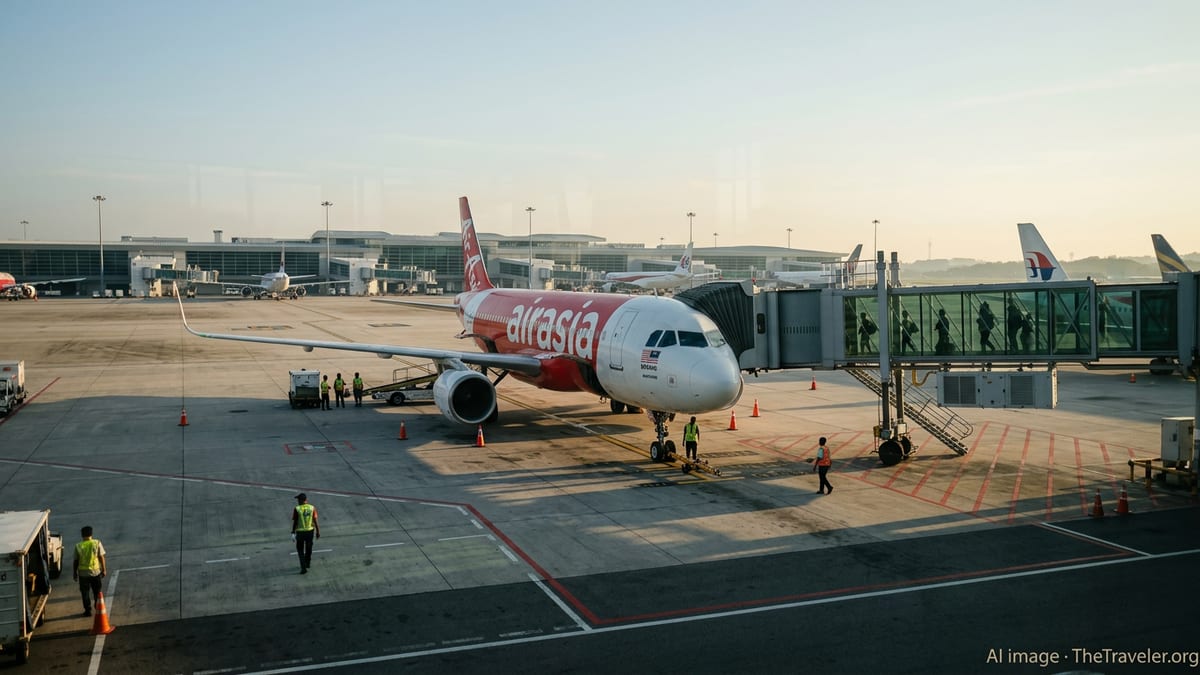
Route Relaunch Reconnects Malaysia With Central China
The restored Kuala Lumpur–Wuhan route will operate four times weekly from Kuala Lumpur International Airport Terminal 2, offering direct access to Wuhan Tianhe International Airport, one of central China’s busiest aviation hubs. The move is part of AirAsia’s broader strategy to rebuild capacity in the China market after several years of pandemic-related disruption and subsequent network reshuffles.
AirAsia has highlighted Wuhan’s role as a major economic, commercial and education center in central China, underlining the route’s importance beyond leisure travel. The airline previously served the city before suspending operations during the height of travel restrictions, and internal data showed consistently strong two-way demand with high load factors in the years leading up to the pause.
With the relaunch, AirAsia strengthens its footprint among Malaysian carriers serving China and aims to tap into pent-up demand from both Malaysian and Chinese travelers. The airline is positioning Kuala Lumpur as a convenient one-stop hub for passengers from Wuhan heading onward to Southeast Asia, Australia and other parts of its network.
To stimulate early bookings, AirAsia is promoting all-in one-way fares starting from RM399 from Kuala Lumpur to Wuhan and from CNY608 on the return sector, for travel between late May and late October 2026. The limited-time fares are designed to quickly rebuild traffic on the route and reintroduce Wuhan to AirAsia’s customer base.
Tourism and Study Travel Set for a Lift
The reinstated flights are expected to provide fresh momentum for tourism flows in both directions. Malaysian tourism stakeholders have long identified central China as a high-potential source market for mid-range leisure travelers, with Wuhan serving as a gateway to surrounding Hubei attractions and neighboring provinces.
At the same time, Malaysian destinations such as Kuala Lumpur, Penang, Langkawi and Sabah remain popular among Chinese visitors seeking warm-weather getaways, shopping and food-focused itineraries. The renewed link from Wuhan gives tour operators more flexibility to design packages that combine city stays in the Malaysian capital with beach or nature extensions elsewhere in the country.
Education travel is also set to benefit. Wuhan’s reputation as a university city makes it an important origin point for students considering overseas study options. Malaysian institutions, particularly English-language universities and colleges, have been active in recruiting in central China, and direct flights can make short-term programmes, campus visits and family travel more convenient and affordable.
Conversely, Malaysian students and academics headed to China for exchange programmes, conferences or research collaborations gain another direct option into central China. The improved connectivity may in turn support new institutional partnerships between universities in Malaysia and Hubei province.
Business, Trade and Investment Ties Strengthened
Beyond leisure and education, the Kuala Lumpur–Wuhan service is expected to bolster business travel and trade between Malaysia and China. Wuhan has grown into a key advanced manufacturing and technology hub, hosting industries ranging from automotive and electronics to biotechnology and logistics.
Malaysian firms with interests in central China, as well as Chinese investors exploring opportunities in sectors such as manufacturing, digital economy, green technology and tourism infrastructure in Malaysia, stand to gain from shorter journey times and more predictable flight options. Direct services typically help reduce travel costs, simplify itineraries and encourage more frequent face-to-face engagement.
Industry analysts note that as supply chains in Asia continue to evolve, improved connectivity between secondary Chinese cities and Southeast Asian hubs can play a subtle but meaningful role in investment decisions. Regular flights create the conditions for closer networks between chambers of commerce, industry associations and government agencies on both sides.
For small and medium enterprises, particularly those in services, food exports and niche manufacturing, a reliable air link can facilitate exploratory trips, trade-show participation and client visits that might not have been viable with longer or more complex routings.
Visa Policies and Connectivity Enhance Travel Appeal
The route resumption comes against the backdrop of favorable visa policies that make cross-border travel more accessible for many travelers. Malaysian citizens currently enjoy visa-free entry to China for short tourism stays, while Chinese visitors benefit from a temporary visa-free arrangement to Malaysia for stays of up to 30 days. These reciprocal measures, in place through the mid-2020s, have been a significant driver of demand between the two countries.
The ability to travel without the time and cost of visa processing can be particularly attractive for short-getaway travelers and last-minute business trips. For airlines, such policies often translate into stronger shoulder-season demand, helping to smooth load factors across the year.
AirAsia’s network design further amplifies the appeal of the Wuhan flights. Passengers arriving in Kuala Lumpur can connect to an extensive web of domestic Malaysian destinations, as well as onward international routes across ASEAN, East Asia, South Asia and Oceania. This positions the airline to capture not only point-to-point traffic but also growing transfer flows between China and third countries.
Conversely, Malaysian and regional travelers gain another option for reaching central China via Kuala Lumpur, complementing existing services by Chinese carriers and other regional airlines. As capacity builds, competition on China routes is expected to keep fares relatively competitive compared with pre-pandemic peaks.
Part of AirAsia’s Wider Network Realignment
The return to Wuhan fits into a wider recalibration of AirAsia’s network as the group consolidates its various branded airlines and focuses on high-demand, strategically important routes. While some services, such as flights to Darwin and select secondary Chinese cities, are being wound down or adjusted, capacity is being redeployed to markets where the carrier sees stronger long-term potential.
China remains a cornerstone of that strategy. The restoration of Kuala Lumpur–Wuhan follows previous resumptions to other major Chinese cities and comes as the airline eyes additional aircraft and potential long-haul and medium-haul growth from its Kuala Lumpur hub. Executives have repeatedly underscored their confidence in sustained demand between Southeast Asia and China, particularly for value-focused travel.
For travelers, the changes mean a shifting mix of destinations but also more focused frequencies on core routes. As schedules are fine-tuned in the months ahead, industry observers will be watching how quickly AirAsia is able to rebuild pre-pandemic traffic levels on the Wuhan sector and whether frequencies increase beyond four weekly flights.
With bookings now open and introductory fares on offer, the Kuala Lumpur–Wuhan link is poised to become one of the headline additions in the carrier’s China portfolio for the 2026 summer season, signaling renewed confidence in cross-border travel between Malaysia and central China.