

More news on this day
AirAsia has vaulted into the top tier of global airline sustainability rankings, with fresh ESG scores across Malaysia and Thailand underscoring the low-cost carrier’s bid to anchor aviation’s greener future while keeping fares competitive.
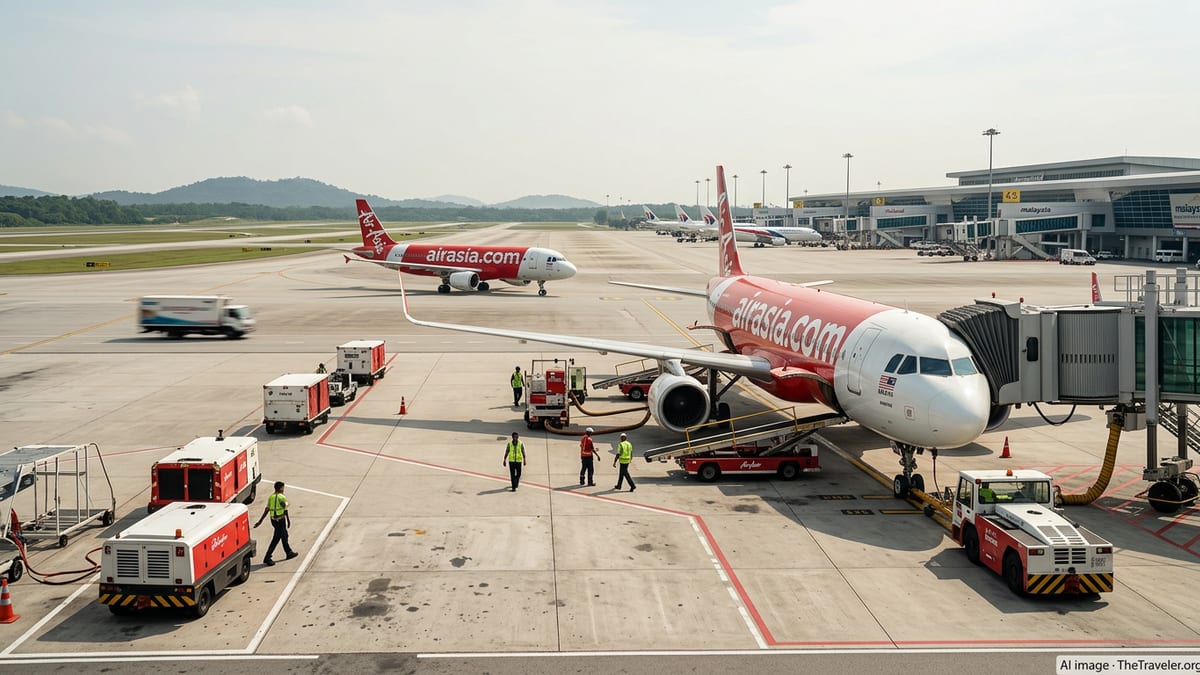
New ESG Scores Put AirAsia Among Global Sustainability Leaders
AirAsia’s parent entities in Malaysia and Thailand have reported their strongest environmental, social and governance performance to date, building on several years of steady improvement in external ratings. In the latest FTSE Russell ESG assessments released in late 2025 and early 2026, Capital A in Malaysia and Asia Aviation in Thailand, together with AirAsia X, now rank among the top five airlines globally on benchmarked ESG performance. This places the AirAsia brand in a rarefied peer group for sustainability within commercial aviation.
Capital A, which until January 2026 directly owned AirAsia’s short-haul airlines, has seen its ESG score climb to around 4.0 out of 5 in FTSE Russell’s methodology, up from the low 3-point range only a few years ago. AirAsia X, the medium and long-haul operator now responsible for the group’s aviation businesses across Malaysia, Thailand and the wider region, has also secured a high score in the upper 3-point band, crossing the threshold that defines global best practice within emerging markets.
In Thailand, Asia Aviation, the listed company behind Thai AirAsia, has recorded similarly strong momentum. Earlier assessments by the Stock Exchange of Thailand’s own ESG ratings placed Asia Aviation in the AA and AAA bands, with its ESG score moving from the high 60 percent range to over 80 percent. This strong local standing is now being translated into FTSE Russell’s globally benchmarked ratings as the Thai exchange shifts its ESG methodology, allowing AirAsia’s Thai operations to be compared directly with leading airlines worldwide.
For travelers, these scores are not abstract financial metrics. Independent ESG rankings increasingly shape which companies major funds are willing to back, and they create real pressure on airlines to cut emissions, improve labor standards and strengthen governance. When a budget carrier like AirAsia pushes into the top tier, it signals that sustainability is no longer the preserve of premium full-service airlines.
Malaysia and Thailand Operations Drive Measurable Carbon Reductions
The higher ESG rankings reflect concrete changes in how AirAsia runs its operations, particularly in its Malaysian and Thai hubs. In Thailand, Thai AirAsia has reported a sharp reduction in its carbon intensity ratio over recent years, supported by fleet renewal, more efficient route planning and higher load factors. These gains mean less fuel burned per passenger kilometer, a critical metric as regulators scrutinize aviation emissions.
In Malaysia, AirAsia has launched technology upgrades on the ground aimed at cutting thousands of tonnes of carbon dioxide from day-to-day operations. New hybrid and fully electric ground support equipment, including multi-function “combo” units that can replace several conventional diesel-powered vehicles on the tarmac, are being rolled out first at Kuala Lumpur International Airport Terminal 2 and then across other domestic hubs. The airline has indicated that these systems alone could reduce emissions by up to 20,000 tonnes of CO2 when fully deployed.
AirAsia has also been closely involved in shaping regional aviation climate policy. It chairs Malaysia’s National Task Force on CORSIA, the United Nations-backed carbon offsetting and reduction scheme for international aviation, and participates in technical working groups under the International Civil Aviation Organization. That role has helped align its operational strategy with evolving global climate rules, from monitoring and reporting emissions to preparing for future carbon pricing.
For passengers flying between Malaysia, Thailand and neighboring countries, these measures are largely invisible, but they are reshaping the environmental footprint of every ticket sold. Newer aircraft, more efficient turnarounds and better energy use on the ground mean that a typical low-cost regional flight today can be substantially less carbon intensive than it was just a few years ago.
Fleet Renewal and Operational Efficiency Underpin ESG Gains
Beneath the headline ESG scores sits a long-term shift in AirAsia’s fleet and operating model. The group is in the midst of phasing in Airbus A321neo aircraft, which offer lower fuel burn per seat than older A320 models and allow denser seating on high-demand routes from Kuala Lumpur and Bangkok. Several of these new aircraft have already entered service for AirAsia Malaysia and AirAsia Thailand, with more on order over the coming years.
Alongside new jets, AirAsia has focused on improving utilization of its existing fleet. As previously idle aircraft re-enter service following the pandemic slump, the airline has been able to rebuild capacity while maintaining high load factors, a combination that improves emissions per passenger. Higher daily flying hours and careful route planning across Malaysian and Thai networks have become central to its sustainability narrative.
On the ground, efficiency gains extend beyond carbon. AirAsia has invested in digital platforms for maintenance, crew scheduling and turnarounds, with the aim of cutting delays, optimizing fuel uplift and reducing unnecessary taxi time. In busy hubs such as Kuala Lumpur and Bangkok Don Mueang, even small reductions in ground time can translate into meaningful emissions savings across thousands of flights each quarter.
These operational changes also support the company’s financial recovery, an important point for ESG analysts. Stronger balance sheets and consistent profitability are seen as enablers of long-term decarbonization, because airlines must fund new aircraft, sustainable aviation fuel trials and infrastructure upgrades. By tying efficiency and climate progress directly to cost savings, AirAsia is trying to make sustainability a core business advantage rather than a compliance burden.
What AirAsia’s ESG Push Means for Travelers and the Region
For travelers across Southeast Asia, AirAsia’s rising ESG scores offer fresh context for choosing flights in a region where low fares have often trumped environmental concerns. While there is not yet a universal label for “greenest” airlines at the check-out stage, institutional investors and corporate travel managers are beginning to factor ESG performance into their decisions. That trend is likely to accelerate as governments in Malaysia, Thailand and beyond tighten disclosure rules and introduce more robust carbon accounting.
AirAsia’s leadership in sustainability among low-cost carriers could also influence airport strategies and tourism boards. As Kuala Lumpur and Bangkok compete for regional hub status, the ability to market routes as both affordable and aligned with climate goals may help differentiate them from rival gateways. Joint initiatives on sustainable aviation fuel, greener airport infrastructure and transit-friendly scheduling are increasingly on the agenda as airlines, regulators and tourism authorities look to manage growth without breaching national climate targets.
There are still challenges. Sustainable aviation fuel remains expensive and scarce in Southeast Asia, and fuller deployment of zero-emission ground vehicles will require substantial investment from airport operators as well as airlines. Yet by anchoring its ESG story in verifiable ratings and technical upgrades, AirAsia is signaling to travelers that progress is under way today, not parked in a distant 2050 pledge.
For now, passengers flying AirAsia in Malaysia and Thailand will see the most immediate evidence of change in newer cabins, more reliable operations and an expanding network that aims to balance growth with responsibility. As the airline’s ESG rankings rise, so too does the expectation that it will continue to push the region’s aviation sector toward a lower-carbon, more transparent future.