

More news on this day
AirAsia’s launch of daily flights between Kuala Lumpur and Batam is emerging as a pivotal development in Southeast Asia’s aviation landscape, tying together fast-growing tourism markets and deepening trade and business links across the Malaysia–Indonesia corridor.
Get the latest news straight to your inbox!
Daily Kuala Lumpur–Batam Flights Take Off
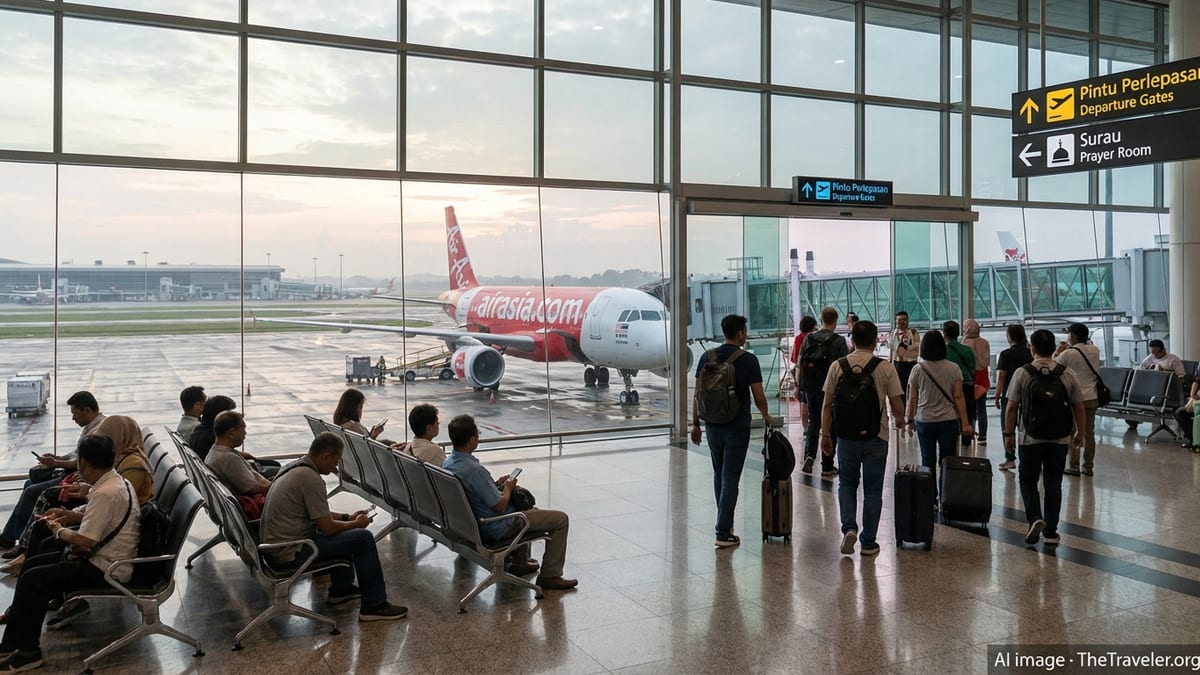
AirAsia Malaysia has introduced a new direct service between Kuala Lumpur and Batam, with daily flights scheduled from 13 March 2026 using Airbus A320 aircraft. Publicly available information shows that the carrier has filed one daily rotation on the route, positioning the service as a convenient new bridge between the Malaysian capital and one of Indonesia’s fastest-growing island economies.
The new connection adds a fresh international link for Batam’s Hang Nadim International Airport at a time when the island is investing heavily in tourism, logistics, and manufacturing. For Kuala Lumpur International Airport, it strengthens the hub’s role as a regional connector, funnelling passengers onward across AirAsia’s extensive short- and medium-haul network.
Reports indicate that introductory all-in one-way fares have been marketed from around RM199 from Kuala Lumpur and IDR899,000 from Batam, underscoring the low-cost carrier’s strategy of stimulating demand with competitive pricing. Travel industry coverage suggests that early interest has been strong among both leisure travellers and small and medium-sized enterprises seeking faster access to the Riau Islands.
Operationally, the daily schedule is expected to offer morning or midday departures designed to support same-day business trips while still appealing to weekend leisure travellers. Aviation data platforms show that the flight timing is coordinated with key arrival and departure banks at Kuala Lumpur, enabling smooth same-day connections to domestic Malaysian cities and other ASEAN capitals.
Boost for Trade, Investment, and Cross-Border Business
Batam has long been promoted by Indonesian authorities as a strategic industrial and logistics hub, positioned just south of Singapore and close to major shipping lanes. The new Kuala Lumpur–Batam link gives Malaysian firms and regional investors a more direct air bridge into Batam’s special economic zones, cutting travel time compared with itineraries that previously relied on transits through Singapore and sea crossings.
According to economic and aviation analyses, the island hosts a growing ecosystem of manufacturing, electronics, shipbuilding, and data center projects, alongside free trade and bonded logistics zones. Improved air connectivity from Kuala Lumpur is expected to make it easier for executives, technicians, and suppliers to move between plants, headquarters, and regional offices, especially for companies with footprints in both Malaysia and Indonesia.
Travel trade reporting also notes that the new route dovetails with national tourism and investment campaigns on both sides of the Malacca Strait. Malaysia’s forthcoming Visit Malaysia 2026 initiative and Indonesia’s ongoing efforts to attract higher-spending foreign visitors and investors are likely to benefit from more seamless, low-cost air links into secondary but rapidly developing destinations like Batam.
Frequent flyer and corporate travel programmes are expected to take advantage of the route by bundling Batam with other Indonesian gateways already served by AirAsia from Kuala Lumpur, such as Jakarta, Medan, Bali, and Banjarmasin. This creates multi-city itineraries that can support factory inspections, regional sales tours, and cross-border project work in a single trip.
Tourism Flows and Island-Hopping Demand Set to Climb
Beyond business travel, the Kuala Lumpur–Batam launch is poised to reshape short-haul leisure patterns in the region. Batam has built a reputation as a quick island escape for visitors from Singapore and Malaysia, known for its golf courses, waterfront resorts, spas, and growing lifestyle and retail offerings. The new direct service from Kuala Lumpur simplifies weekend getaways and short holidays, eliminating the need for ferry connections from Singapore.
Published travel coverage highlights Batam’s ambitions to diversify its tourism base beyond traditional day-trippers, targeting families, meetings and incentive groups, and regional golfers. AirAsia’s daily schedule supports these plans by providing predictable capacity and by connecting Batam into a broader network that can draw visitors from secondary Malaysian cities and other ASEAN markets via Kuala Lumpur.
For Malaysian travellers, the route adds another island destination to a portfolio that already includes popular Indonesian spots such as Bali, Lombok, Labuan Bajo, and Makassar. Industry observers suggest that competitive fares and convenient timings could encourage “island-hopping” itineraries, pairing Batam with beach destinations in Indonesia or coastal getaways in Malaysia on a single multi-stop ticket.
Inbound tourism from Batam to Malaysia is also expected to benefit. With Kuala Lumpur serving as a gateway to Penang, Langkawi, Kota Kinabalu, and other domestic destinations, residents of Batam gain easier access to short-break city and nature escapes, further deepening people-to-people ties across the Strait of Malacca.
AirAsia’s Expanding Malaysia–Indonesia Footprint
The Batam service arrives amid a broader expansion of AirAsia’s Malaysia–Indonesia network. Over the past two years, the airline has added or ramped up services from Kuala Lumpur to cities including Palembang, Semarang, Banjarmasin, and Pontianak, alongside existing links to Jakarta, Bali, Medan, Yogyakarta, and other major Indonesian gateways. Industry data now ranks the carrier among the most connected foreign airlines operating in Indonesia by number of routes and weekly frequencies.
Aviation schedule trackers indicate that, with the latest additions, AirAsia operates well over one hundred weekly frequencies between Malaysia and Indonesia, spanning both primary and secondary cities. The Kuala Lumpur–Batam route slots into this framework as another spoke that feeds traffic into the airline’s main Kuala Lumpur hub, supporting both point-to-point demand and connecting flows.
Analysts note that this expansion strategy aligns with broader regional trends in low-cost aviation, where carriers are increasingly focusing on dense short-haul corridors within ASEAN rather than long-haul growth. Routes like Kuala Lumpur–Batam are seen as high-potential segments that can be served efficiently by single-aisle aircraft while tapping into rising middle-class travel demand.
By strengthening its Malaysia–Indonesia footprint, AirAsia is also shoring up its competitive position against rival low-cost and full-service airlines that have been adding capacity on cross-border Southeast Asian routes. Market watchers suggest that sustained network growth, combined with aggressive pricing and high aircraft utilisation, will remain central to the carrier’s strategy in the coming years.
Implications for ASEAN Connectivity and Future Growth
The launch of daily Kuala Lumpur–Batam flights carries wider implications for ASEAN connectivity as the region looks to deepen economic integration and revive travel momentum. Each new short-haul route adds redundancy and resilience to the network, creating alternative paths for passengers and cargo when larger hubs are congested or when schedules are disrupted.
Regional aviation commentators point out that secondary-city links such as Kuala Lumpur–Batam can play an outsized role in knitting together cross-border supply chains and tourism clusters. In this case, Batam’s proximity to Singapore and Johor’s industrial zones, combined with Kuala Lumpur’s status as an aviation hub, effectively forms a triangle of economic activity connected by a mix of air, sea, and land routes.
The route may also serve as a testbed for further network development in the Riau Islands and surrounding regions. If demand proves robust, additional frequencies, seasonal capacity boosts, or new city pairs linking Batam to other Malaysian or regional hubs could follow, echoing previous patterns seen when AirAsia established new Indonesian routes from Kuala Lumpur.
With ASEAN governments continuing to promote intra-regional travel and considering deeper liberalisation of air services, industry observers expect more announcements of similar cross-border routes over the coming years. For now, the daily AirAsia link between Kuala Lumpur and Batam stands out as a timely addition that encapsulates the broader boom in ASEAN aviation, reflecting surging trade, tourism, and connectivity across the region.