

More news on this day
Indonesia AirAsia has inaugurated a new Surabaya–Makassar service, strengthening air links between Java and Sulawesi and opening smoother connections to key destinations across eastern Indonesia.
Get the latest news straight to your inbox!
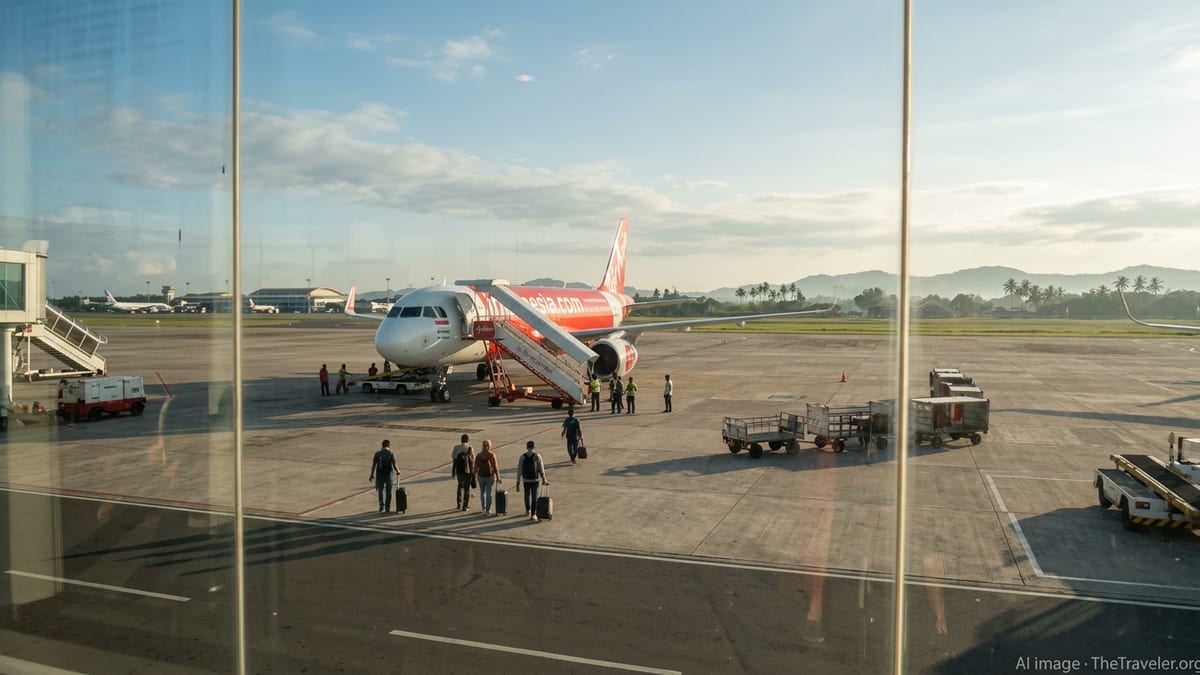
New Route Launch Anchors Makassar as Eastern Gateway
Indonesia AirAsia officially launched its Surabaya–Makassar route on March 7, 2026, positioning the new service as a backbone connection between Indonesia’s second-largest city and the principal aviation hub of eastern Indonesia. The inaugural flight departed from Juanda International Airport in Surabaya and arrived at Sultan Hasanuddin International Airport in Makassar to a ceremonial welcome that underscored the route’s strategic importance.
The Surabaya–Makassar sector forms part of a broader expansion in which Indonesia AirAsia is rolling out four new domestic services linking Makassar to Surabaya, Palu, Kendari and Luwuk, with multiple daily frequencies. Executives describe Makassar as a “virtual hub” for the carrier, designed to streamline passenger flows from Java into Sulawesi and onward to smaller cities that are increasingly popular for tourism and trade.
Industry observers note that while Surabaya and Makassar are already connected by several Indonesian airlines, the entry of Indonesia AirAsia adds a prominent low-cost competitor on the trunk route. The airline is banking on its brand recognition, digital booking ecosystem and aggressive fare strategy to capture price-sensitive travelers, especially ahead of the busy Ramadan and Eid travel period.
By reinforcing Makassar’s status as a transfer point, the new link is expected to complement ongoing infrastructure upgrades at Sultan Hasanuddin International Airport, which has been expanding terminal capacity and apron space to handle growing domestic and regional traffic.
Stronger Access to Palu, Kendari and Luwuk
A key selling point of the new service is improved one-stop connectivity from Surabaya to secondary cities in Sulawesi. With synchronized schedules, passengers traveling from Surabaya can connect in Makassar to Indonesia AirAsia flights bound for Palu in Central Sulawesi, Kendari in Southeast Sulawesi and Luwuk in Central Sulawesi, cutting total journey times compared with some existing multi-stop itineraries.
Airport officials in Makassar say the new pattern of flights effectively stitches together a mini-network that links eastern Indonesia’s coastal and inland communities with one of Java’s main commercial centers. Travelers who previously relied on limited direct services or mixed-carrier itineraries now have an additional through-journey option on a single low-cost airline, simplifying planning and, in many cases, lowering costs.
Tourism authorities highlight that Palu, Kendari and Luwuk are all gateways to lesser-known marine and nature attractions, from coral-rich dive sites and island-hopping routes to forested highlands and cultural villages. Easier access via Surabaya and Makassar is expected to support efforts to diversify visitor flows beyond Indonesia’s most crowded destinations and distribute tourism income more evenly across the archipelago.
Local tourism stakeholders are responding in kind, with hotels, tour operators and transport providers in Sulawesi signaling plans to align products and promotions with the new capacity. Industry groups say the presence of additional low-fare seats can help stimulate first-time travel among domestic tourists who may previously have viewed eastern destinations as expensive or difficult to reach.
Economic Momentum for Java–Sulawesi Trade Corridors
Beyond tourism, the Surabaya–Makassar route is regarded as a boost to freight and business travel between two of Indonesia’s most active regional economies. Surabaya, a manufacturing and logistics hub for eastern Java, and Makassar, a key distribution center for Sulawesi and surrounding islands, have long been linked by sea and air routes that underpin inter-island supply chains.
With more frequencies and competitive pricing, exporters and small businesses are expected to gain additional flexibility in moving high-value and time-sensitive goods by air, from fresh seafood and agricultural products to pharmaceuticals and electronic components. The airline has indicated it will leverage belly cargo capacity on the new flights to attract shippers seeking faster delivery options than traditional maritime routes.
Business groups in both cities have welcomed the new service, pointing to the timing ahead of peak religious holiday travel, when inter-island movement of people and goods reaches its annual high. Analysts say the added capacity could help moderate seasonal price spikes in some consumer goods by easing logistical bottlenecks between production centers in Java and consumer markets in Sulawesi and beyond.
The route also supports government ambitions to rebalance economic growth towards eastern Indonesia. By tightening the air bridge between Java’s industrial base and emerging urban centers in Sulawesi, policymakers hope to encourage investment in sectors such as fisheries processing, tourism infrastructure and small-scale manufacturing closer to source regions.
Competition and Capacity in a Crowded Domestic Market
The launch of Indonesia AirAsia’s Surabaya–Makassar service adds another player to a domestic corridor already served by several Indonesian carriers, including full-service and low-cost operators. While this intensifies competition on fares and schedule convenience, aviation analysts argue that Indonesia’s large population and geography still leave significant room for growth on core inter-island routes.
For travelers, the increased choice is likely to translate into more promotional fares, especially in the early months as Indonesia AirAsia seeks to build market share on the new route. The carrier has a track record of using digital campaigns and advance-purchase discounts to stimulate demand, particularly among younger passengers and those comfortable booking via mobile apps.
However, the added capacity also comes at a time when Indonesian airlines continue to balance fleet utilization, operating costs and currency pressures. Efficient deployment of aircraft on high-demand routes such as Surabaya–Makassar is seen as a way to spread fixed costs while diversifying away from heavily congested city pairs like Jakarta–Surabaya.
Some analysts caution that maintaining reliability and on-time performance will be critical as airlines jostle for position. Frequent domestic travelers in Indonesia have become increasingly sensitive to delays and schedule changes, especially where they rely on tight connections from hubs like Makassar to reach more remote destinations.
Supporting Eastern Indonesia’s Long-Term Connectivity Goals
The Surabaya–Makassar route arrives as Indonesia pursues a long-term strategy to improve connectivity across its vast archipelago through a mix of aviation, maritime and land-based projects. In Sulawesi, these include ongoing upgrades to Sultan Hasanuddin International Airport and incremental development of the Trans-Sulawesi transport corridor that links Makassar with other cities on the island.
Aviation is expected to remain the backbone of long-distance travel in eastern Indonesia, where islands and challenging terrain limit the reach of road and rail infrastructure. New and expanded routes such as Surabaya–Makassar are therefore closely watched by regional governments, which view reliable air links as essential to drawing investment and encouraging urbanization in smaller cities.
Indonesia AirAsia’s decision to position Makassar as a virtual hub within its domestic network mirrors a broader industry trend of building secondary hubs outside Jakarta and Bali. By channeling more passenger flows through Makassar, the airline is betting that demand for eastbound travel will continue to grow as living standards rise and travel becomes a more regular part of life for Indonesia’s expanding middle class.
As the new Surabaya–Makassar service settles into regular operation, attention will focus on how quickly passenger numbers ramp up, and whether the surrounding network of feeder routes to Palu, Kendari and Luwuk can sustain year-round loads. For now, the route’s launch marks a notable step in knitting together Indonesia’s eastern regions with its economic heartlands on Java.