

More news on this day
airBaltic is marking twenty years of scheduled flights between Riga and London, spotlighting its daily Airbus A220-300 services and the route’s widening role in tourism and business links between the Baltic region and the United Kingdom.
Get the latest news straight to your inbox!
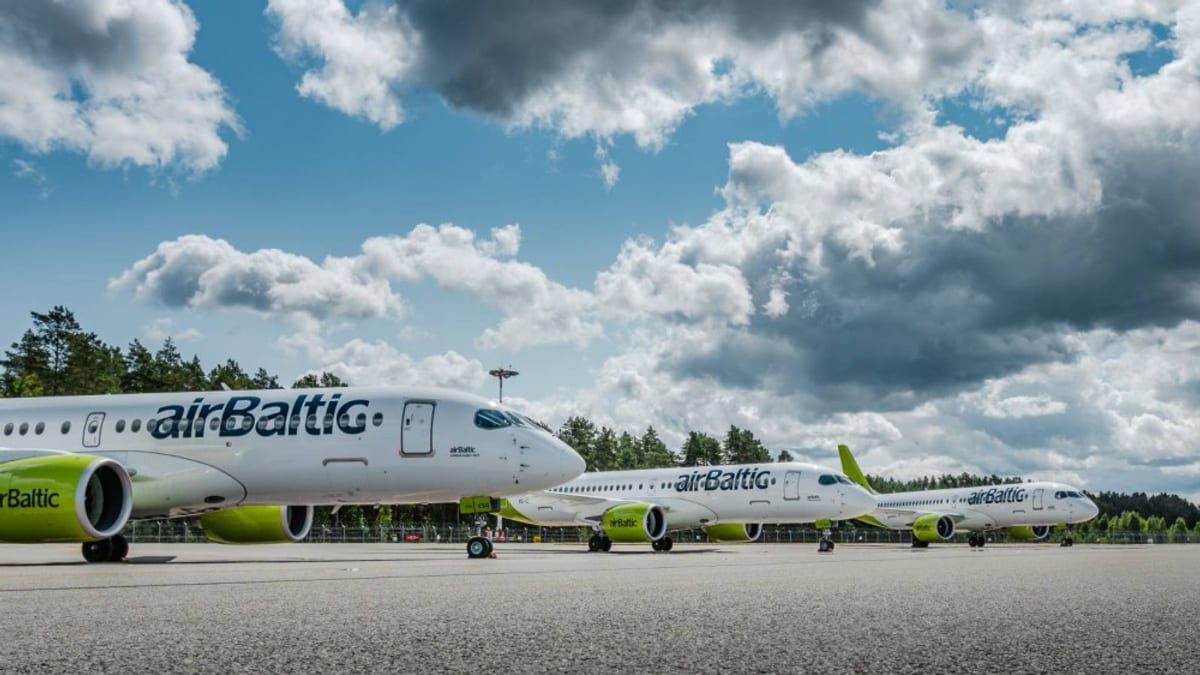
Image by Travel And Tour World
Two Decades Linking Latvia and the UK Capital
Publicly available schedules and historic timetables indicate that airBaltic has maintained regular Riga to London services since the mid-2000s, evolving from early operations at London Gatwick into a core Western European route. Over that period, the Latvian carrier has turned Riga into a connecting hub, funnelling passengers from the Baltics and neighbouring markets onto flights bound for the UK capital.
Industry coverage shows that, in the years after Latvia joined the European Union, Riga’s airport began to position itself as a regional gateway, with London among the first and most important high-frequency links. As air travel demand recovered after the global financial crisis and again after the pandemic, the Riga–London connection remained one of the airline’s most recognisable city pairs.
Today, airBaltic’s Riga–London services operate daily and, according to recent timetable information, are marketed as double-daily on some dates, reflecting sustained demand from both leisure and corporate travellers. The route has become an essential link for the Latvian diaspora in the UK, for British visitors heading to the Baltics, and for transfer traffic connecting onwards across Northern and Eastern Europe.
Daily A220-300 Operations Define a New Fleet Strategy
According to manufacturer data and airline statements, airBaltic became the launch operator of the Bombardier CS300, now known as the Airbus A220-300, in 2016 and has since transitioned to an all-A220-300 mainline fleet. That strategy is clearly visible on the Riga–London route, where the aircraft type has become the standard equipment.
Fleet updates from Airbus and airBaltic show that the carrier continues to grow its A220-300 order book, with additional aircraft scheduled for delivery in the coming years. The airline has publicly outlined ambitions to operate close to 100 A220-300s, cementing the type at the centre of its network, including key Western European destinations such as London.
The A220-300’s economics and cabin configuration, with around 145 to 150 seats in a single class and relatively low fuel burn, are regarded in industry analysis as well suited to medium-haul routes like Riga–London. For travellers, publicly available reviews highlight wider seats, larger windows and generous overhead bin space, attributes that support the carrier’s efforts to differentiate the experience on a route with strong competition from other European airlines.
Tourism and Business Travel Growth on the Riga–London Corridor
Tourism boards and airport traffic data for both Latvia and the United Kingdom indicate that the steady availability of direct air services has helped stimulate two-way visitor flows. London’s role as a global tourism and business centre, combined with Riga’s growing profile as a city-break and cultural destination, has supported year-round demand.
Reports from Latvian tourism organisations describe rising interest from UK travellers in short city visits, nature-focused trips to the Baltic coast and countryside, and multi-country itineraries taking in Riga alongside Tallinn and Vilnius. For many of these visitors, daily airBaltic flights from London provide the primary point of entry, especially for independent travellers and short-stay weekend trips.
At the same time, UK-bound traffic from Latvia and neighbouring states uses the Riga–London connection to access British universities, employment opportunities and business meetings. Publicly available information on airBaltic’s transfer model shows that a notable share of passengers originate in Estonia, Lithuania, Finland and other regional markets, using Riga as a one-stop gateway to London and beyond.
Partnerships and Connectivity Amplify Regional Impact
According to published coverage from the airline industry press, airBaltic has complemented its own operations on the Riga–London market through a codeshare arrangement with British Airways. Under this extended partnership, airBaltic places its code on British Airways flights between Riga and London Heathrow, while the UK carrier continues to codeshare on airBaltic’s services from Riga and Tallinn to London Gatwick.
These cooperation agreements broaden booking options and onward connectivity for passengers, effectively linking airBaltic’s Baltic and Nordic network with British Airways’ long-haul and European services. For the Riga–London market, this means additional one-stop links for travellers connecting through either Heathrow or Gatwick to destinations in North America, Africa and Asia.
Industry analysts note that such partnerships are increasingly important for mid-sized airlines seeking to extend their reach without operating long-haul fleets. For airBaltic, the Riga–London route benefits from this strategy by positioning the airline as both a point-to-point carrier and a feeder to larger global networks, enhancing its relevance to business and leisure travellers in the wider region.
Future Growth Prospects on a Mature European Route
Financial disclosures and strategic presentations from airBaltic point to continued focus on network development from Riga, with Western European capitals, including London, remaining central to its plans. The expansion of the A220-300 fleet and the airline’s emphasis on punctuality and product upgrades are framed as key tools for sustaining competitiveness on established routes.
Recent performance reports highlight passenger growth and record operational activity during the airline’s broader 30th anniversary period. Within that context, the Riga–London connection is positioned as a mature but still dynamic market, capable of absorbing additional frequencies at peak times and supporting seasonal capacity adjustments aligned with tourism demand.
Regional tourism stakeholders describe daily Riga–London flights as a strategic asset for the Baltic travel economy, underpinning hotel occupancy, conference traffic and cultural events. As airBaltic continues to refine its network and deepen partnerships, the twenty-year evolution of this route illustrates how a focused fleet strategy and hub model can shape the future of travel and tourism growth on a key European corridor.