

More news on this day
Latvian carrier airBaltic has introduced Skynet, a new in-flight digital platform built on SpaceX’s Starlink satellite connectivity, positioning the airline at the forefront of aviation’s shift toward always-on, commerce-driven travel experiences.
Get the latest news straight to your inbox!
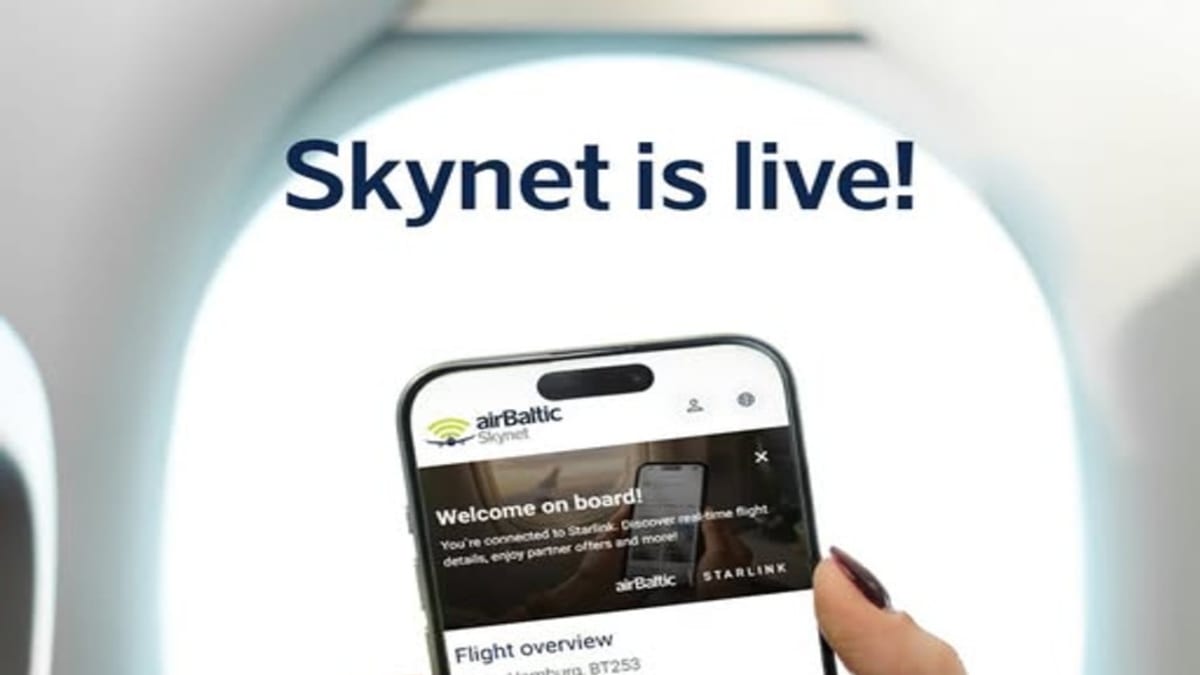
Image by Travel And Tour World
A New Layer on Top of Starlink Connectivity
Publicly available information indicates that airBaltic began rolling out high-speed Starlink internet across its Airbus A220-300 fleet in recent years, making complimentary, low-latency connectivity a core part of its product. The launch of Skynet in March 2026 builds directly on that infrastructure, turning bandwidth into a structured digital environment for passengers rather than a simple utility.
Skynet is presented as a portal accessible via Starlink during flight, acting as a central gateway to entertainment, information and services. Instead of passengers hopping between separate airline pages and third-party apps, the platform brings key functions into a single interface tailored to airBaltic’s network and customer base.
According to industry coverage, the airline has positioned itself as one of Europe’s early adopters of satellite-powered in-flight broadband, using the compact A220-300 as a testbed for digital-first services. Skynet extends that strategy, helping airBaltic package connectivity, content and commerce into a cohesive offer designed for increasingly connected travelers.
The combination of Starlink hardware and a proprietary front-end platform reflects a broader aviation trend, where carriers seek to control not just the pipes that deliver connectivity but also the digital storefront that passengers see once they log on.
Turning the Cabin into a Digital Marketplace
Skynet is described as more than an entertainment menu or Wi-Fi login screen. Early material about the platform indicates that it bundles real-time flight information, destination content, and tailored retail offers in a single, mobile-friendly layout, leveraging Starlink’s bandwidth to keep prices, inventory and promotions up to date while the aircraft is in the air.
For passengers, this means that browsing for duty-free items, ordering snacks, or exploring partner offers from hotels and retailers can become a continuous experience rather than a brief pass of the trolley. With live connectivity, pricing and availability can be adjusted dynamically, and targeted offers can be surfaced based on route, time of day or customer profile.
For airBaltic, Skynet effectively transforms the cabin into a digital marketplace that extends beyond traditional onboard sales. Ancillary revenue can shift toward curated partnerships, subscription-style content, and time-limited deals delivered to personal devices, all without adding bulk or weight to the cabin.
This approach mirrors developments at several global airlines that now view the in-flight portal as valuable digital real estate, comparable to a homepage or app start screen, and an increasingly important contributor to non-ticket income.
Enhancing the Passenger Experience in the Digital Age
Skynet’s launch reflects changing expectations among travelers, who increasingly treat aircraft cabins as extensions of their regular online life. With Starlink’s low-latency connections, passengers can stream, work collaboratively in the cloud and maintain social media activity at cruising altitude with fewer of the constraints that defined earlier in-flight Wi-Fi systems.
By organizing this connectivity through a branded platform, airBaltic is attempting to make the experience feel less like a technical add-on and more like part of the core product. Flight status updates, gate information, and destination guides can be refreshed in real time, while curated playlists, video content and interactive maps help bridge the gap between entertainment and practical travel planning.
Reports on passenger reactions to Starlink-equipped services across the industry suggest that reliable, fast internet is increasingly a differentiator when choosing routes, especially for business travelers and digital nomads. Skynet aims to capitalize on this by framing connectivity as a seamless part of the travel journey rather than a standalone purchase.
As more airlines move in the same direction, platforms like Skynet help set baseline expectations for what “connected flying” should look like in Europe: low-friction login, consistent speeds across the cabin, and a clear path from browsing to booking additional travel products.
Linking In-Flight Innovation to Tourism and Regional Growth
The launch of Skynet comes as the Baltic and wider European tourism sectors benefit from a rebound in international travel. Aviation analysts have noted that digital experiences now play a tangible role in destination choice, with younger travelers in particular valuing easy planning, sharing and remote working capabilities during trips.
By adding a structured digital layer to its flights, airBaltic is aligning its product with the needs of visitors who expect to research restaurants, book activities and share content in real time. The airline’s network, centered on Riga with links across Europe and beyond, positions Skynet as a potential bridge between travelers and local tourism ecosystems in Latvia and neighboring countries.
Travel industry observers point out that tourism marketing is steadily shifting onboard, where airlines can present destination campaigns, local experiences and partner offers to a receptive, captive audience. Skynet’s design, anchored in always-on connectivity, allows these messages to be personalized, interactive and updated throughout the flight.
For regional tourism boards and travel companies, this environment offers a new channel to reach international visitors before they land, potentially encouraging longer stays, higher spending and more even dispersal of tourism flows across seasons and locations.
A Glimpse of Aviation’s Connected Future
airBaltic’s Skynet initiative underscores how quickly in-flight connectivity is moving from a premium extra toward a foundational layer of airline strategy. With Starlink providing the underlying network and the airline curating the passenger-facing experience, the cabin is evolving into a digital hub that continues the habits of everyday online life at 10,000 meters.
As more carriers across regions commit to similar satellite-based systems, industry watchers expect a new wave of competition focused on platform quality, content depth and commercial partnerships rather than just raw connection speed. In that context, early movers such as airBaltic gain an opportunity to shape traveler expectations and experiment with new digital revenue streams.
For passengers, the rollout of Skynet signals a future in which boarding a flight on the airline will increasingly resemble logging into a personalized travel environment, where planning, purchasing and sharing take place continuously from departure to arrival.
In the broader travel and tourism landscape, initiatives like Skynet suggest that the next phase of growth will depend as much on invisible digital layers and satellite constellations as on new routes and aircraft orders, tying the fortunes of airlines and destinations ever more closely to the quality of their online experiences.