

More news on this day
The Airbus A321XLR is beginning to reshape transatlantic travel, as airlines on both sides of the Atlantic deploy the long-range single-aisle jet on new routes that promise more city pairs, varied cabin experiences and, in some cases, lower operating costs than traditional widebody aircraft.
A New Kind of Transatlantic Aircraft
For decades, a trip across the Atlantic typically meant boarding a twin-aisle widebody jet. The Airbus A321XLR, a stretched, long-range version of the A321neo family, is changing that equation by pairing widebody-like range with the economics of a single-aisle aircraft. With a published range of up to roughly 5,400 miles and flight times of up to 10 or 11 hours, the type is designed specifically for “long, thin” routes that could not reliably support larger aircraft year-round.
The aircraft’s arrival comes as airlines look to match capacity more closely to demand and reach secondary cities on both continents. Instead of funnelling passengers through a handful of megahubs, carriers can now contemplate nonstop flights between mid-sized markets, from US East Coast cities to regional centers in the UK, Spain, Italy, Brazil and beyond. For travelers, that can mean fewer connections, shorter overall journeys and access to destinations that previously required a change of planes.
At the same time, the rise of long-haul narrowbodies has raised new questions about comfort and passenger expectations. Airlines are responding with upgraded cabins, improved seating and more thoughtful inflight amenities, seeking to reassure customers that a single-aisle jet can deliver a credible long-haul experience.
American Airlines Leads the US Charge
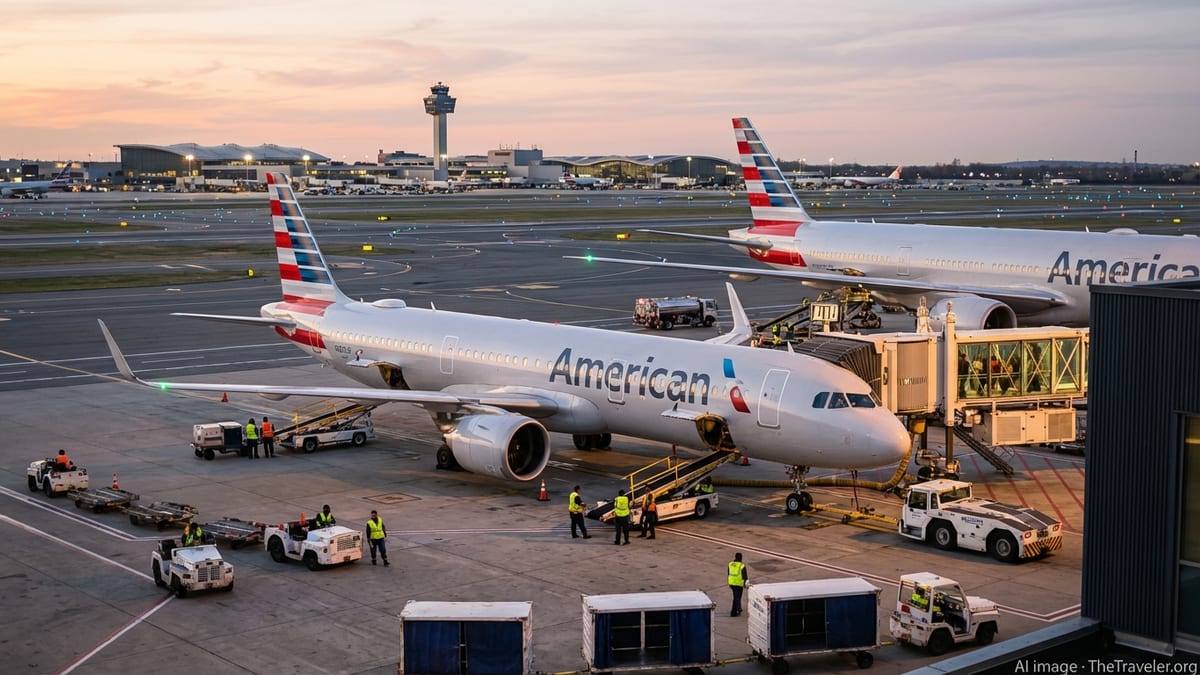
American Airlines is at the forefront of the A321XLR’s transatlantic rollout from the United States. After taking delivery of its first aircraft in mid-2025 and overcoming interior and certification delays, the airline has begun flying the type on domestic trunk routes and is preparing to send it across the Atlantic. Its inaugural scheduled transatlantic A321XLR service is set to operate between New York John F. Kennedy and Edinburgh, Scotland, beginning March 8, 2026, on a seasonal basis.
The route illustrates the aircraft’s core mission: pairing a major US gateway with a European city that can attract steady demand, but not necessarily the passenger volumes needed to justify a widebody all year. American plans to base additional A321XLR flying from its Northeast hubs in New York, Philadelphia and Charlotte, progressively assigning the type to thinner European markets where smaller premium cabins and strong cargo performance can make the economics work.
Domestically, American has already positioned the A321XLR as the successor to its aging A321T fleet on flagship transcontinental routes. The aircraft entered scheduled service on the New York to Los Angeles corridor in late 2025 and is being phased onto other high-value domestic routes such as Boston to Los Angeles and New York to San Francisco during 2026. By the end of that year, the airline expects to operate more than a dozen A321XLRs, using them interchangeably on transcontinental and transatlantic missions as seasons and demand patterns shift.
Cabin Experience: Narrow Fuselage, Widebody Ambitions
One of the most closely watched aspects for travelers is what it actually feels like to spend seven to nine hours on a narrowbody aircraft. Airbus has designed the A321XLR to support a range of cabin layouts, and airlines are taking divergent approaches. American has opted for a premium-heavy interior, fitted with 20 lie-flat business class suites at the front, followed by 12 premium economy seats and a main cabin of just over 120 seats, each with seatback entertainment, power and access to high-speed onboard connectivity.
In business class, American’s Flagship Suite offers direct aisle access, sliding privacy doors, wireless charging and enhanced personal storage, bringing a product more commonly associated with long-haul widebodies into a single-aisle fuselage. Premium economy features larger pitched recliners with winged headrests, calf and footrests, personal screens and power at every seat. In economy, American is emphasizing modern seat designs, individual entertainment screens with Bluetooth audio pairing and in-seat power, seeking to offset the psychological perception that a long flight on a narrowbody might feel more confined.
European operators are configuring the jet differently. Iberia, which plans to use the A321XLR on routes from Madrid to San Juan in Puerto Rico and to Brazilian cities such as Recife and Fortaleza from late 2025 into 2026, is equipping its version with 14 business class seats and 168 in economy. That reflects a more traditional European two-class layout, with a smaller premium cabin and high-density economy, but still pitched as a comfortable long-haul experience on point-to-point leisure routes.
Across operators, the cabin common denominators are new-generation seating, modern LED lighting, larger overhead bins and enhanced air filtration. While seat width is essentially fixed by the A320-family cross-section, airlines are using slimline designs, mood lighting and quieter engines to make the cabin feel more spacious and less fatiguing on overnight segments.
New Destinations and Nonstop Options
The A321XLR’s real impact becomes most visible on the route map. On the US side, American’s rollout is widening the list of nonstop transatlantic options from New York and, over time, from Philadelphia and Charlotte as well. Once Edinburgh service is established, industry observers expect the airline to experiment with secondary cities across northern and western Europe, including regional French, Spanish and Italian markets that have strong seasonal demand but historically depended on connections through London or other large hubs.
From Europe, Iberia is using the aircraft’s extra range to deepen Spain’s connectivity with the Americas. The carrier’s planned Madrid to San Juan service is set to become one of the longest A321XLR routes in the world, with a block time of a little over nine hours. New narrowbody-operated flights from Madrid to Recife and Fortaleza will open more direct links between Spain and northeastern Brazil, avoiding the need for passengers to backtrack through São Paulo or Rio de Janeiro when traveling to or from regional Brazilian cities.
Beyond the North Atlantic, Indian low-cost giant IndiGo has begun inducting the A321XLR with plans to open nonstop services from Mumbai and Delhi to Athens as early as January 2026. While these flights do not cross the Atlantic, they highlight how airlines elsewhere are using the same platform to stretch into longer markets that previously demanded widebodies or a connection through the Gulf. As more aircraft are delivered globally, analysts expect similar city pairs to emerge connecting North America with smaller European and possibly West African or northeastern Brazilian markets.
Comfort, Perception and Flight Time
Spending an entire night on a narrowbody jet remains a psychological hurdle for some passengers. Traditional long-haul marketing has leaned heavily on the idea that widebody aircraft inherently offer more space and comfort. In practice, however, seat width and legroom in economy are often similar between modern widebodies and newer narrowbodies. What does differ is the cabin geometry: a single aisle and a 3-3 layout can feel busier during boarding and meal services, and there is typically less space to stretch near the galleys.
To address this, airlines are focusing heavily on soft product and onboard amenities. Hot meals for all passengers, complimentary drinks on transatlantic legs, and curated menus are becoming standard on routes where the A321XLR is deployed. Continuous high-speed Wi-Fi, Bluetooth-enabled entertainment screens and plentiful power outlets are designed to keep passengers occupied and productive, mitigating the perception of a “smaller” aircraft.
Flight times also play a role. On many East Coast to Western Europe routes, block times fall in the six to eight hour range eastbound and slightly longer westbound, keeping journeys within what many travelers already experience on conventional widebodies. On longer segments such as Madrid to San Juan, the nine-hour duration pushes the upper end of what some passengers might prefer on a narrowbody, but airlines are betting that nonstop convenience and competitive fares will win over enough of the market.
Pricing, Loyalty and Environmental Considerations
The economics of the A321XLR are a major part of why it is expanding across the Atlantic. The aircraft’s fuel efficiency, lower trip costs and smaller crew requirements enable airlines to operate routes profitably with fewer passengers than a typical twin-aisle jet would require. That, in turn, can sustain thinner routes year-round instead of only during peak summer months when demand and yields are strongest.
For travelers, this can translate into more consistent nonstop options, especially outside the busiest travel season. Fares in economy are not guaranteed to be lower solely because a narrowbody is deployed, but the ability to right-size capacity gives airlines more flexibility to price competitively, particularly in markets facing low-cost or leisure-focused competition. Premium cabins, especially lie-flat business class on a narrowbody, are likely to remain priced at a premium, but may be offered on city pairs that historically lacked such products.
The A321XLR also fits into airlines’ public sustainability narratives. On a per-seat basis, fuel burn and associated emissions are typically lower than on older widebodies it may replace. For environmentally conscious travelers, choosing a carrier operating newer-generation aircraft can be one way to lessen the footprint of a necessary trip. Airlines are quick to highlight these efficiency gains, even as they acknowledge that long-haul flying remains emissions-intensive overall.
From a loyalty perspective, the proliferation of the A321XLR broadens the set of routes where frequent flyers can enjoy fully flat beds, premium economy seating and consistent onboard entertainment. As American, Iberia and others standardize products across fleets, elite travelers and points collectors may find it easier to predict the experience they will receive on specific transatlantic flights.
Operational Challenges and Growing Pains
The expansion of A321XLR service across the Atlantic has not been entirely smooth. Certification of the aircraft’s new long-range fuel tank system was more complex than initially anticipated, contributing to delivery delays. Airlines such as American also faced worldwide shortages of certified aircraft seats and other cabin components, which led early airframes to be stored in Europe awaiting completion even after formal handover from Airbus.
These delays had knock-on effects for planned route launches. Some inaugural transatlantic services, originally targeted for late 2025, slipped into 2026 as interior work and regulatory approvals dragged on. Travelers booked on early A321XLR-marketed flights have periodically seen last-minute aircraft substitutions, with airlines assigning conventional A321neos or widebodies instead, sometimes resulting in a different cabin layout than originally sold.
As more aircraft enter service and supply chains stabilize, industry analysts expect these disruptions to diminish. Airlines are gradually firming up their schedules for summer 2026 and beyond, building the A321XLR into networks with greater confidence. Travelers interested in trying the new jet on an Atlantic crossing are nonetheless advised to pay attention to schedule changes and equipment notes in the months leading up to departure, particularly during the type’s first full seasons in operation.
What Travelers Should Watch Next
Looking ahead, the A321XLR’s role on the Atlantic is likely to grow steadily rather than explosively. Deliveries to US and European carriers will ramp up through the latter half of the decade, opening the door to more nonstop routes between secondary cities. For US passengers, that could mean additional links from East Coast and Midwest hubs to regional European destinations, while European travelers may see more direct access to mid-sized American cities without a change at coastal gateways.
Airlines will continue to fine-tune cabin configurations and service concepts as they learn how travelers respond. If premium-heavy layouts prove successful on routes like New York to Edinburgh or Madrid to San Juan, more airlines may follow suit, investing in long-haul grade business and premium economy seats on single-aisle fleets. Conversely, strong leisure demand may push some operators toward higher-density configurations on sun and visiting-friends-and-relatives routes, with pricing tailored to more budget-conscious customers.
For now, the A321XLR represents a notable shift in how transatlantic flying is structured. Instead of relying solely on large widebodies shuttling between a small number of global hubs, airlines are experimenting with a more granular network built around smaller, efficient aircraft. For travelers, that is beginning to translate into more choice of departure points, destinations and onboard experiences when crossing the Atlantic, with the compact silhouette of the A321XLR increasingly visible on both sides of the ocean.