

More news on this day
From its sprawling base in Marignane on the outskirts of Marseille, Airbus Helicopters is steadily weaving a wider digital web around its global fleet, expanding a support network that increasingly relies on data, connectivity and advanced analytics to keep aircraft in the air and operators a step ahead of maintenance needs.
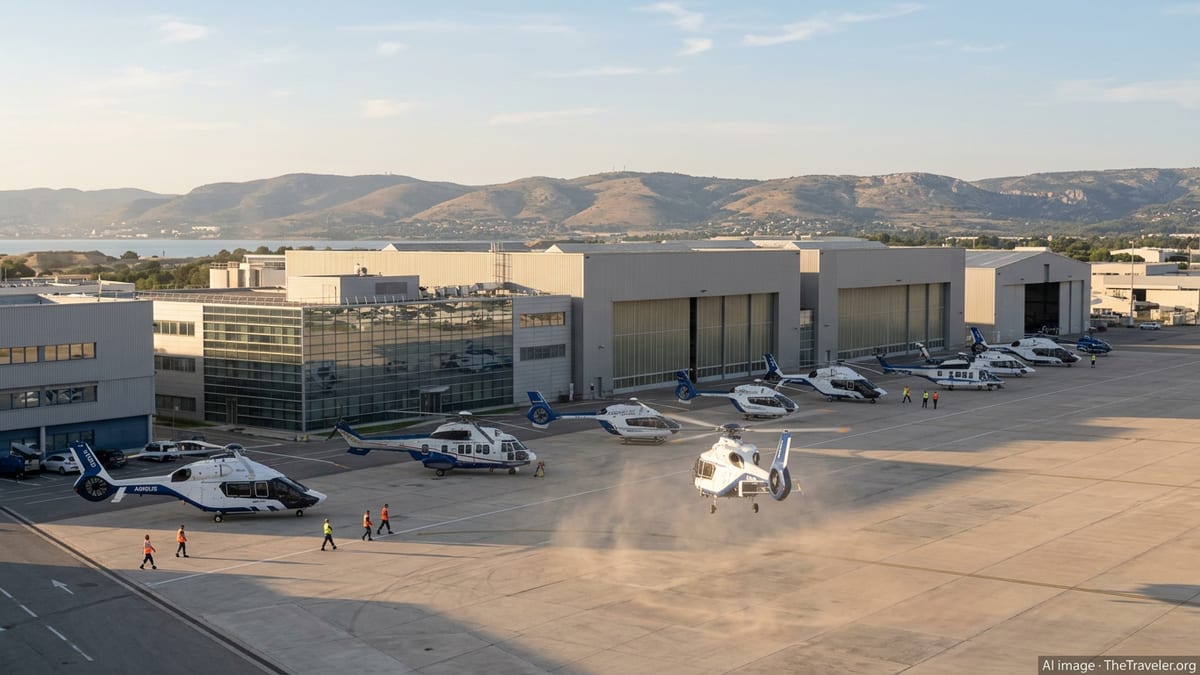
Marignane Site Takes Lead in Digital Support Push
As Airbus Helicopters deepens its focus on services and lifecycle support, the industrial campus at Marignane has emerged as a central hub for its digital transformation. The site, already one of France’s largest aerospace facilities, now concentrates a growing share of the company’s data, IT and operations-transformation teams tasked with modernising support for thousands of helicopters worldwide.
Recent recruitment drives in Marignane highlight how quickly that shift is accelerating. New roles dedicated to digital transformation deployment, extended enterprise solutions and embedded data systems are being added to operations departments, underscoring the company’s intent to streamline processes and connect production, engineering and in-service support through common digital platforms.
This internal focus directly feeds into what operators experience in the field. By tightening the digital backbone in Marignane, Airbus Helicopters aims to harmonise how data flows from factories and test benches into maintenance centres and customer bases, improving response times and making predictive tools more widely available to fleets of every size.
The effort is particularly significant for the global support and services business, which spans everything from spare parts logistics and technical assistance to long-term by-the-hour maintenance contracts. Digitalisation underpins most of these offerings, and Marignane’s expanding role suggests that a greater portion of that activity will be coordinated from southern France.
Data, Connectivity and the Extended Enterprise
Central to the evolving support network is a strategy Airbus Helicopters refers to as the extended enterprise, an ecosystem in which suppliers, partners and customers securely access information systems from their own locations. Solution architects and information management teams based in Marignane are designing platforms that allow external stakeholders to plug into Airbus tools while respecting strict cybersecurity and service-level requirements.
These initiatives support the wider Airbus ambition to provide seamless connectivity across aircraft types and mission profiles, linking helicopters, drones and emerging electric vertical-lift concepts with ground infrastructure and satellite networks. For helicopter operators, the practical impact is the ability to access maintenance records, configuration data, documentation and engineering updates through common digital gateways, wherever they are based.
The approach is also intended to break down traditional silos between manufacturing, engineering and in-service support. By giving suppliers better visibility on parts performance and stock levels, Airbus can refine inventory planning and shorten lead times for critical components, a long-standing concern for emergency services, military users and offshore operators working in demanding environments.
For customers, the extended enterprise concept translates into more transparent support relationships. Digital portals offer near real-time insight into fleet status and open more direct lines to technical specialists in Marignane, allowing issues to be diagnosed remotely and solutions proposed before aircraft are grounded.
Training the Next Generation of Digital Support Specialists
To sustain its digital ambitions, Airbus Helicopters is investing heavily in new talent in and around Marignane. A series of apprenticeship programmes launched for 2025 and 2026 emphasise areas such as aviation safety, artificial intelligence for embedded systems, supply chain optimisation and data-driven process improvement, all with direct relevance to global support activities.
Apprentices joining quality and aviation safety departments are expected to analyse in-service incidents and propose technical and operational improvements, feeding their findings into updated maintenance recommendations and support tools. These roles bridge the gap between operational feedback and digital knowledge bases accessible to customers worldwide.
Other positions focus on applying generative AI and data techniques to software development and verification for onboard systems. By making use of advanced analytics earlier in the design and validation chain, Airbus Helicopters aims to deliver more robust digital systems into service, which in turn eases the burden on support teams who rely on accurate health monitoring and diagnostic information.
Supply chain apprenticeships in Marignane’s logistics departments similarly link directly to the global support network. Their work on stock health, quality issues at goods reception and coordination between data and warehouse teams supports efforts to ensure the right parts are available at the right time, limiting aircraft downtime in far-flung locations.
Implications for Operators and Global Fleets
For operators, the consolidation of digital expertise in Marignane offers a preview of how helicopter support may look in the coming years. Aircraft will increasingly transmit operational and health data back to central systems, where analytics tools flag potential issues and trigger proactive interventions, from spare parts provisioning to tailored maintenance campaigns.
Smaller fleets, which may lack dedicated engineering departments, stand to benefit from these developments. With more of the heavy analytical work handled in Marignane and distributed through digital portals, operators can access insights that were previously reserved for large organisations, such as trend analyses, reliability reports and optimised inspection schedules.
The growing emphasis on digital support is also reshaping the relationship between Airbus Helicopters and its customers. Traditional, transactional interactions around spare parts and repairs are gradually giving way to longer-term partnerships built around data sharing and continuous improvement. The Marignane teams at the centre of this shift are increasingly involved in co-developing support solutions tailored to specific mission profiles and regulatory environments.
As digital platforms mature and more aircraft types are integrated, the company expects its global network of maintenance centres and customer support facilities to operate with a more unified set of tools and standards. That, in turn, could reduce variability in service quality across regions and contribute to higher levels of fleet availability for critical missions, from air medical transport to search and rescue.
Marignane’s Evolving Role in the Helicopter Ecosystem
The transformation underway in Marignane reflects a broader trend in aerospace, where the value of aircraft is increasingly measured over decades of service rather than at the point of sale. For Airbus Helicopters, building a sophisticated digital support network anchored in its French heartland is central to that long-term vision.
As new models such as lighter utility helicopters and updated variants enter the market, their success will depend as much on the quality of connected services and predictive maintenance as on raw performance figures. Digital teams in Marignane are already working to ensure that each new platform comes with an integrated suite of monitoring, documentation and remote-support capabilities from day one.
The site’s proximity to Marseille and the wider Provence region, with its universities, engineering schools and technology ecosystem, provides a deep talent pool for sustaining this evolution. Partnerships with academic and industrial actors in the area support research into new data, AI and connectivity applications that can ultimately be transferred into the global support portfolio.
While many elements of Airbus Helicopters’ support network are dispersed across continents, the expanding digital backbone in Marignane is quietly redefining how the company serves its customers. As more aircraft feed information into shared systems and more operators opt into collaborative support models, the small city on the edge of the Étang de Berre is cementing its place at the centre of a global rotorcraft ecosystem.