

More news on this day
Airbus is gearing up for a landmark 2026 Annual General Meeting in Amsterdam on 14 April, where shareholders will be asked to weigh in on key board appointments, mandate renewals and a proposed dividend that will signal how confidently the European aerospace giant is looking to the future.
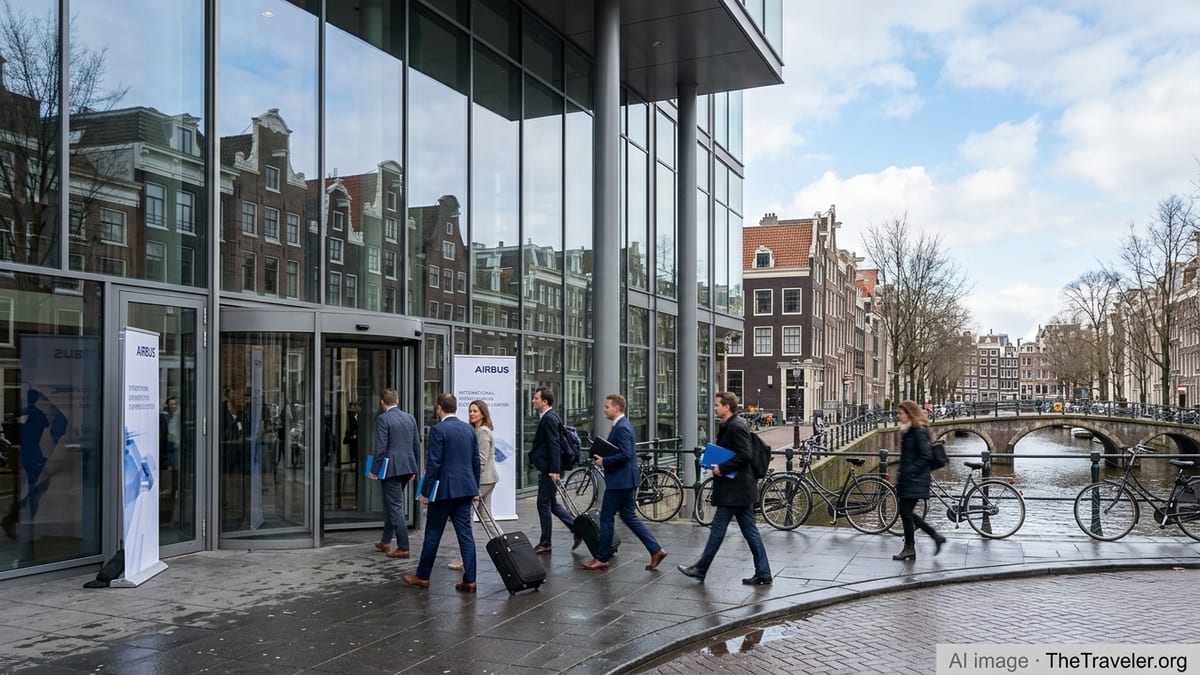
Amsterdam to Host High-Profile 2026 Shareholder Gathering
The 2026 AGM will once again bring Airbus investors to Amsterdam, which has become the regular stage for the group’s major governance and strategic announcements. The meeting is expected to draw strong interest from institutional shareholders, proxy advisers and industry observers as the company navigates heavy aircraft backlogs, supply chain challenges and intensifying competition in global aviation.
Holding the meeting in the Dutch capital underscores Airbus’s status as a European champion with a broad investor base, while also reflecting its Dutch legal structure. The AGM will offer one of the most important annual windows into how the board sees market conditions evolving through the second half of the decade, and how it intends to balance growth investment with returns to shareholders.
With airlines rebuilding capacity and ordering new-generation fleets, investors will be listening closely for management’s latest read on production rates, delivery targets and the health of key programmes. The outcome of the 2026 votes is likely to be viewed as a direct signal of market confidence in Airbus’s long-term strategy and leadership.
Board Appointments and Mandate Renewals in the Spotlight
A central focus of the 2026 AGM will be proposed appointments to the Airbus board and the renewal of mandates for existing directors. The board, which under Airbus’s governance framework can include up to 12 members, sits at the heart of strategic oversight, risk management and long-term industrial planning for the group.
Shareholders are expected to scrutinise how the proposed slate of directors reflects the company’s priorities, including deep aviation and technology expertise, financial and risk credentials, and international experience aligned with Airbus’s global footprint. Diversity of backgrounds and perspectives, which has been a growing theme in European corporate governance, will also be an important lens for many investors.
The renewals will be closely read as an indicator of continuity and stability at the top of the company. In recent years, investors have largely endorsed Airbus’s governance approach, but they have also increased expectations around board engagement with topics such as climate transition, supply chain resilience and digitalisation of operations. The 2026 meeting will test whether the proposed board composition is seen as fit for purpose for the challenges ahead.
Dividend Proposal Signals Confidence in Long-Term Outlook
The planned shareholder vote on the dividend will be another major marker of Airbus’s stance on capital allocation. While the precise payout proposal will be detailed in the formal AGM documentation, the company has made clear that shareholder approval of the distribution will be a core item on the 2026 agenda, linking financial performance to tangible cash returns.
For investors, the scale and structure of the dividend proposal will offer a direct read on how Airbus weighs investment needs in production ramp-ups and new technologies against the demand for predictable income. With the civil aviation market recovering and defence demand also in focus across Europe, many shareholders are hopeful that the company can sustain a progressive distribution while still funding its substantial order book and innovation pipeline.
The vote will follow several years in which Airbus has worked to restore and strengthen its dividend profile after the disruptions of the pandemic. A strong approval in Amsterdam in 2026 would reinforce the market’s perception of the group as a resilient cash generator, while any sign of investor pushback could trigger deeper debate over capital priorities.
Governance, Sustainability and Strategic Direction Under Review
Beyond the headline votes, the 2026 AGM is expected to feature detailed presentations and discussions on Airbus’s governance framework and long-term strategic direction. The company’s committees, including those responsible for audit, remuneration, nominations and sustainability, play a pivotal role in how risks and opportunities are managed, and their work has become a growing area of interest for engaged shareholders.
Climate strategy and the path to lower-emission aviation are likely to be prominent themes, with investors keen to hear how board oversight is being strengthened around sustainable fuels, next-generation aircraft technologies and lifecycle emissions. The AGM will also give insight into how the board is monitoring operational execution, from workforce planning to supplier performance and digital transformation across factories and support functions.
For many long-term holders, the meeting will be as much about the tone from the board as about the resolutions themselves. Clear communication on governance practices, risk appetite and strategic milestones will be seen as crucial in maintaining trust in a sector where multi-year programmes and large capital commitments are the norm.
Shareholder Engagement and Travel Industry Interest
The 2026 AGM will attract not only financial investors but also close attention from airlines, airports, tourism bodies and wider travel industry stakeholders. Aircraft orders and delivery schedules have direct implications for global capacity, route development and the pace at which more efficient fleets enter service, influencing everything from ticket pricing dynamics to environmental footprints of travel.
Amsterdam’s role as host city adds an additional travel dimension. The hub status of the Dutch capital, its connectivity across Europe and beyond, and its long association with aviation make it a fitting venue for a gathering that will help define Airbus’s trajectory to 2030 and beyond. For many attendees, the AGM will sit alongside meetings with airline partners, financiers and regulators, turning the city into a temporary nexus of aerospace and travel decision-making.
As the countdown to 14 April 2026 continues, investors and industry observers will be parsing every signal ahead of the meeting, from preliminary agenda updates to proxy advisory recommendations. The decisions taken in Amsterdam on board composition, mandate renewals and dividend approval will help shape how Airbus navigates one of the most pivotal phases in modern aviation, with consequences that will ripple across the global travel landscape.