

More news on this day
Air travel across Peru faced fresh turbulence this weekend as a wave of short-notice cancellations by LATAM, Sky Airline, United Airlines and other carriers disrupted nearly a dozen key domestic and international routes, snarling connections through Lima and impacting popular destinations including Cusco, Arequipa, Iquitos and Houston.
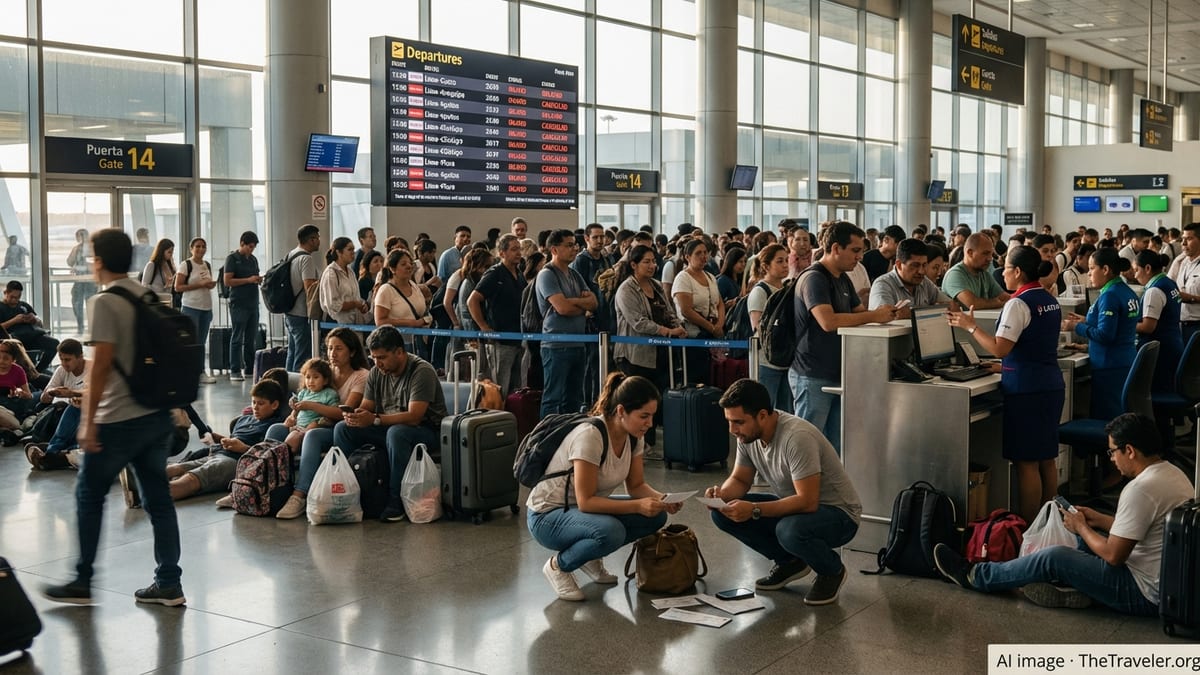
Multiple Airlines Pull Flights on Busy Peru Corridors
The latest disruptions emerged late Friday and into Saturday as airlines adjusted schedules on some of Peru’s highest-demand routes, including Lima to Cusco, Lima to Arequipa and regional links feeding connections to the United States. While some affected flights are being rebooked same day, others have been scrubbed outright, forcing travelers to overhaul itineraries or extend stays unexpectedly.
LATAM, the country’s dominant carrier, has led the reshuffle with a mix of cancellations and significant delays on core domestic services between Lima and Cusco and on connections onward to the United States. Flight status trackers on Saturday showed selected Cusco to Lima frequencies, including at least one LA22xx series departure, listed as cancelled, with others operating well behind schedule as aircraft and crews were rotated onto priority services.
Low-cost operator Sky Airline, which in recent years positioned itself as a budget alternative on Peru’s trunk routes, has also withdrawn several departures linking Lima with Cusco and other regional cities. While many Sky flights remain scheduled in the coming weeks, Saturday’s boards reflected a trimmed operation that has left seats scarce for stranded passengers attempting to move between the capital and the Andes at short notice.
Internationally, United Airlines and other North American carriers have reported isolated cancellations and rolling delays on Lima services, including flights feeding the crucial Lima–Houston corridor used by both business travelers and long-haul tourists connecting across the United States. The tightening of domestic capacity has compounded the impact, as travelers struggle to reach Lima in time to board remaining long-haul departures.
Lima Hub Under Strain as Connections Slip
Lima’s Jorge Chávez International Airport, Peru’s main aviation hub, has borne the brunt of the disruption. With domestic schedules already dense at peak hours, the removal of even a handful of key departures has created knock-on effects across the network. Passengers arriving late from secondary cities such as Iquitos or Arequipa are in many cases finding onward connections to Cusco or international gateways fully booked.
Travel data platforms on Saturday showed a pattern of delays rippling across LATAM’s Lima–Cusco shuttle, with some flights still operating but at reduced punctuality compared with earlier in the month. Other Lima routes, including to Arequipa, remained on the board yet were running with departure times pushed back as operations teams attempted to reset rotations and reassign aircraft after the cancellations.
The strain comes at a sensitive moment for Lima’s role as a regional hub. LATAM already confirmed in December that it will cancel six international routes from Lima at the end of March 2026 as a response to higher airport user charges, a decision that will shrink options for through-passengers linking North and South America. The latest bout of operational disruption, though triggered by short-term factors, underscores how quickly connectivity through the Peruvian capital can be squeezed.
For travelers, the practical consequence is an airport where rebooking desks and customer service lines are suddenly overwhelmed, even as many flights continue to operate. With a finite number of remaining seats to Peru’s interior, particularly on the prized Lima–Cusco corridor, some passengers are being offered rerouting via alternative cities or next-day departures that can upend carefully timed itineraries.
Tourism Hotspots Cusco, Arequipa and Iquitos Feel the Impact
The cancellations and schedule cuts are being felt most sharply in Peru’s tourism heartlands. Cusco, gateway to Machu Picchu and the Sacred Valley, relies heavily on frequent Lima shuttles operated by LATAM and Sky Airline to feed international visitors arriving from North America, Europe and elsewhere in South America. When multiple daily frequencies vanish or slide hours behind schedule, tour operators are forced into last-minute rearrangements of transfers, hotel nights and site visits.
Tourism businesses in Arequipa and Iquitos report a similar pattern. While mainline services from Lima to both cities were still scheduled on Saturday, capacity reductions and delays have narrowed the margin for error for travelers working with tight connections. Even a modest delay on a flight into Lima can now mean an unplanned overnight stay rather than a same-day onward trip to the Amazon or the southern highlands.
Domestic travelers are also being swept up in the disruption. Peruvians flying for work, medical appointments or family visits on routes such as Cusco–Lima–Houston are seeing itineraries unravel as a single cancelled domestic leg breaks the rest of the journey. With seats limited, many are scrambling for alternatives on competing carriers, or turning to ground transport where feasible between major cities.
Local tourism chambers warn that repeated episodes of cancellations and tight capacity risk eroding confidence among international visitors, many of whom build trips around fixed-entry dates to sites like Machu Picchu. Even when travelers eventually reach their destination, lost days at the start of a journey can mean fewer nights in hotels and reduced spending with local guides, restaurants and outfitters.
Airlines Cite Operational Pressures as Passengers Seek Relief
Airlines have not issued a single unifying explanation for the latest cluster of cancellations, but operational pressures ranging from aircraft availability and crew rotations to weather disruptions in certain regions are being cited across carriers. Industry observers note that tight fleet planning, especially among low-cost airlines operating at high daily utilization, can leave little room to absorb unexpected technical issues or air traffic control constraints.
United and other North American carriers operating into Lima continue to emphasize safety and regulatory compliance when cancelling or consolidating flights, while pointing affected passengers toward rebooking options on later departures. However, when domestic feeder flights within Peru are also being cut, even generous change fee waivers may not be enough to salvage complex itineraries.
Consumer advocates in Peru point to existing regulations that oblige airlines to provide meals, accommodation and ground transport in cases of cancellation or long delay, as well as compensation thresholds tied to the value of the affected journey segment. They stress that travelers should document communications with airlines and keep receipts for any out-of-pocket expenses incurred while stranded at airports or in unplanned overnight stays.
At the same time, travel insurers report a spike in inquiries from policyholders seeking clarity on what is covered when cancellations are attributed to operational reasons rather than extraordinary events. Many standard policies include trip interruption benefits, but coverage can vary widely depending on the specific terms and whether the disruption is linked to factors deemed under the airline’s control.
What Travelers Flying Through Peru Should Do Now
With schedules in flux, aviation analysts and travel planners are urging anyone holding imminent tickets through Peru to monitor flight status obsessively in the 24 hours before departure and to allow extra buffer time in Lima wherever possible. Same-day domestic connections into long-haul flights, particularly to hubs such as Houston, are currently considered higher risk than usual due to the reduced ability to rebook quickly onto later departures.
Passengers already in Peru are being advised to confirm not just their next leg, but also any critical downstream connections and nonrefundable arrangements such as hotel nights and tours. Where feasible, shifting to earlier flights in the day or even moving key domestic segments forward by one day can provide insurance against further unplanned cancellations or rolling delays.
Industry experts also recommend that travelers make full use of airline apps and digital channels, which often display schedule changes and rebooking options faster than airport departure boards. In some cases, customers can self-service changes onto available flights or request credit vouchers without joining long lines at service counters, preserving limited seats for those whose plans are most time-sensitive.
For now, Peru’s skies remain open and the majority of flights are still operating, but the sudden loss of nearly a dozen key frequencies has exposed how fragile connectivity can be in a network heavily reliant on a single hub and a small set of dominant carriers. Until operations stabilize, passengers heading to or through Lima, Cusco, Arequipa and Iquitos are likely to face a travel environment that demands more flexibility, more time and more contingency planning than they might have expected at the height of the high season.