

More news on this day
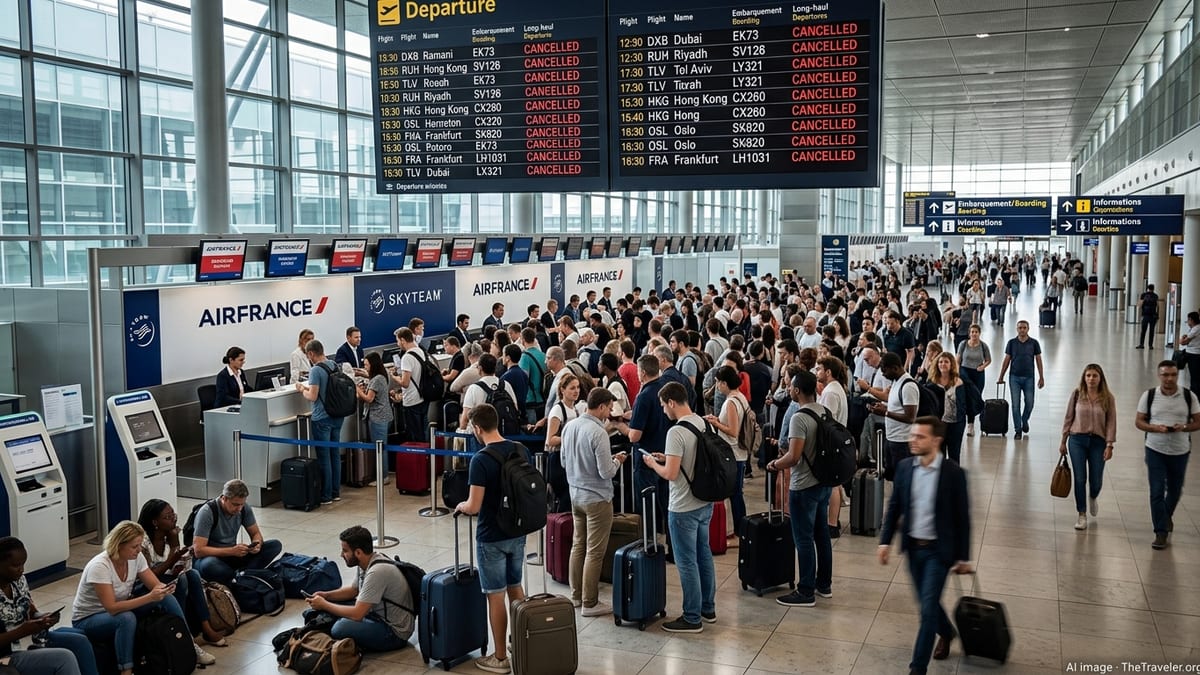
Travelers connecting through France face fresh disruption as a wave of cancellations by Air France, Gulf Air, Lufthansa and other carriers affects key routes to and from Europe, the Middle East and Asia, including Dubai, Paris, Riyadh, Tel Aviv, Hong Kong, Oslo and Frankfurt.
Get the latest news straight to your inbox!
Growing Fallout From the Middle East Conflict Reaches French Hubs
Published coverage of the rapidly evolving conflict involving Iran and several Gulf states shows that commercial aviation across the region remains under heavy strain, with closures and restrictions in multiple airspaces forcing airlines to reroute or ground services. France, as a major gateway between Europe and the Middle East, is now seeing a second wave of disruption as carriers adjust schedules at short notice.
Reports indicate that more than 20 flights connected to French airports have been cancelled over recent days, with a significant share involving routes that either originate in France or route via French hubs on their way to destinations such as Dubai, Riyadh, Tel Aviv and Hong Kong. Some cancellations involve aircraft that would normally overfly affected Middle Eastern airspace, while others reflect broader network cuts by airlines recalibrating capacity.
The result for passengers is a patchwork of disrupted itineraries. Those traveling between France and major hubs like Frankfurt, Oslo and Dubai are encountering short-notice cancellations and rebookings, while travelers heading onward to Asia and the Gulf are seeing missed connections, extended layovers and, in some cases, being forced to abandon multi-stop itineraries altogether.
Air France Trims Services on Key Long-Haul and Regional Links
Air France has already been operating with caution on routes touching the Middle East, and new adjustments are now filtering through its wider network. According to recent coverage of airline schedule changes, the carrier has extended or reintroduced suspensions on select services to Tel Aviv and reduced frequencies on certain flights that require overflight of volatile air corridors en route to the Gulf.
Knock-on effects are being felt on connecting traffic through Paris Charles de Gaulle, particularly for itineraries linking European cities such as Oslo and Frankfurt with long-haul destinations in the Gulf and Asia. Passengers booked on multi‑segment tickets via Paris are finding that even if their European leg operates as planned, the onward long‑haul flight may be cancelled or significantly delayed, forcing lengthy rebookings.
Travel advisories shared through airline and airport channels highlight that some domestic and short‑haul European flights within and from France are also being retimed to accommodate aircraft and crew reassignments. While the absolute number of cancellations in France remains small compared with the sweeping suspensions seen closer to the conflict zone, the concentration on high‑demand routes makes the impact particularly visible for long‑haul travelers.
Gulf Air and Regional Carriers Grapple With Airspace Closures
Gulf Air, whose network has been directly hit by the closure or restriction of Bahraini and neighboring airspaces, continues to operate a reduced and heavily modified schedule. Industry circulars and passenger advisories show that many flights that would typically connect Europe with Bahrain and onward to destinations such as Dubai and Riyadh have been cancelled or rerouted through alternative gateways.
For journeys involving France, this is producing complex disruptions. Tickets originally issued on Gulf Air or in combination with European partners for routes such as Paris to Dubai or Paris to Riyadh are now subject to repeated schedule changes. Some itineraries are being rebooked through substitute hubs like Dammam or other Gulf airports, while others are simply cancelled, with passengers encouraged to seek refunds or alternative carriers.
Travelers report that re-accommodation options are limited, as seat availability to and from the Gulf is tight across multiple airlines. With other regional carriers also trimming services or avoiding certain air corridors, what might previously have been a straightforward overnight connection from France to a Middle Eastern city can now involve extended detours via northern Europe or southern Mediterranean gateways.
Lufthansa and European Partners Cut Capacity on Tel Aviv and Gulf Routes
Lufthansa Group airlines, which feed substantial traffic into France through their joint European networks, have also moved to scale back flights across the wider Middle East. Recent public notices describe extended suspensions on services to Tel Aviv and adjustments to flights touching the Gulf, including Dubai and other regional hubs.
Although many of these cancellations originate from German and other non‑French airports, the interconnected nature of European scheduling means that travelers using France as either a starting point or a connecting waypoint are directly affected. Itineraries linking French cities with Frankfurt and then onward to Tel Aviv, Dubai or Riyadh have seen both long‑haul and feeder segments cancelled, sometimes with minimal warning.
These cuts add further strain to already busy intra‑European routes. Passengers attempting to rebook from France onto remaining Lufthansa or partner flights are competing for fewer seats, and travel forums highlight growing instances of travelers being routed through third countries or having to delay trips by several days to secure new itineraries.
What Travelers Through France Should Do Right Now
Given the fluid situation, publicly available information from airlines, airports and travel agents consistently stresses the need for passengers to verify the status of every flight segment, especially if their trip touches France and then continues to or from the Middle East or Asia. Same‑day and next‑day cancellations are being reported across multiple carriers, even in cases where tickets were rebooked only hours earlier.
Travel experts quoted in recent coverage recommend that travelers avoid assuming that a confirmed booking will necessarily operate as scheduled. Instead, they suggest monitoring airline apps and departure boards closely, arriving at the airport with ample time to navigate potential check‑in queues triggered by mass rebookings, and preparing for the possibility of overnight stays if connections through Paris, Frankfurt or other hubs fall apart.
Passengers whose flights between France and cities such as Dubai, Riyadh, Tel Aviv, Hong Kong, Oslo or Frankfurt are cancelled are generally being offered either re-routing at no extra charge, travel vouchers or refunds, depending on the airline’s policy and local regulations. In some instances, reports indicate that travelers are choosing to postpone nonessential trips entirely, waiting for greater clarity on airspace conditions and carrier schedules before planning new journeys.
As of late March 2026, the broader outlook remains uncertain. Airlines including Air France, Gulf Air and Lufthansa are signaling that schedules will continue to be under review while regional tensions and airspace restrictions persist. For anyone with upcoming travel linking France to the Middle East or beyond, the most reliable strategy remains a combination of flexibility, close monitoring of flight status and a willingness to reconsider routing at short notice.