

More news on this day
A fresh wave of flight cancellations by United Airlines, Viva Aerobus, Delta Air Lines, Frontier Airlines, and WestJet is disrupting travel across Mexico this week, as civil unrest and security concerns in western states spill over into air schedules and snarl popular routes linking Cancun, Mexico City, Guadalajara, Monterrey, Tijuana, and Puerto Vallarta with major U.S. hubs including Chicago, Las Vegas, Atlanta, Denver, Seattle, and Houston.
Get the latest news straight to your inbox!
Security Turmoil in Western Mexico Ripples Through the Skies
The latest cancellations come in the wake of cartel-related unrest and highway blockades in parts of western Mexico, particularly affecting the state of Jalisco and neighboring regions. Authorities have warned that overland access to some airports could be compromised at short notice, prompting airlines to reassess the safety and reliability of their operations.
While Mexico’s main gateways in Cancun and Mexico City have remained largely operational, airlines have been selectively suspending or trimming flights into and out of airports in Guadalajara and Puerto Vallarta, as well as adjusting schedules at Monterrey, Tijuana, and other secondary hubs. Operators are citing a combination of security risks in affected regions, unpredictable ground transportation, and crew positioning challenges.
Airline executives and government officials say the cancellations are precautionary but necessary, emphasizing that any emerging threats near airport access roads or along key approach corridors can quickly trigger diversions or last minute schedule changes. Passengers, however, are feeling the immediate impact in the form of scrapped flights, overnight delays, and complicated rebookings across the North American network.
United, Delta, Frontier and Viva Aerobus Pull Back on Key US Mexico Routes
United Airlines has been among the most heavily impacted carriers, as its dense network of routes from Chicago, Denver, Houston, and other U.S. hubs into Mexico intersects directly with the regions affected by the unrest. Recent days have seen United scrub additional services linking Guadalajara and Puerto Vallarta with Chicago and Houston, as well as adjust capacity on select Denver and Chicago departures into the Mexican Pacific.
Delta Air Lines, which connects Atlanta, Seattle, and other U.S. cities with Mexican leisure destinations, has also been forced to cancel and consolidate flights, particularly on services touching Puerto Vallarta and western Mexico. Frontier Airlines, with its low-cost footprint into Cancun, Mexico City, and secondary markets such as Monterrey and Guadalajara, has similarly trimmed a cluster of departures, inconveniencing budget travelers headed for spring getaways.
On the Mexican side, ultra low cost carrier Viva Aerobus has been cutting back its tightly scheduled operations between Guadalajara, Monterrey, Tijuana, and coastal destinations like Puerto Vallarta and Cancun. The airline, which relies heavily on fast turnarounds and high aircraft utilization, faces outsized disruption when an airport or city pair becomes operationally uncertain, resulting in rolling cancellations that cascade throughout its domestic and cross border network.
WestJet Customers Face Holiday Whiplash in Beach Destinations
Canadian leisure travelers have not been spared. WestJet, which operates a significant seasonal schedule into Mexico’s sun destinations, has canceled additional flights serving Cancun and Puerto Vallarta from Western Canada and key U.S. connection points. Several WestJet services bound for Puerto Vallarta have been diverted or scrubbed entirely in recent weeks, often after aircraft were already airborne or passengers had arrived at the airport.
The abrupt schedule changes have left many travelers scrambling for last minute hotel nights, alternative routings through Tijuana or Mexico City, or entirely new itineraries home via the United States. Travel agents report a spike in calls from WestJet passengers seeking reroutes through hubs such as Las Vegas, Denver, or Houston to circumvent affected airports along Mexico’s Pacific coast.
Industry analysts note that airlines with a strong focus on winter and spring leisure markets, like WestJet, are particularly exposed when a single resort destination suddenly becomes unstable. With aircraft and crews heavily committed to fixed holiday schedules, carriers have limited flexibility to redeploy capacity on short notice, meaning even a relatively small pocket of unrest can produce outsized disruption for beach bound travelers.
Passengers Confront Long Lines, Confusing Waivers, and Limited Alternatives
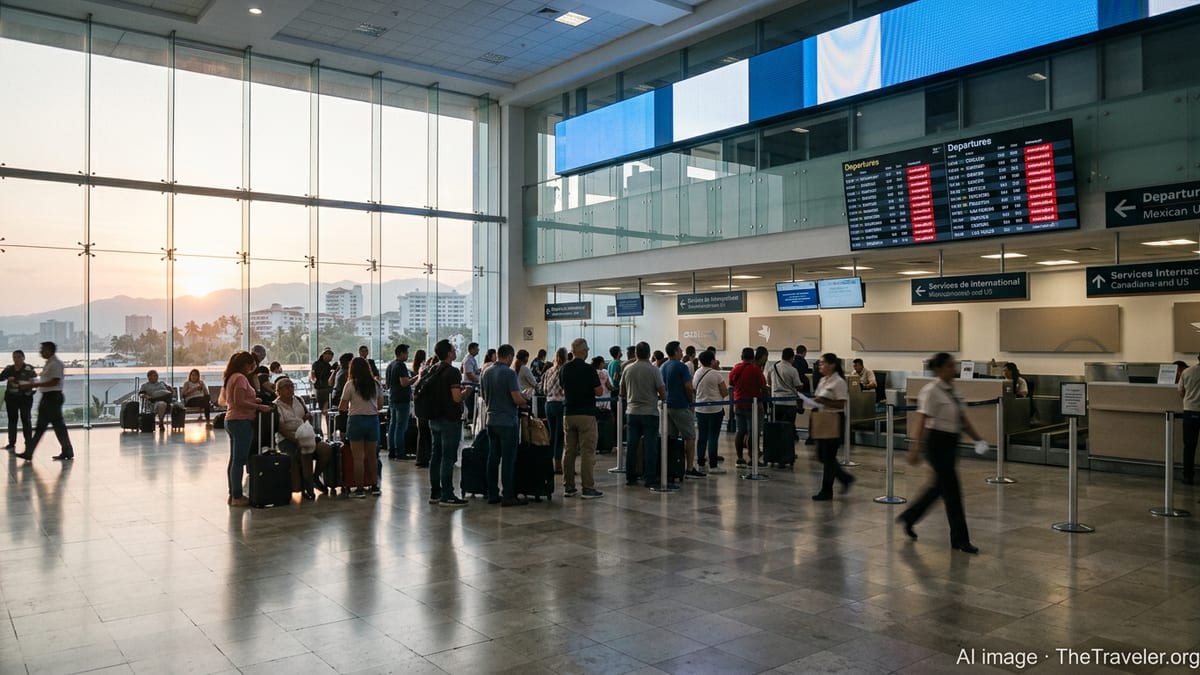
For passengers in both Mexico and the United States, the operational upheaval has translated into long lines at check in counters, overflowing customer service desks, and jammed airline call centers. Travelers in Cancun and Mexico City are largely seeing flights depart, but connections onward to Guadalajara, Puerto Vallarta, and some northern cities remain vulnerable to cancellation, often with only a few hours notice.
United, Delta, Frontier, Viva Aerobus, and WestJet have each rolled out or extended flexible travel waivers for affected Mexican destinations, allowing customers to rebook without change fees and, in some cases, without fare differences if they travel by specific dates. However, these policies vary widely by carrier and route, and many passengers report confusion when attempting to rebook complex itineraries involving multiple airlines or separate tickets.
The challenge is compounded by limited alternative options. With over a dozen flights scrubbed across key Mexico U.S. city pairs, remaining departures to Chicago, Las Vegas, Atlanta, Denver, Seattle, and Houston are quickly filling up, leaving stranded travelers to piece together multi stop routings via secondary airports or even long distance bus journeys to reach a functioning gateway. Some airports in western Mexico remain technically open, but with highway closures and security checkpoints making it difficult, and in some cases unsafe, for travelers to reach the terminals.
What Travelers Should Do If Their Mexico Flight Is Affected
Travel experts advise passengers booked on near term flights to or from western Mexico to monitor their reservations closely, ideally through airline apps and real time flight status tools, and to ensure their contact details are up to date so carriers can push notifications about schedule changes. Those holding tickets to Guadalajara, Puerto Vallarta, or other cities in Jalisco and neighboring states may want to proactively explore alternative routings via Cancun or Mexico City, which currently offer more stable operations.
Where travel waivers are in place, passengers are encouraged to take advantage of fee free changes as early as possible, as rebooking options diminish once a wave of cancellations ripples through the system. For travelers already in Mexico whose return flights have been canceled, consumer advocates suggest documenting out of pocket expenses for potential reimbursement and, when feasible, coordinating with travel insurers who may cover costs related to civil unrest or unforeseen cancellations.
Although airlines stress that safety remains the overriding priority and that most of Mexico’s air gateways continue to function normally, the knock on effects of the unrest highlight how quickly a localized security crisis can reverberate across international flight networks. With schedules into western Mexico likely to remain fluid in the coming days, travelers are being urged to remain flexible, build extra time into their plans, and be prepared for last minute changes on both sides of the border.