

More news on this day
With spring break crowds already packing U.S. airports, the chiefs of major airlines are pressing Congress to restore full funding for the Department of Homeland Security, warning that prolonged strain on unpaid airport security officers could deepen already mounting travel disruptions.
Get the latest news straight to your inbox!
Open Letter Raises Stakes in Washington Funding Standoff
Publicly available information shows that the leaders of several large U.S. carriers have issued an open appeal to lawmakers to resolve the partial shutdown affecting the Department of Homeland Security. The letter urges Congress to quickly approve funding that would ensure pay for tens of thousands of Transportation Security Administration officers and other aviation security personnel.
According to published coverage, the executives argue that aviation workers have once again become collateral damage in a broader political fight over immigration and border policy. They contend that allowing Homeland Security funding to lapse during one of the busiest travel periods of the year exposes the system to avoidable stress and heightens the risk of operational breakdowns at airports.
The appeal follows weeks of partisan stalemate on Capitol Hill, during which stopgap bills to cover Homeland Security have repeatedly stalled. As the shutdown drags on, the airline leaders are seeking to frame reliable aviation security staffing as an essential service that should be insulated from recurring political brinkmanship.
Industry groups representing airports, pilots, and travel companies have echoed similar concerns in recent weeks, warning that each additional day of uncertainty makes it harder to plan staffing and schedules for the peak spring and early summer travel seasons.
Unpaid TSA Officers and Lengthening Security Lines
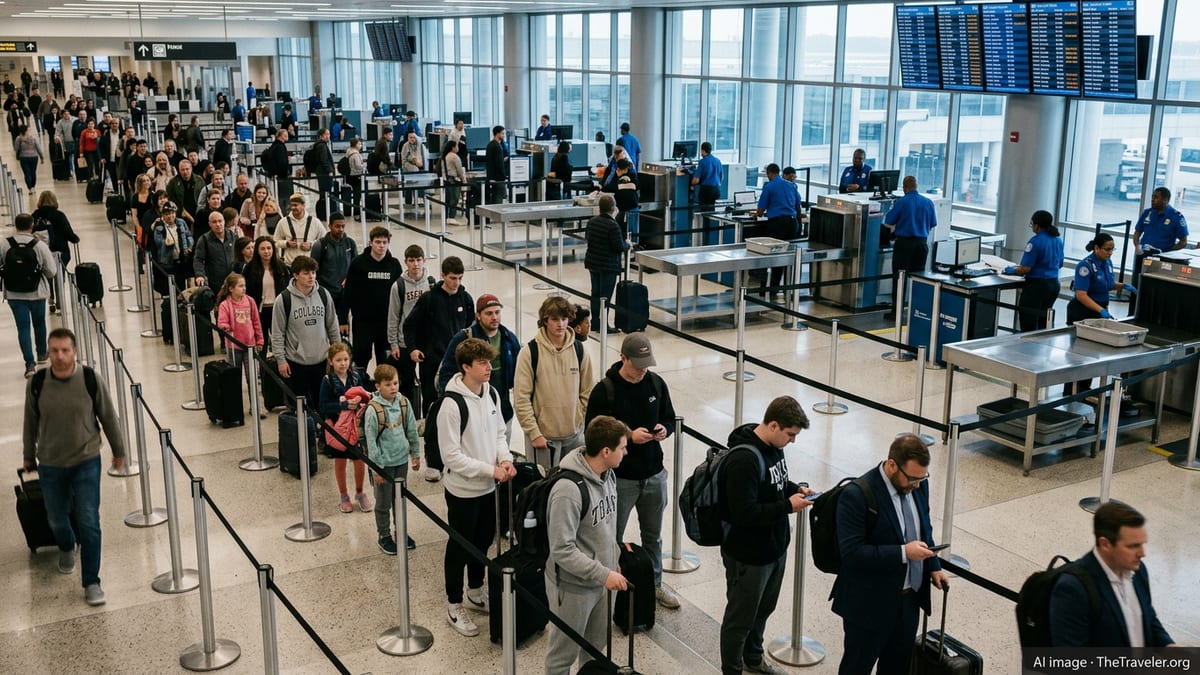
Reports indicate that roughly 50,000 TSA officers are currently working without pay, a situation that has already fueled higher absenteeism and resignations at some checkpoints. At several major hubs, travel outlets describe security lines stretching to three hours or more at peak times, with airport authorities advising passengers to arrive significantly earlier than usual.
News coverage from multiple outlets describes airports posting advisories that travelers should be prepared to arrive three to five hours before departure because of staffing shortages at security. In some cases, terminal checkpoints have been consolidated to keep lanes operating, concentrating crowds and amplifying wait times for both leisure and business travelers.
Past shutdowns have shown that missed paychecks can quickly erode morale among security officers. Analysts cited in recent reporting note that when funding lapses extend beyond a few weeks, more officers call out or leave for other work, which can trigger a feedback loop of longer waits, greater passenger frustration, and more pressure on those who remain on the job.
For travelers, the impact is increasingly tangible. Flight tracking data compiled in recent weeks point to thousands of daily delays within the U.S. system, as aircraft wait for passengers stuck in security queues or for available gate space at congested terminals.
Spring Break Travel Demand Collides With System Strain
The funding impasse is unfolding just as spring break traffic reaches its annual crest, amplifying what might otherwise have been a more contained operational issue. Travel industry analyses show that spring break demand is spread across several weeks from late February into April, leading to sustained pressure rather than a single sharp spike like Thanksgiving.
Airlines have scheduled aggressive spring capacity in response to strong leisure demand, particularly to sun destinations in Florida, the Mountain West, and international beach resorts. However, even well-planned airline operations can be undermined when security throughput slows, creating choke points on the ground that ripple through the national network.
Observers note that family groups, student travelers, and infrequent flyers are especially vulnerable to the current environment. Many build tight connections into their itineraries or underestimate how early they need to arrive, increasing the likelihood of missed flights when security delays stretch beyond published estimates.
Tourism advocates warn that prolonged disruptions at the outset of the spring season may have economic consequences that extend into summer, as travelers adjust future plans based on stressful experiences and perceived unpredictability at U.S. airports.
Economic and Safety Concerns for the Wider Aviation Ecosystem
Beyond the immediate headaches of long lines and missed departures, aviation and travel associations have repeatedly highlighted the broader economic stakes of a prolonged Homeland Security funding lapse. The air travel sector accounts for a significant share of U.S. economic output, and trade groups emphasize that predictable, well-resourced security operations are a foundational requirement for that activity.
Previous shutdowns have delayed critical hiring and training programs for air traffic controllers and technical staff, according to aviation safety organizations. Similar concerns are resurfacing now, with warnings that furloughs and uncertainty could slow modernization projects and stall efforts to address chronic staffing shortages in key operational roles.
Safety advocates quoted in recent analyses caution that extended financial stress on frontline security and aviation workers may also have intangible effects on performance and retention. While there is no indication that core safety standards have been relaxed, experts argue that the system is operating with thinner margins, leaving less room to absorb additional shocks such as severe weather or technical outages.
Business travel groups and meeting planners are monitoring the situation closely, noting that corporate travelers are more likely to shift to virtual events or alternative hubs if they perceive that particular airports are chronically unreliable. That, in turn, could influence local hospitality economies that depend heavily on conferences and trade shows.
What Travelers Can Expect in the Weeks Ahead
With no immediate resolution guaranteed, published guidance from travel and aviation organizations suggests that passengers should prepare for continued disruptions over the coming weeks. Many airports are advising travelers to arrive earlier than standard recommendations, particularly at large hubs and during peak morning and evening banks.
Airlines are attempting to adapt by adjusting schedules, waiving some change fees in select cases, and increasing communication about expected wait times. However, reports indicate that carriers have limited ability to offset security staffing constraints that lie outside their direct control, especially when those constraints are tied to federal budget politics.
Travel experts point out that the situation can vary widely by airport. Some smaller or less congested facilities have reported relatively normal operations, while others handling heavy spring break traffic are facing acute strain. Passengers are being encouraged by consumer advocates to monitor airport and airline updates closely on the day of travel and to build extra buffer time into connections where possible.
For now, the airline CEOs’ appeal places additional public pressure on Congress to prioritize Homeland Security funding and stabilize the aviation workforce before the disruptions of early spring harden into a prolonged period of unreliable travel conditions.