

More news on this day
Thousands of travellers faced mounting disruption on Monday as severe weather and mounting operational problems triggered 532 delayed and 52 cancelled flights linked to Sydney, Melbourne and Brisbane, rippling across routes to the United States, Japan, New Zealand, Thailand and other key long haul markets.
Major Australian Hubs Buckle Under Strain
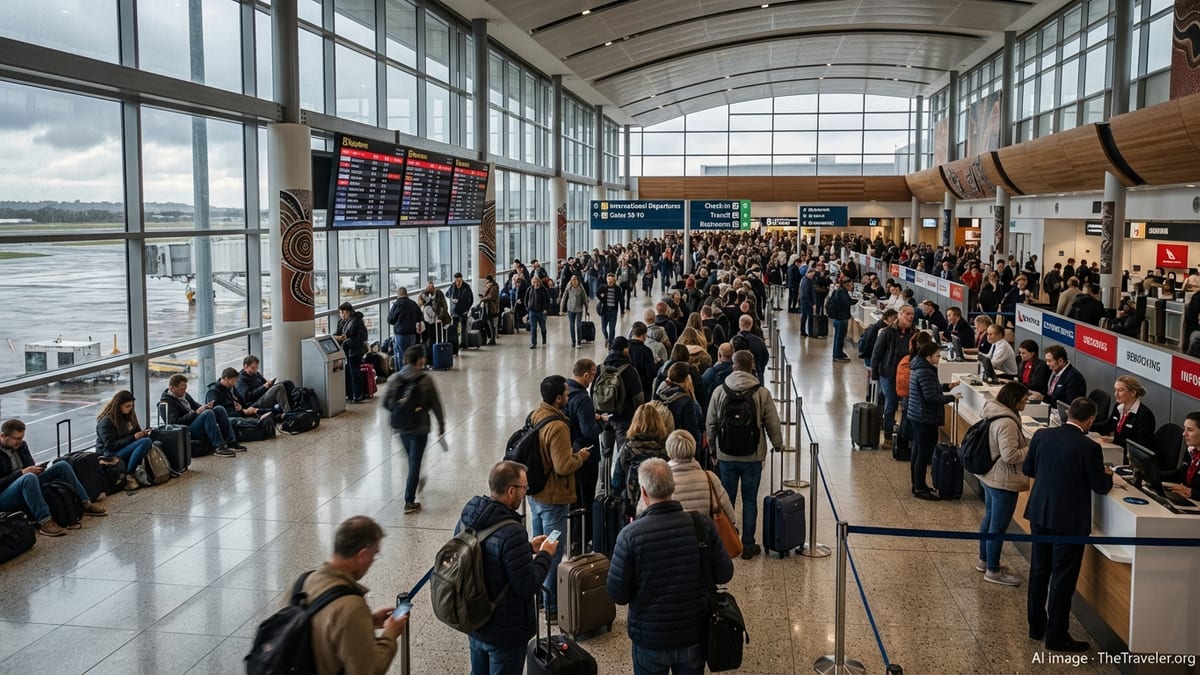
Passengers arriving at Sydney, Melbourne and Brisbane airports on February 23 encountered long queues, crowded departure halls and rolling delay announcements as airlines struggled to keep services running. Qantas, Air New Zealand, Emirates and several other international and regional carriers reported severe schedule disruption, with domestic and overseas services banked up from early morning.
While some short haul flights managed to depart within an hour of schedule, others were held on the ground for much longer or pulled from departure boards entirely. Airport staff said the pattern was highly uneven, with certain banks of flights heavily affected while others operated relatively close to timetable, contributing to confusion among passengers trying to understand the scale of the disruption.
Across the three airports, disruption figures compiled by aviation data providers and industry sources pointed to at least 532 delayed flights and 52 outright cancellations linked to the day’s operations. Those totals included a mix of domestic and international services and did not capture the further knock on delays later in the day as aircraft and crews remained out of position.
Inside the terminals, departure lounges quickly filled as travellers who had cleared security found themselves waiting for updated departure times. At Sydney, staff moved portable barriers to manage crowds around busy gates, while at Melbourne and Brisbane, additional seating and floor space near power outlets became improvised waiting areas for travellers trying to recharge devices and rebook connections.
Weather Systems Trigger Global Ripple Effects
Meteorologists said a convergence of adverse weather systems was a key driver of the disruption, aligning with a broader pattern of flight delays seen across several regions in recent days. Heavy thunderstorms and low cloud around Australia’s eastern seaboard periodically slowed arrivals and departures, forcing air traffic control to increase spacing between aircraft and temporarily halt runway movements at times.
At the same time, a powerful winter storm sweeping across parts of North America led to cancellations and schedule changes on routes linking Australia with major United States gateways. Long haul services involving Los Angeles and other West Coast connections were among those that saw altered timings or equipment changes as carriers restructured global networks to cope with the conditions.
In Asia, weather complications and air traffic flow restrictions around Tokyo contributed to additional knock on effects, affecting flights that either originated in or were due to feed into Australian services. Routes to and from Japan, including those with onward connections to North America and Europe, experienced a mix of delays and missed connections that reverberated through the day.
Closer to Australia, unsettled conditions over parts of the South Pacific and Southeast Asia also hampered operations. Flights to Auckland and other New Zealand centres, as well as popular leisure destinations in Thailand, encountered a combination of weather related holding patterns and slot restrictions that compounded the congestion already building at Australian hubs.
Airlines Struggle With Operational and Staffing Challenges
While weather was the initial trigger for many of the disruptions, airline managers and airport officials acknowledged that underlying operational challenges made it significantly harder to recover normal schedules. Several carriers, including Qantas and Air New Zealand, have been operating with relatively tight crew availability, meaning that even minor delays can quickly translate into rostering headaches and duty time limitations.
Maintenance and aircraft allocation added another layer of complexity. Industry analysts noted that when aircraft are held on the ground for extended periods due to storms or air traffic caps, routine maintenance windows can be thrown off balance. This can force airlines to reshuffle aircraft at short notice, sometimes resulting in last minute substitutions or cancellations when suitable aircraft are not available.
Ground handling capacity also came under pressure as the day wore on. At Sydney and Melbourne, baggage belts and ramp operations reached peak load, particularly when clusters of delayed flights attempted to depart within a short window once conditions improved. That created bottlenecks in refuelling, catering and baggage loading, occasionally pushing already delayed departures even further back.
Customer service desks for Qantas, Air New Zealand, Emirates and other affected carriers saw long lines as passengers sought rebookings or accommodation after missed connections. Staff were tasked with juggling limited seat availability on later services while also assisting travellers who had separate onward tickets on partner and non partner airlines, further complicating the recovery effort.
Long Haul Routes to Los Angeles, Tokyo and Auckland Hit Hard
Among the most visible impacts for international travellers were disruptions on high profile long haul routes linking Australia with Los Angeles, Tokyo and Auckland. These corridors serve as critical gateways for both leisure and business passengers, and any sustained interruption can quickly ripple through multiple markets.
On services to and from Los Angeles, airlines contended with both the downstream effects of the North American winter storm and the constraints at Australian departure points. Some flights operated with significant delays, while others were rescheduled or combined, leaving passengers with extended layovers or unexpected overnight stays in transit cities.
Tokyo bound flights were likewise affected by a combination of local congestion and wider regional weather impacts. Travellers connecting through Japanese hubs reported missed onward flights and rebookings that stretched itineraries by many hours, particularly on journeys that involved additional connections to North America or Europe.
Auckland and other New Zealand gateways experienced a concurrent wave of delays and cancellations that compounded pressures on airlines operating trans Tasman routes. With aircraft and crews shared between Australian domestic and international networks, any disruption in one area quickly reduced the flexibility available to smooth out problems in another, leaving many passengers facing longer waits for alternative departures.
Passenger Frustration Grows Amid Limited Communication
For travellers caught up in the disruption, long waits and shifting information were among the most common complaints. Many passengers reported receiving generic text messages or app notifications about delays and cancellations with little detail on likely departure times or rebooking options, especially in the early stages of the day’s chaos.
Inside the terminals, public address announcements struggled to keep pace with rapidly changing gate allocations and departure estimates. At times, screens showed multiple revisions for the same flight within short intervals, leaving travellers unsure whether to remain at the gate, seek assistance at service desks or attempt to rearrange their journeys through airline apps.
Families travelling with children and elderly passengers were particularly affected as limited seating and crowded facilities made long waits uncomfortable. In some cases, community groups and airport volunteers assisted with distributing water and offering basic guidance, but many travellers said they felt largely left to navigate the situation on their own.
Consumer advocates noted that the disruption highlighted the ongoing gap between passenger expectations and what airlines consistently deliver during major operational events. They argued that clearer, more proactive communication, along with standardised support such as meal vouchers and accommodation in cases of extended delays, would significantly reduce frustration and uncertainty during such episodes.
Regulatory Scrutiny and Calls for Stronger Passenger Protections
The latest wave of delays and cancellations is likely to renew scrutiny of airline performance and passenger rights in Australia and across the wider region. Aviation regulators and transport ministries have been examining how best to balance operational flexibility for airlines with clearer obligations to inform and assist passengers when flights are disrupted.
Policy discussions in recent months have included proposals for more explicit rules on when passengers should receive refunds, accommodation or other forms of compensation in the event of significant delays and cancellations. Advocates point to established models in regions such as the United States and European Union, where compensation frameworks have been used as a benchmark in debates over reforms.
Industry bodies representing airlines have cautioned against overly rigid regimes, arguing that carriers already face substantial operational and financial pressures, particularly when disruptions are driven by severe weather or air traffic control decisions outside their direct control. They have urged policymakers to focus on improving coordination and infrastructure resilience rather than imposing strict financial penalties.
Nonetheless, travel consumer groups say the experience of thousands of passengers stranded or heavily delayed across Sydney, Melbourne, Brisbane and onward destinations shows that clearer guarantees are needed. They argue that standardised minimum support measures, consistent communication protocols and transparent data on cancellation and delay rates would help restore confidence for travellers planning complex international itineraries.
Advice for Travellers Navigating Ongoing Disruptions
With airlines and airports still working through the backlog created by the latest disruptions, travel advisors urged passengers with upcoming itineraries involving Sydney, Melbourne or Brisbane to build additional flexibility into their plans. That includes allowing longer connection times where possible and avoiding tight back to back schedules, particularly when travel spans multiple regions prone to weather volatility at this time of year.
Experts also recommended that travellers make full use of airline apps and direct notification tools, which can sometimes reflect schedule changes more quickly than airport display boards. Keeping contact details updated in bookings and enabling alerts can improve the chances of receiving timely information about revised departure times or alternative routing options.
Those with critical time sensitive travel, such as business commitments or family events, were advised to consider earlier departure dates or backup routing where practical. Travel insurance that explicitly covers delays and missed connections due to weather and operational issues can also provide some financial protection, although the level of coverage and conditions vary widely between policies.
For passengers already on the move, airport staff emphasised the importance of staying close to departure gates once a flight enters final boarding processes, even if the departure time has been revised multiple times. In a rapidly shifting operational environment, short windows to board can open with little warning when aircraft, crews and air traffic slots all align, and missing that moment can mean an even longer wait for the next available seat.