

More news on this day
Six flight cancellations and a wave of rolling delays involving Delta Air Lines, Spirit Airlines, United Airlines and American Airlines disrupted operations at Palm Beach International Airport on Sunday, stranding passengers bound for major hubs including Atlanta, Newark, Boston, Cleveland and Washington and complicating onward travel across the United States.
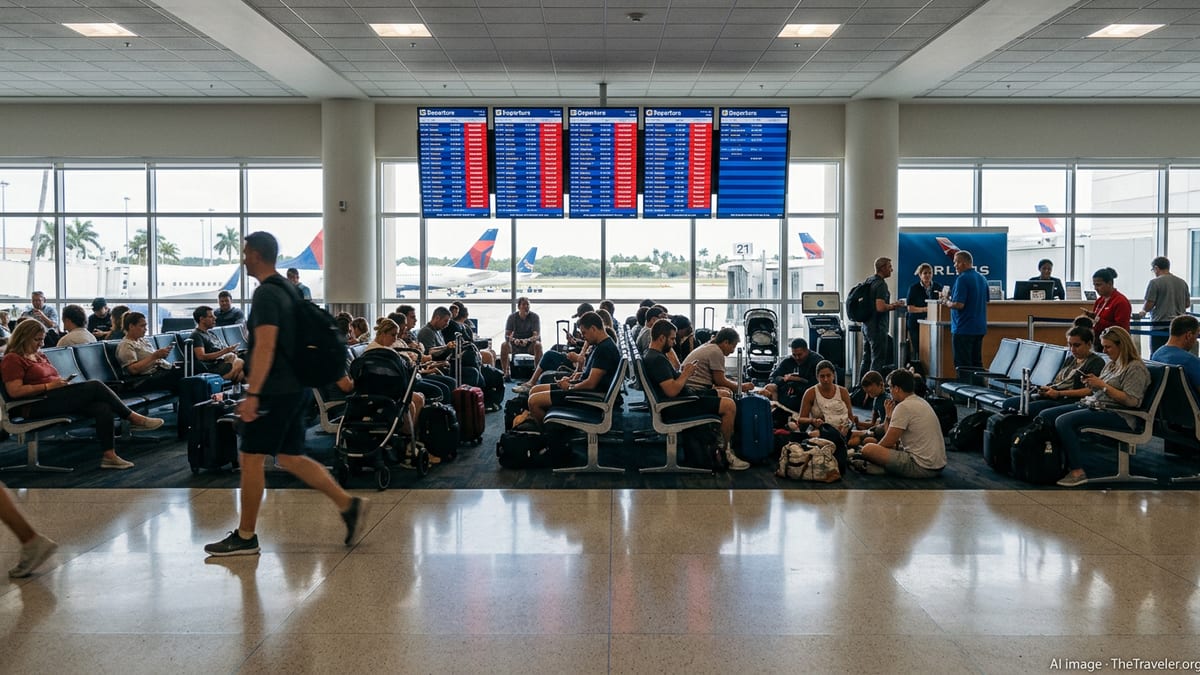
Ground Delays Ripple Across Major East Coast Routes
The disruption began early on March 8 as morning departures from Palm Beach International Airport to several northern hubs fell behind schedule, with departure boards showing multiple services pushed back in 30 to 90 minute increments. By midday, at least six flights operated by Delta, Spirit, United and American had been canceled outright, while dozens more were subject to extended delays, according to live flight tracking data and airport status boards.
Routes to Atlanta, Newark, Boston, Cleveland and Washington were among the hardest hit, with some passengers reporting that consecutive departures on the same route had been scrubbed or substantially delayed. Travelers heading for Atlanta, a critical connecting hub for Delta, faced particular uncertainty as schedule changes in Palm Beach compounded prior disruptions in the carrier’s network this weekend.
Although the airport itself remained open and security queues moved steadily, gate areas grew crowded as the day progressed, with families, business travelers and seasonal visitors jostling for scarce open seats and power outlets while they waited for updated departure times.
Weather And Network Strain Blamed For Latest Wave Of Cancellations
The latest Palm Beach disruptions come at the end of a turbulent stretch for U.S. carriers, who have been contending with a combination of volatile late-winter weather, congested airspace and tight crew availability. Severe storms and lingering operational knock-on effects have left airline networks more vulnerable to local schedule shocks, meaning that even a small number of out-of-position aircraft or crews can cascade into wider cancellations and delays.
On Sunday, airlines pointed to weather and broader network constraints rather than local infrastructure failures at Palm Beach International. Operations at other large hubs, including Atlanta and key Northeast airports, have also been under pressure this week, making it harder for carriers to recover quickly from earlier disruptions and restore normal schedules.
Aviation analysts note that when multiple major airlines simultaneously cancel a small cluster of flights at a secondary airport such as Palm Beach, it often reflects a strategic choice to preserve capacity and recover punctuality at the largest hubs, where a single aircraft rotation can affect hundreds more passengers downline.
Travelers Face Missed Connections And Limited Rebooking Options
For passengers departing from Palm Beach, the combination of six outright cancellations and a larger ring of delays translated into missed connections across the country. Travelers bound for international departures in New York, Boston and Washington described racing to rebook long-haul segments after their first legs from Florida were canceled or retimed beyond their original connection windows.
Because many of the affected flights from Palm Beach to cities such as Atlanta and Newark are core feeder services, a cancellation can leave limited same-day alternatives, especially on peak travel days at the tail end of the winter high season in South Florida. Some travelers were offered rebooked departures 12 to 24 hours later, while others opted to drive to larger airports in Miami or Fort Lauderdale to find open seats.
At Palm Beach International, airline agents worked gate-side and at ticket counters to reroute passengers, offer overnight options and arrange hotel vouchers where policies allowed. However, staffing stretched thin meant long waits at customer service desks, leading many passengers to rely on airline mobile apps and call centers to secure earlier alternatives.
Delta, Spirit, United And American Adjust Schedules In Real Time
Delta, Spirit, United and American all adjusted their Palm Beach schedules throughout the day, cutting some departures entirely while attempting to protect others from further delay. In several cases, aircraft that had been scheduled to operate Palm Beach legs were reassigned within carrier networks to maintain critical long-haul or hub-to-hub flying elsewhere.
Delta passengers heading to Atlanta reported multiple schedule changes as the carrier balanced ongoing weather-related impacts at its main hub with high demand from South Florida. United and American travelers bound for Newark, Washington and Boston also encountered rolling estimated departure times as operations control centers weighed whether to depart late from Palm Beach or consolidate flights and move passengers onto later services.
Spirit, which often operates a single daily frequency on some routes, saw particular frustration from leisure travelers facing the prospect of losing an entire day of vacation or being forced into overnight stays. With aircraft utilization high across the ultra-low-cost carrier’s system, spare planes and crew to backfill last-minute cancellations were limited.
What Passengers Can Do When Disruptions Hit Regional Hubs
The difficulties at Palm Beach International on Sunday underscore how quickly conditions can deteriorate for travelers when multiple airlines pare back schedules at a single airport, even without a full ground stop. Industry experts emphasize that passengers departing from regional and secondary hubs should build extra buffer time into itineraries, especially if connecting to international or evening departures in other cities.
When cancellations or long delays occur, travelers are advised to immediately check their airline’s app or website for self-service rebooking tools, which can sometimes secure open seats faster than waiting in line or on hold. Those with flexible tickets or elite status may find additional options, including rebooking via nearby airports or alternative partner carriers.
Consumer advocates also remind passengers to keep receipts for meals, hotels and alternate transport when disruptions are lengthy, as some costs may be recoverable through airline policies or travel insurance, particularly when delays are within a carrier’s control. With weather and network disruptions likely to continue through the spring shoulder season, the experience at Palm Beach offers a timely reminder of the importance of contingency planning for anyone flying through crowded U.S. airspace.