

More news on this day
A high-profile visit by Union Minister Jeng Phang Naw Taung to key hotels in Mawlamyine, Mon State is reshaping momentum in Myanmar’s recovering tourism sector, prompting major carriers including Emirates, Thai Airways, Singapore Airlines, Qatar Airways and Myanmar Airways to sharpen their focus on the market just as the country’s hotel industry pushes through a new phase of upgrades and service improvements.
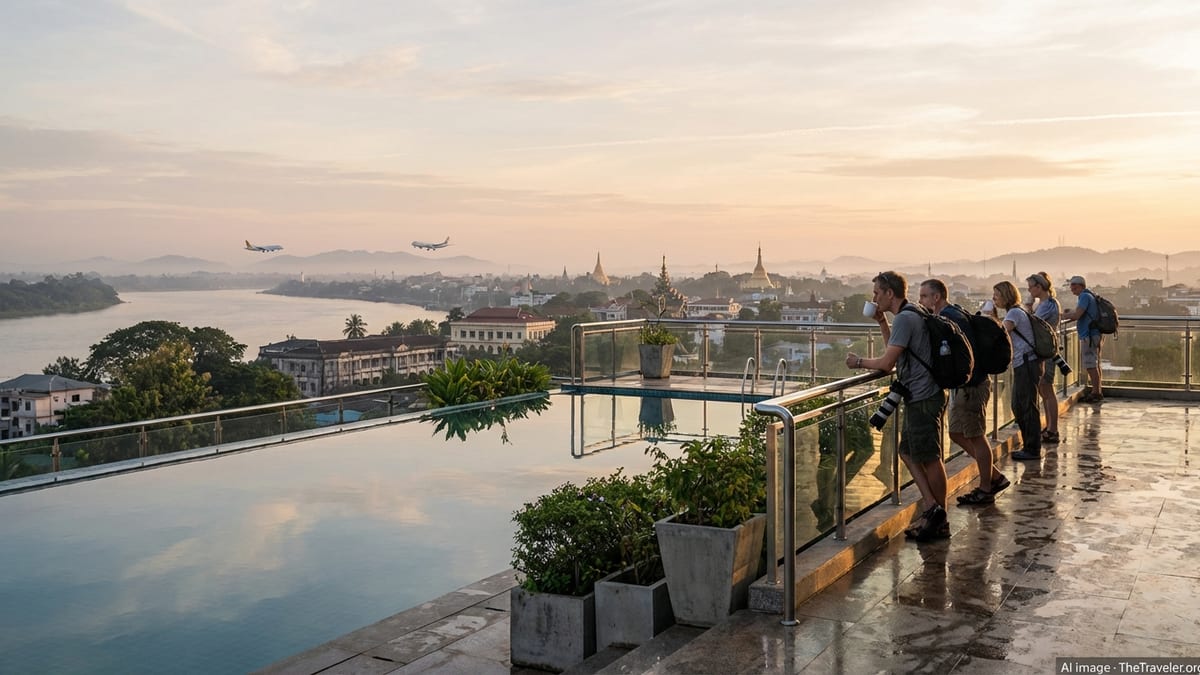
Minister’s Mawlamyine Tour Signals New Priority on Tourism
The recent inspection tour by Union Minister Jeng Phang Naw Taung, who oversees both Sports and Youth Affairs as well as Hotels and Tourism, has placed an unusual national spotlight on Mawlamyine, a coastal gateway historically overshadowed by Yangon, Mandalay and Bagan. By choosing Royal Mawlamyine Hotel and Ngwe Moe Hotel as focal points, the minister underscored the government’s intention to spread tourism benefits more evenly beyond traditional hotspots.
During the visit, hotel operations, guest safety protocols and staff capacity were highlighted as top priorities. Management teams were encouraged to invest in systems that can accommodate a higher volume of international arrivals without compromising on security or service quality. For a market that has long been constrained by underinvestment and patchy standards, the clear message from Naypyidaw is that hotels must now be able to compete with regional peers.
Industry observers in Myanmar say the tour also serves a political purpose, projecting confidence in the country’s ability to welcome visitors at a time when many long haul travelers remain cautious. By physically appearing in hotel lobbies, kitchens and back offices, the minister aimed to reassure both local operators and foreign partners that tourism development remains on the national agenda.
The timing is notable. With regional travel steadily recovering and more Southeast Asian destinations seeing double digit growth in visitor numbers, Myanmar’s authorities are under pressure to show concrete steps that will bring the country back into itineraries of airlines, tour operators and independent travelers.
Hotel Upgrades Aim to Match Rising Airline Capacity
For hotel managers in Mawlamyine and other emerging destinations, the minister’s visit has translated into a clear set of marching orders. Emphasis is now firmly on modernizing facilities, tightening safety and hygiene standards, and investing in human resources so that front line staff can deliver service levels expected by international guests arriving on full service carriers.
Properties such as Royal Mawlamyine Hotel and Ngwe Moe Hotel are reported to be reviewing guest room standards, fire and security systems, and digital booking capabilities. Operators are also being encouraged to refresh food and beverage offerings to reflect both local Mon cuisine and global tastes, a key factor for airlines that want to confidently recommend partner hotels in destination marketing campaigns.
Staff training has emerged as perhaps the most urgent priority. With labor costs traditionally low, many hotels have relied on on the job learning rather than structured development. The ministry is now pushing for programs that cover language skills, emergency response, sustainable operations and guest relations, so that Myanmar’s famed friendliness is matched by professional consistency.
These improvements are not just cosmetic. International carriers evaluating route planning and capacity increases often look closely at on the ground infrastructure. A destination that can demonstrate reliable midscale and upscale accommodation, along with clear safety standards, stands a much stronger chance of attracting more seats from airlines seeking new growth corridors in Asia.
Global Carriers Reassess Myanmar’s Market Potential
The renewed government attention to hotels comes as several major airlines reexamine Myanmar’s role within their broader Southeast Asian networks. Emirates, Thai Airways, Singapore Airlines and Qatar Airways all serve or connect to Myanmar through regional hubs, while Myanmar Airways International acts as a key home carrier linking Yangon with the wider region.
For these airlines, Myanmar’s trajectory has been uneven over the past decade, marked by periods of strong growth followed by sharp downturns as political and economic conditions shifted. The latest signals from the tourism ministry, however, suggest a more coordinated attempt to stabilize and slowly grow visitor flows, especially in secondary cities such as Mawlamyine.
Airline planners pay close attention to such policy cues. A visible push to raise hotel standards, streamline tourism services and promote regional destinations sends a message that locally based partners are ready to support higher passenger volumes. That, in turn, can justify extra frequencies, upgraded aircraft or seasonal capacity boosts that make Myanmar more accessible to long haul markets in Europe, the Middle East and North Asia.
While full scale expansion remains cautious, the combination of ministry engagement and hotel investment is helping to rebuild confidence after several years in which Myanmar’s tourism narrative was dominated by uncertainty.
Emirates and Qatar Airways Eye Long Haul Connectivity
Among Gulf carriers, Emirates and Qatar Airways remain critical connectors between Myanmar and key source markets in the Middle East, Europe and beyond. Emirates has a history of serving Yangon as part of its wider Southeast Asia network, using wide body aircraft to funnel visitors through Dubai onto a global roster of destinations. The airline closely tracks demand rebounds in frontier markets where even modest growth can justify incremental capacity.
Qatar Airways, operating from its Doha hub, has steadily expanded its global connectivity in recent years and is well placed to benefit when Myanmar bound demand strengthens. The presence of a dedicated Yangon to Doha link from Myanmar Airways International, introduced as part of that carrier’s expansion strategy, gives travelers an additional pathway into the Qatar Airways network via interline or codeshare arrangements, effectively tying Myanmar more tightly into long haul traffic flows.
These Gulf carriers tend to look for clear evidence that a destination can support premium cabins and consistent year round demand. Improvements in the hotel landscape, particularly at quality midscale and upscale properties in cities beyond Yangon, help to underpin that business case. Corporate travelers, diaspora passengers and high end tourists are far more likely to commit to trips when they can rely on safe, comfortable accommodation matched with seamless international connections.
A successful alignment between upgraded hotels and enhanced Gulf connectivity could see Myanmar repositioned as a convenient stop within multicountry Southeast Asia itineraries, particularly for travelers originating in Europe and the Middle East who value one stop journeys into secondary cities.
Thai Airways and Singapore Airlines Strengthen Regional Hubs
Closer to home, Thai Airways and Singapore Airlines continue to play an outsized role in funneling traffic to and from Myanmar through Bangkok and Singapore, two of Asia’s most important aviation hubs. For many years, these carriers have been the default choice for business travelers, aid workers and tourists heading into Yangon and other parts of the country.
Bangkok remains a critical gateway. Thai Airways and its regional affiliates provide dense connectivity across the Mekong region, making it relatively simple for travelers to combine Myanmar with Thailand, Laos, Cambodia or Vietnam in a single trip. As hotels in Myanmar upgrade their offerings and focus more deliberately on guest safety and service, tour operators in Bangkok are expected to reassess itineraries that had previously been scaled back.
Singapore, meanwhile, functions as a high efficiency hub linking Europe, North America and Australasia with Southeast Asia. Singapore Airlines’ services into Myanmar are particularly attractive to long haul passengers seeking reliable schedules and high on time performance. When hotel conditions improve and new destinations such as Mawlamyine gain visibility, it allows the carrier and its partners to market more diverse stopover and open jaw combinations anchored on Singapore’s connectivity.
For both Thai Airways and Singapore Airlines, the emerging narrative out of Mawlamyine provides a useful storyline for marketing teams eager to showcase lesser known corners of Southeast Asia. Updated hotel standards make it easier to sell Myanmar as a component of premium regional circuits rather than merely an add on for budget travelers.
Myanmar Airways International Expands Regional Reach
As the country’s principal international carrier, Myanmar Airways International occupies a pivotal role in bridging domestic tourism development with global networks. Over the past year, the airline has added capacity on core regional routes from Yangon, increasing flights to Bangkok and Chiang Mai and adding additional frequencies to Phnom Penh. These moves are designed to keep Myanmar firmly plugged into the fast growing tourism flows of mainland Southeast Asia.
The launch of the Yangon to Doha service in 2024 marked a notable milestone, signaling MAI’s ambition to move beyond a purely regional footprint and tap into long haul transit traffic through the Gulf. Operated several times weekly to Hamad International Airport, the route offers Myanmar based passengers more one stop options to Europe, the Middle East and the Americas while also giving inbound visitors an extra choice when planning trips.
By aligning its growth strategy with the government’s push on hotel standards, MAI is positioning itself as both a beneficiary and an enabler of Myanmar’s tourism recovery. Stronger regional frequencies make it easier for travelers to add side trips to Thai or Cambodian destinations, while improved hotels in cities like Mawlamyine give the airline new points of interest to promote in joint campaigns with tour operators.
Industry analysts note that if hotel investments continue and security perceptions stabilize, MAI could gradually develop secondary hubs beyond Yangon, using domestic and short haul routes to disperse international arrivals more evenly across the country.
Mon State Targets a Bigger Share of Visitor Arrivals
Mawlamyine and the wider Mon State coastline have long been touted as underdeveloped gems in Myanmar’s tourism portfolio, offering colonial architecture, riverside vistas and access to lesser known beaches. Yet the area has historically received only a fraction of international arrivals compared with Yangon or Bagan. The minister’s decision to highlight hotels in Mawlamyine suggests a deliberate attempt to change that equation.
Improved hotel facilities and staff training are expected to make the city more attractive to tour operators designing multi stop itineraries that combine cultural sites with coastal relaxation. Proximity to Thailand also gives Mon State an advantage, as cross border overland routes could be paired with short flights into regional hubs, particularly if airlines maintain or add capacity into nearby gateways.
Local hoteliers are keenly aware that their ability to capture a larger market share depends on meeting the expectations of passengers arriving on full service carriers. That means not just comfortable rooms but also reliable transport links, clear information in multiple languages and seamless coordination with guides, drivers and excursion providers.
If these elements come together, Mon State could emerge as a testing ground for Myanmar’s broader strategy to draw visitors away from a handful of established sites and encourage longer stays that distribute spending more widely across the country.
Balancing Opportunity with Ongoing Challenges
Despite the optimistic tone of the minister’s visit and the cautious steps by airlines to reaffirm their presence, Myanmar’s tourism outlook still carries significant caveats. Political uncertainty, security concerns and patchy infrastructure continue to weigh on the decisions of many international travelers and corporate travel planners. Airlines remain acutely sensitive to these factors when allocating aircraft and marketing budgets.
For hotels, the requirement to upgrade facilities and training comes at a time when many have limited access to capital after years of disrupted operations. Smaller independent properties, especially in secondary cities, may struggle to keep pace without targeted financial support or technical assistance programs that help them meet the standards expected by global distribution partners.
Nevertheless, the alignment now visible between the Ministry of Hotels and Tourism, hotel operators in Mawlamyine and major carriers from the Gulf and Southeast Asia suggests that Myanmar is determined to hold its place on the regional tourism map. Incremental gains in safety, service and connectivity may not deliver an immediate surge in arrivals, but they lay the groundwork for a more resilient industry when conditions improve further.
For travelers, the developments offer a cautiously encouraging sign. The combination of better managed hotels and renewed airline interest means that those willing to explore Myanmar will likely find a hospitality sector more prepared to meet international expectations, particularly in destinations that until now have lingered at the edge of the tourist trail.