

More news on this day
An American airline’s decision to reduce the number of seats on parts of its fleet is reshaping how passengers experience economy cabins, trading some overall capacity for roomier layouts, new seating tiers, and higher potential revenue from travelers willing to pay for extra space.
Get the latest news straight to your inbox!
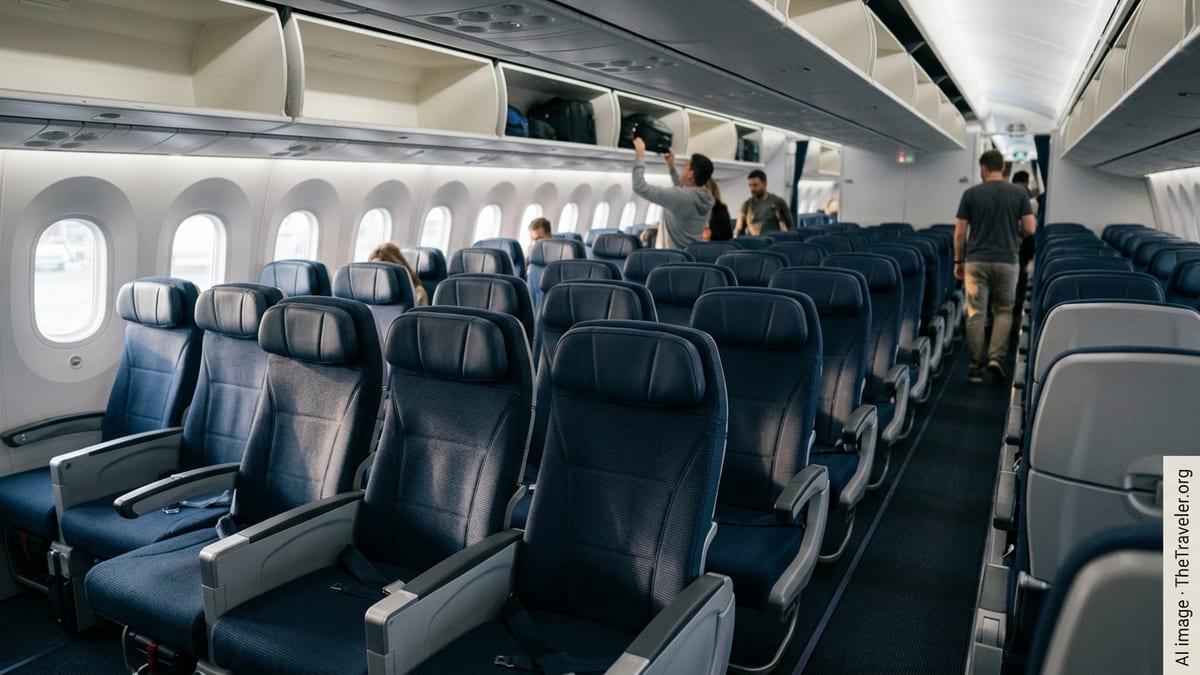
Which Airline Is Reducing Seats, and Why Now
Recent fleet updates at large U.S. airlines show a clear trend toward rebalancing cabins away from pure density and toward more premium seating. In 2025 and 2026, several carriers are reconfiguring aircraft to introduce larger blocks of extra legroom seats and refreshed interiors, even if that means reducing the total number of standard economy seats on board.
Publicly available information highlights Southwest Airlines as one of the highest profile examples. The airline is in the middle of a multiyear overhaul that adds a new extra legroom section on its Boeing 737-800 and 737 Max 8 aircraft, reshapes boarding and seat assignment policies, and relies more heavily on differentiated seating products. Industry coverage indicates that to carve out this premium space, Southwest is slightly reducing legroom in some regular rows and adjusting cabin layouts, a change that ultimately reduces the share of basic economy-style seating in favor of more spacious options in select rows.
Other airlines are making different but related moves. Some long-haul carriers are debuting new cabin concepts that add inches of pitch in standard economy and premium economy, while trimming seat counts compared with previous high-density layouts. The common thread is that airlines see more value in selling a mix of roomier seats at higher fares rather than simply flying as many passengers as possible on every aircraft.
For travelers, the headline is that fewer seats on a given plane does not necessarily mean a more relaxed experience for everyone. It usually signals greater segmentation, with some passengers enjoying noticeably more comfort while others see only subtle changes, or even a slight squeeze, in order to make the new layouts work.
What Fewer Seats Actually Looks Like on Board
When an airline reduces seat count in pursuit of comfort and revenue, it rarely removes entire rows evenly across the cabin. More often, the seats that disappear are effectively converted into premium products, such as extra legroom rows at the front of the aircraft or near exit doors, wider recliners in a small premium cabin, or redesigned bulkhead areas that require more space per passenger.
Reports on current retrofits describe updated narrowbody jets where roughly one third of seats may be branded as extra legroom, with several inches more pitch than standard rows. To make room for these, some standard seats might shift slightly closer together, or airlines may opt for slimmer seat designs and revised galleys and lavatories. The net effect can be a modest reduction in total capacity, but a larger range of comfort and price points within the same aircraft.
From the aisle, the cabin can feel subtly different. Extra legroom sections are often marked by distinct headrest covers, slightly thicker seat cushions, or updated lighting and trim. Standard economy behind them may look much like today’s cabins, albeit with carefully managed pitch and slimmer seats designed to preserve knee space even as airlines work to maintain efficiency.
On some long-haul planes, reduced seat counts may show up as one fewer seat per row in certain sections, or as slightly wider seats with more recline where airlines previously pursued tight, high-density layouts. In those cases, the change is more visible and tends to align with a clear marketing push around comfort on ultra-long flights.
How the Changes Affect Fares and Booking Strategies
Seat reductions interact directly with airline pricing, and this is where travelers are most likely to feel the impact. By creating a larger pool of extra legroom seats or premium economy rows, carriers gain more inventory they can sell at a surcharge, especially on high-demand routes and peak dates. Fewer standard economy seats on each aircraft can, in some markets, contribute to higher average fares when flights are nearly full.
Travel industry analysis suggests that airlines aim to keep base fares competitive while steering more passengers into paid upgrades. That could mean a relatively low headline price accompanied by a growing list of seat selection fees. Extra legroom seats near the front of the cabin, or in emergency exit rows, are often dynamically priced, with surcharges rising on busy business routes and holiday departures.
For travelers, this environment rewards early planning. Booking further in advance typically unlocks more choice among the newly expanded range of seat types, increasing the chances of finding extra legroom at a moderate surcharge or even, occasionally, at no added cost for elite frequent flyers. Waiting until check-in may limit options to middle seats in the tightest rows, particularly as more passengers become aware of and willing to pay for extra space.
Budget-conscious travelers may see the biggest change in how far their base fare goes. Where an older configuration might have offered acceptable pitch throughout the main cabin, newer layouts can make the standard product feel more no-frills, with truly comfortable legroom increasingly framed as an add-on rather than an automatic feature of the ticket.
Comfort, Wellness, and the Passenger Experience
From a comfort standpoint, fewer seats and more legroom in select areas can materially improve the experience, especially on flights longer than three hours. Additional inches of pitch translate into easier movement, less need to angle knees sideways, and improved ability to work on a laptop or rest without bumping neighboring passengers as frequently.
Health experts often highlight the importance of in-flight movement to reduce stiffness and the risk of circulation problems, particularly on long-haul routes. Roomier seating areas can make it easier for passengers to adjust position, stretch their legs, and stand up periodically without disturbing others. For taller travelers, the difference between a tight and a more generous pitch can be the difference between a tolerable flight and a physically taxing journey.
However, comfort gains may not be evenly distributed. If reductions in overall seat count are paired with tighter standard rows farther back, passengers who do not pay for upgrades might feel little improvement or even a slight decline in space. The result is a more stratified cabin where perceptions of comfort depend heavily on where an individual sits and how much they choose to spend.
Noise levels and boarding dynamics can also shift. With more defined zones and premium sections, boarding may occur in more groups, and there can be more jockeying for overhead bin space near the front of the aircraft. At the same time, fewer total passengers on certain routes could make deplaning faster and reduce congestion in the aisles when flights are not completely full.
Tips for Travelers Navigating New Seat Layouts
As airlines roll out reconfigured cabins, travelers can take practical steps to make the most of the changes. The first is to examine aircraft type and seat maps during booking, paying attention to which rows are flagged as extra legroom and how many of those seats exist on a given flight. A plane with a larger dedicated extra legroom section may offer more competitive pricing for upgrades and better odds of finding a preferred aisle or window.
Checking the seat pitch information published by airlines and independent comparison sites can also help. Even a one or two inch difference in pitch can be significant on longer flights, particularly for taller passengers or anyone prone to discomfort in tight spaces. Where one carrier has chosen to reduce overall seat count for a more generous layout, another on the same route may still operate in a denser configuration, giving travelers real alternatives when they shop.
Flexible travelers might also benefit from off-peak departures. Flights that are less busy can blunt the practical impact of reduced seat counts, leaving more open seats for passengers to spread out, sometimes even in cabins that are technically denser. Meanwhile, frequent flyer status, co-branded credit cards, or bundled fare options can unlock complimentary or discounted access to the new roomier sections, offering a way to experience the benefits of cabin changes without dramatically higher out-of-pocket costs.
Ultimately, an airline reducing seats on its aircraft is a sign of a broader shift in strategy rather than a simple promise of more space for everyone. For travelers who understand how these layouts work and plan accordingly, the changes can bring meaningful comfort improvements, even as they reinforce a growing divide between basic fares and the most desirable seats onboard.