

More news on this day
Passengers traveling between Mexico and major U.S. and Canadian cities are facing fresh disruption after a new wave of cancellations by Viva Aerobus, Spirit, Delta, United and other carriers wiped more than 30 flights from schedules across Cancun, Mexico City, Monterrey, Guadalajara, Puerto Vallarta and Los Cabos on March 11 and 12, straining an already fragile air network in the wake of recent unrest in western Mexico.
Get the latest news straight to your inbox!
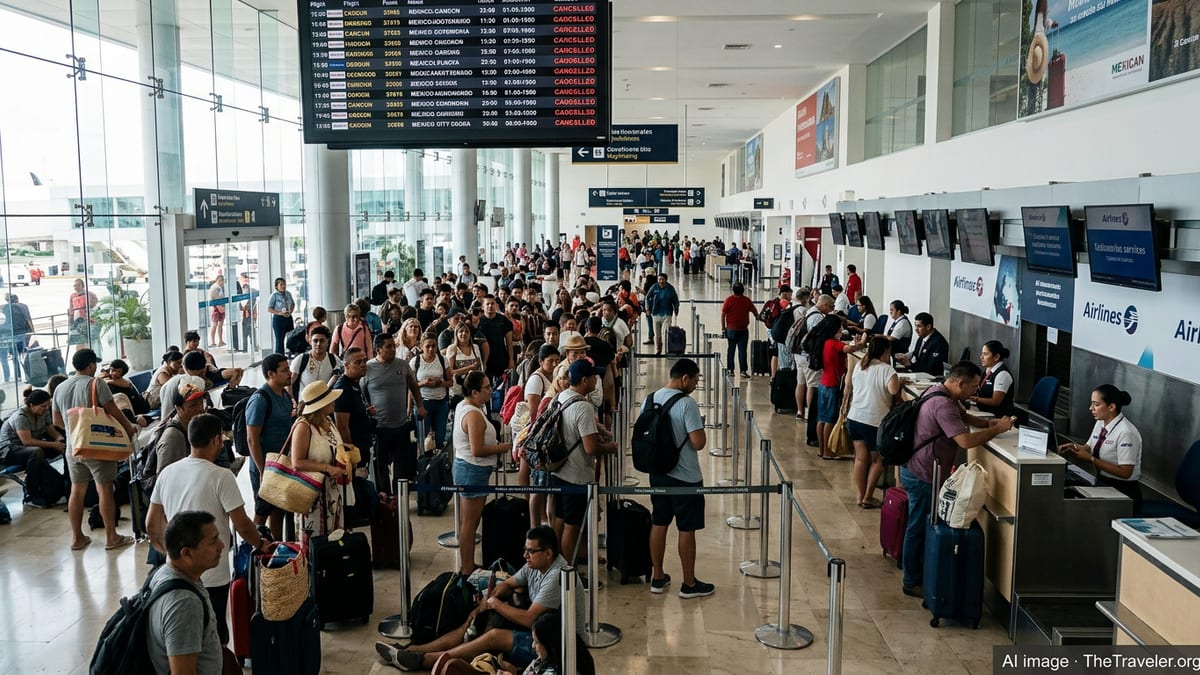
Key Mexican Hubs See Wave of Cancellations
Flight tracking and airport data, backed by airline updates, show that a cluster of cancellations has hit some of Mexico’s busiest tourism and business gateways, including Cancun International Airport, Mexico City’s Benito Juárez International Airport, Guadalajara, Monterrey and Puerto Vallarta. Many of the axed services were scheduled to depart on March 11 and into March 12, local time, underscoring how quickly operational decisions are shifting for carriers serving the region.
While the total number of affected flights remains fluid as airlines continue to adjust schedules, more than 30 departures and arrivals have been scrubbed across the network, according to figures compiled from airport status boards and industry reports. The latest disruptions build on a series of operational challenges that have dogged Mexico’s aviation system over recent weeks, from weather and congestion to security concerns and civil unrest in parts of Jalisco state.
The ripple effects are being felt well beyond Mexico’s borders. Among the routes affected are high-demand links between Mexico and major North American cities including Chicago, Houston, Montreal, Atlanta, Seattle, Las Vegas, Denver and Calgary, frustrating leisure travelers and business passengers at the tail end of the winter high season.
Major U.S. and Canadian Gateways Impacted
United Airlines, Delta Air Lines and low cost carriers such as Viva Aerobus and Spirit have all canceled or significantly altered services, with some of the most heavily impacted routes touching Chicago, Houston and Montreal. Flights connecting Cancun and Mexico City to Chicago and Houston, in particular, have seen cancellations or extended delays, affecting travelers heading to and from key hubs such as O’Hare, Midway and George Bush Intercontinental.
From western Mexico, routes out of Puerto Vallarta and Guadalajara toward cities including Seattle, Denver, Atlanta and Las Vegas have also been disrupted. Delta and United, both of which have strong transborder networks linking U.S. hubs to Mexican resort cities, have trimmed frequencies or canceled individual rotations, while Canadian services involving Montreal and Calgary have seen select flights pulled from schedules.
In several cases, airlines have opted to consolidate lightly loaded flights or reroute passengers via alternative hubs, leading to longer travel times and missed connections for those attempting to reach destinations across the United States and Canada. Travelers originally booked on nonstop services are being rebooked via Mexico City or other U.S. hubs where possible, but limited seat availability is leaving some stranded for days.
Viva Aerobus, Spirit, Delta and United Under Pressure
Viva Aerobus, one of Mexico’s largest low cost carriers, has emerged as a key player in the unfolding disruption. Operating dense networks out of Monterrey, Mexico City, Cancun and Guadalajara, the airline has canceled multiple domestic and cross-border flights, particularly on routes feeding U.S. gateways such as Houston and Chicago and on leisure-heavy corridors to resorts like Puerto Vallarta and Los Cabos. The carrier has been juggling capacity constraints while responding to shifting demand around affected regions.
Spirit Airlines, known for its aggressive expansion in the Mexico leisure market, has also scaled back segments between U.S. cities and Cancun and other sun destinations, part of a broader pattern of schedule tightening as it navigates crew availability and operational reliability. These cuts are being felt by travelers from secondary U.S. markets who rely on ultra low cost links for budget vacations along Mexico’s Caribbean and Pacific coasts.
Legacy U.S. carriers are not immune. Delta Air Lines and United Airlines have both announced cancellations and offered fee waivers for customers traveling to and from parts of western Mexico, including Jalisco’s major airports of Guadalajara and Puerto Vallarta. United, in particular, has broadened a travel waiver that allows rebooking for itineraries touching the region, reflecting continued concerns over stability and access around certain airports.
Unrest and Operational Constraints Drive Ongoing Volatility
The latest wave of cancellations comes against the backdrop of ongoing cartel-related unrest and security operations in western Mexico, especially in Jalisco state, which is home to both Guadalajara and the resort city of Puerto Vallarta. In late February and early March, sporadic violence, roadblocks and police actions disrupted ground access to airports and prompted airlines to temporarily suspend or reduce flights into the region.
Although core airport infrastructure at Guadalajara and Puerto Vallarta has remained largely intact and, at times, fully operational, carriers have continued to adjust their schedules cautiously. Some airlines have resumed normal flying on select days, only to pull back again when local conditions deteriorate or when crews and aircraft could not be repositioned efficiently. This stop-start pattern has created uncertainty for passengers trying to plan trips during what is typically a peak period for North American travelers heading south.
Weather and airspace congestion at Mexico City and Cancun have compounded the situation. Even on days without security concerns, bottlenecks at these busy hubs have made it more difficult for airlines to recover from earlier disruptions, as missed connections cascade across networks and crews time out under strict duty rules.
What Travelers Can Expect in the Coming Days
Industry analysts say flyers should brace for continued volatility in the near term, especially on routes linking western Mexico with major U.S. and Canadian gateways. Airlines are expected to keep fine-tuning schedules at short notice as they balance safety, operational resilience and demand, which means additional day-of-travel cancellations and consolidations cannot be ruled out.
Passengers already in Mexico or planning imminent trips are being urged to monitor their flight status frequently on airline apps, sign up for real-time alerts and allow extra time to reach airports where road access has been intermittently affected. Those flying to or from Guadalajara and Puerto Vallarta, in particular, may benefit from flexible tickets or itineraries that can be rerouted through alternative Mexican hubs such as Mexico City or Monterrey if needed.
Airlines including United, Delta and several Mexican carriers have published travel waivers that relax change fees for itineraries involving affected airports and dates, but these policies vary by carrier and can change quickly. With seats on remaining flights in high demand and the Easter and spring break travel periods approaching, observers warn that swift rebooking and willingness to accept indirect routings may be essential for travelers determined to keep their plans on track.