

More news on this day
Surging security wait times at major U.S. airports are leaving thousands of travelers stranded short of the gate, and several large airlines are now quietly allowing some passengers who miss flights amid the Transportation Security Administration backlog to rebook without the usual penalties.
Get the latest news straight to your inbox!
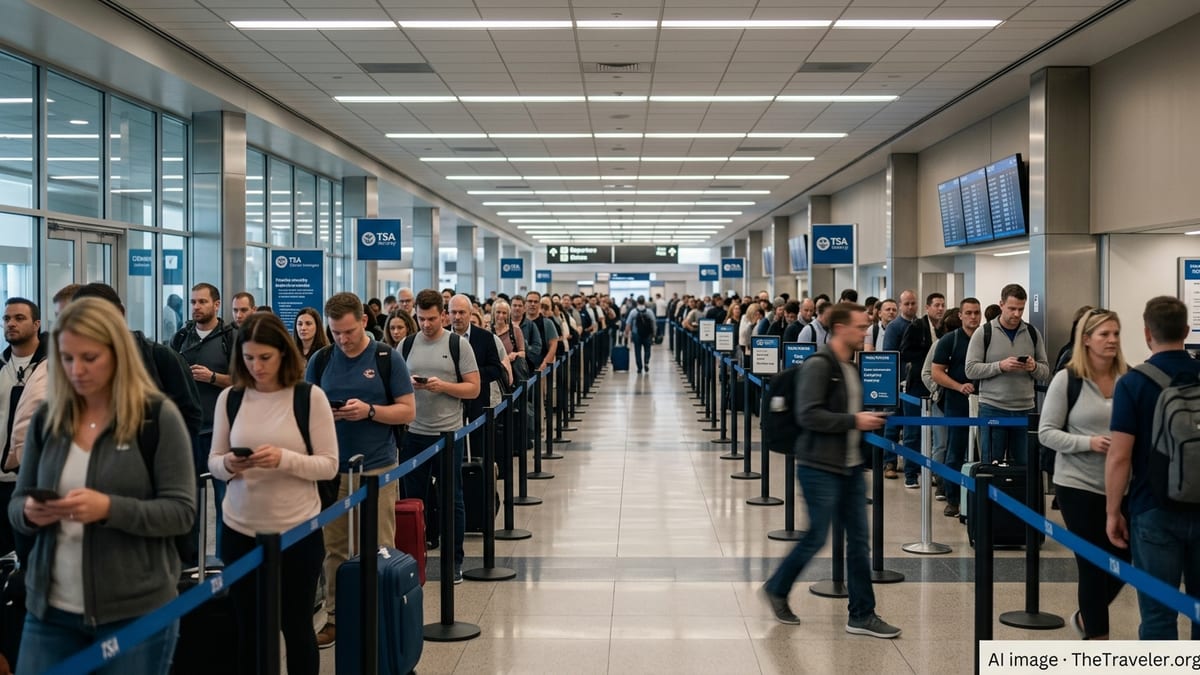
TSA Bottlenecks Turn Routine Departures Into Missed Flights
In recent days, travelers in major hubs including Atlanta, Houston, New York and New Orleans have reported multi hour security lines, with some describing waits of three to five hours even after arriving well ahead of departure. Published coverage indicates that staffing shortages and high absentee rates among screening personnel have forced checkpoint consolidations and lane closures at several airports, concentrating crowds into fewer security lanes.
Publicly available data suggests that call outs among screening agents have climbed at some locations, leaving airports to funnel passengers through a reduced number of open checkpoints. That has created a cascading effect where travelers clear security only to find their departure gates already closed and boarding completed, even when they reached the airport within the typically recommended arrival window.
Social media posts and traveler forums are filled with accounts of missed departures at peak morning and evening banks, particularly at large connecting hubs. For many passengers, the frustration is sharpened by the fact that airlines have long treated security delays as the traveler’s responsibility rather than as a disruption that warrants flexibility.
Major Carriers Quietly Relax Change Rules
Against this backdrop, several large airlines have started to carve out limited exceptions, temporarily allowing some customers who miss flights amid the security crunch to move to later departures without paying standard change fees. According to recent travel alerts and published summaries of airline policies, at least two full service carriers have issued waivers at specific airports and dates where security delays have been most acute.
One major network airline has posted a travel advisory for its primary southern hub, stating that customers departing between late March dates who miss flights due to security congestion may rebook for new departures within a defined window at no additional cost, so long as they keep the same origin and destination. Another large carrier serving a Texas hub has outlined a similar approach, waiving both change fees and fare differences for a short period for travelers who were scheduled out of the most affected airport and nearby alternates.
These targeted waivers mirror the way airlines typically respond to storms or air traffic control disruptions, but applying them to security related delays is a newer development. The shift reflects an acknowledgment that extraordinary screening backlogs are now functionally similar to other operational irregularities, even if they originate with a government agency rather than the airline itself.
Different Airlines, Different Levels of Flexibility
Despite these exceptions, flexibility remains uneven across the industry. Reports from traveler advocacy sites and passenger accounts suggest that some full service airlines are being more generous than others, often invoking informal policies that allow agents to rebook customers at no charge when delays are clearly outside the traveler’s control.
For example, several recent passenger reports describe situations in which large network carriers moved travelers who missed early morning departures because of long screening lines onto later same day flights without fees, especially when customers had arrived at the airport well in advance. In some cases, agents have used existing “flat tire” style guidelines that give staff discretion to assist passengers who encounter unexpected obstacles on the way to the gate.
By contrast, customers on some low cost and ultra low cost carriers continue to report strict enforcement of no show rules, with missed flights treated as forfeited tickets and rebooking offered only on payment of additional fees. Accounts shared by travelers describe instances where passengers facing long queues at check in or security were asked to pay change charges or new fares, even when many others on the same flight were delayed by the same bottlenecks.
The result is a patchwork landscape in which travelers on similar itineraries can experience very different outcomes depending on the airline, the fare type purchased and the individual agent handling their case.
Fine Print: Waivers Are Targeted and Often Temporary
Even among carriers offering more flexibility, the waivers are highly specific. Travel alerts typically name particular airports and narrow date ranges, and many require that changes be made within a short window after the original departure time. Some airlines stipulate that travelers must move to flights within a limited period, such as within a week of the original itinerary, and that all travel remain in the same cabin and between the same cities.
Basic economy and other deeply discounted tickets often have more restrictions. Publicly available fare rules show that some of these lowest priced products still limit same day confirmed changes or standby options, even when broader travel waivers are in effect. In practice, that can mean two passengers affected by the same security line may have different options depending on the type of ticket they hold.
Travel industry analysts note that airlines balance the goodwill generated by fee waivers against the revenue impact of opening up more flexible rebooking. As long as security disruptions are concentrated at a handful of airports and over specific days, targeted waivers can limit that exposure. Should screening delays persist or spread, carriers may face pressure to standardize their approach, particularly if high profile incidents highlight inconsistent treatment of passengers.
What Travelers Can Do If Security Lines Threaten a Trip
Consumer advocates recommend that travelers treat the current wave of security congestion much like approaching a major storm. That can include arriving at the airport even earlier than usual for peak time departures, monitoring airport and airline channels for updated guidance, and being prepared with backup options if bottlenecks arise after check in.
When a missed departure seems likely because of an unexpectedly long screening queue, some experts suggest contacting the airline via its app or phone channels while still in line, documenting wait times with photos and timestamps. Publicly available guidance from travel rights organizations indicates that such documentation can bolster a case for fee waivers or same day rebooking, particularly when airlines have active travel alerts referencing security conditions at that airport.
For passengers who do miss a flight, the first step is usually to approach the airline service desk or use digital tools to request reaccommodation as quickly as possible. In the current environment, reports suggest that major carriers are more open than usual to offering no cost rebooking when presented with clear evidence of extraordinary security delays, especially at airports and on days covered by their official travel notices.
Still, outcomes are not guaranteed, and travelers are advised to review the specific conditions of any waiver before relying on it. As long as TSA bottlenecks continue to ripple through busy hubs, the question of who bears the cost when a line at security stretches far beyond expectations will remain a point of tension between passengers, airlines and the broader aviation system.