

More news on this day
Mocktails, alcohol-free beers and zero-proof “champagnes” are quietly reshaping the in-flight drinks cart as a growing number of travelers choose to fly dry, prompting airlines from the United States to the Middle East to rethink what it means to raise a glass at 35,000 feet.
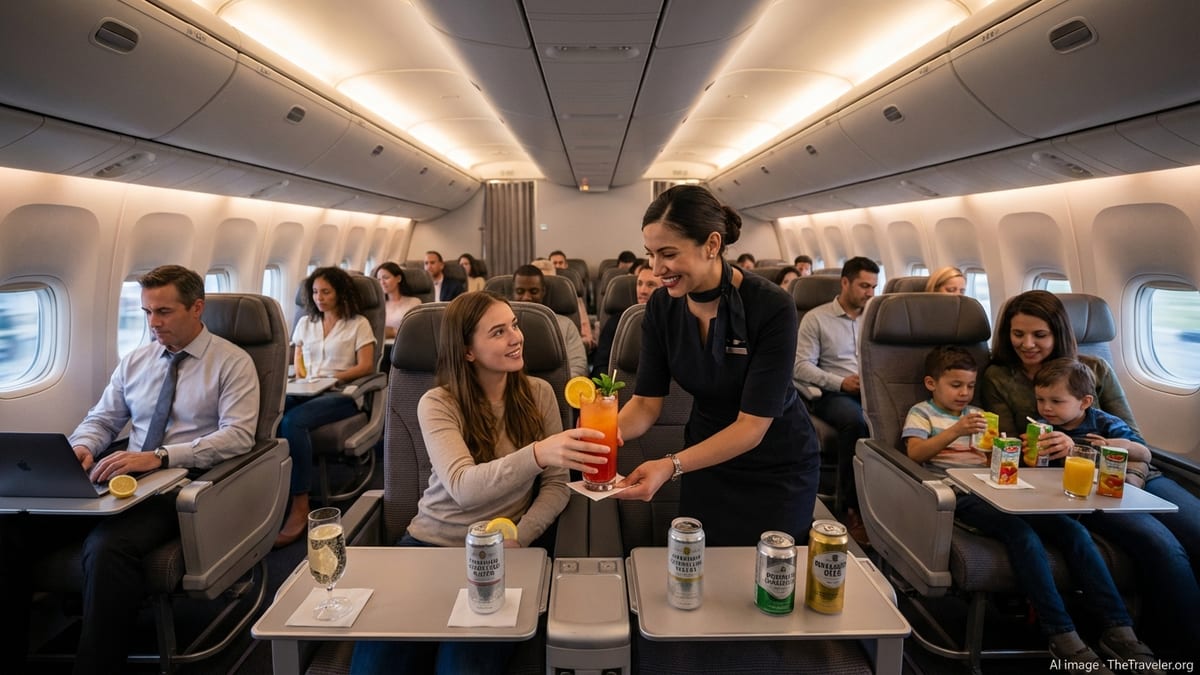
A New Kind of In-Flight Toast
For decades, the ritual of clinking miniature bottles and sipping complimentary wine was as much a part of air travel as cramped seats and jet lag. That ritual is changing. A rising share of passengers now board with wellness apps on their phones, fitness trackers on their wrists and a clear preference for staying sober in the sky. Airlines are responding with drinks lists that read more like boutique hotel bar menus than the old cola-or-coffee choice.
Industry analysts tie the shift to a broader “sober curious” and moderation movement that has transformed restaurant and bar culture on the ground, where alcohol-free cocktails, wines and spirits have moved from novelty to mainstream. Carriers are finding that many travelers want the sensory pleasure and sense of occasion that comes with a cocktail, but without the dehydration, grogginess and disrupted sleep that alcohol can bring on long-haul flights.
The result is an emerging class of “dry flyers” who are not necessarily teetotal, but who choose to skip alcohol on board. For airlines, they are both a service challenge and a commercial opportunity: a reason to rethink inventory, training and branding, and a chance to differentiate in an increasingly commoditized market.
Sober Travel Goes Mainstream
The move toward non-alcoholic options in the air mirrors patterns already visible on the ground. Travel companies across the sector report rising demand for alcohol-free experiences, from wellness-focused resorts to tour operators offering sober group itineraries. That momentum has started to reach the cabin, where a flight’s first drink often sets the tone for the rest of a trip.
Reports on sober and low-alcohol travel trends highlight how younger travelers, in particular, are driving the change. Many are embracing health metrics and mental clarity over the traditional association between vacations and heavy drinking. The pandemic also appears to have accelerated a reassessment of habits, with some travelers now looking to arrive as rested and productive as possible, whether for business meetings or active leisure trips.
For nervous flyers, non-alcoholic options can also be an important alternative. While alcohol has long been used as an informal anxiety aid in the air, safety experts warn that even modest consumption can intensify the effects of cabin altitude and fatigue. A thoughtfully crafted zero-proof drink offers the ritual and comfort of a pre-takeoff beverage without increasing the risk of midflight headaches or next-day exhaustion.
These evolving attitudes are prompting airlines to reframe how they talk about beverages. Where once non-alcoholic meant a basic soft drink, marketing now emphasizes “elevated” and “crafted” offerings, positioning dry choices as aspirational rather than second best.
Middle East Carriers Lead With Sophisticated Mocktails
Gulf carriers, long known for extravagant premium cabins, have been among the earliest adopters of elevated non-alcoholic programs. Emirates, for example, highlights a dedicated mocktail selection in its First and Business Class cabins, with drinks such as Orange Fizz and Apple Spritzer alongside nutrient-focused “vitality” blends that tap into the wellness trend. Passengers can start a flight with a health-oriented beverage rather than champagne, without sacrificing presentation or flavor.
Onboard lounges are also adapting. Reviews of the Emirates A380 inflight bar note that classic cocktails can often be ordered in alcohol-free versions, such as a Virgin Mary in place of a Bloody Mary, allowing passengers to participate fully in the social atmosphere even if they are not drinking alcohol. The experience is framed less as abstaining and more as choosing from an expanded palette of flavors.
Qatar Airways, which has made its name on high-touch business class service, has likewise experimented with premium zero-proof options. The carrier has offered So Jennie, a high-end non-alcoholic sparkling drink, on select routes, and positions its dry offerings as part of a broader emphasis on curated dining at altitude. The message is clear: a non-alcoholic toast in a business class suite can be just as celebratory as a traditional glass of champagne.
These airlines are attuned to a customer base that includes both international travelers avoiding alcohol for cultural or religious reasons and global business passengers who want to land clearheaded. In practice, that has meant integrating dry options into menus from the outset, not treating them as afterthoughts to a wine and spirits list.
North American Airlines Catch Up With Zero-Proof Choices
While Middle Eastern and some Asian carriers were early to spotlight mocktails, North American airlines have accelerated their efforts more recently, often in partnership with fast-growing non-alcoholic brands. JetBlue made headlines when it became the first major United States carrier to add a non-alcoholic beer to its regular in-flight selection, teaming up with Athletic Brewing Company for its Upside Dawn Golden Ale. The move was framed as part of a push to give passengers more control and customization in how they fly.
JetBlue has also leaned into the trend by offering a dry version of its popular Mint Condition cocktail in premium cabins, showcasing that signature drinks can be reimagined without alcohol. For a carrier whose brand is built around a more relaxed, lifestyle-driven image, extending choice to non-drinkers strengthens its appeal to health-conscious and younger customers.
Alaska Airlines followed with its own partnership, serving a non-alcoholic beer from Best Day Brewing. The airline positions the option as one more way to enjoy a West Coast-inspired experience without compromising on alertness or comfort. These collaborations mirror an explosion of alcohol-free craft beverages on supermarket shelves and in city bars, signaling that passengers now expect the same variety when they fly.
Other large United States carriers have been slower to publicize zero-proof offerings, but many have quietly expanded stocked options in both cabins and lounges. From flavored sparkling waters and upscale juices to branded alcohol-free beers and ready-to-drink mocktails, the traditional binary of soda versus spirits is giving way to a spectrum of non-alcoholic choices.
Lounges Rethink the Preflight Drink
The rise of dry flyers is reshaping airport lounges as much as cabins. Once dominated by self-serve wine and liquor displays, many lounges now feature bar menus that call out non-alcoholic cocktails, premium teas and infused waters, giving travelers alternatives to a preflight glass of wine or beer.
Passengers at some lounges have noted that non-alcoholic beers are still treated as specialty items and may carry a charge even when basic alcoholic options are complimentary, highlighting an inconsistency in how dry choices are priced. That tension is pushing operators to reconsider both the economics and optics of their drinks policies, especially as demand for quality zero-proof options grows.
Airlines that run flagship lounges are also experimenting with more health-oriented beverage stations. These can include fresh juices, kombucha-style drinks and vitamin-infused waters, often marketed alongside healthier food options. For business travelers transiting multiple time zones, the ability to stay hydrated and avoid alcohol before a long overnight segment is increasingly marketed as part of a productivity-focused travel experience.
The shift is not uniform, and many lounges still devote most of their bar real estate to traditional spirits. Yet the direction of travel is clear: preflight spaces are gradually becoming more inclusive for passengers who want the comfort and ritual of a drink without the alcohol, reflecting a broader redefinition of what it means to relax before boarding.
Wellness, Sleep and Safety Drive Demand
Behind the changing beverage carts are practical considerations. Medical and aviation experts have long warned that alcohol can have outsized effects in a pressurized cabin, potentially worsening dehydration and jet lag while impairing judgment. As public awareness of these issues increases, more travelers see abstaining during a flight as an easy win for their health.
On overnight long-haul journeys, especially in premium cabins where fully flat beds are a selling point, passengers are increasingly focused on sleep quality. Airlines promote cabin humidity control, circadian-friendly lighting and upgraded bedding; a carefully designed non-alcoholic drink program fits naturally into that narrative. Sipping a herbal tea or a zero-proof nightcap aligns better with the promise of arriving rested than a final glass of strong spirits.
Safety and behavior in the cabin are another factor. Incidents involving disruptive, intoxicated passengers have drawn scrutiny from regulators and the public. While serious cases remain rare relative to the volume of flights, they are costly and damaging when they do occur. Offering compelling non-alcoholic alternatives allows crew to nudge some passengers away from excessive drinking without eliminating alcoholic service entirely.
For families and multigenerational groups, expanded non-alcoholic menus create a shared experience that includes children and non-drinkers. A tray of colorful mocktails or fresh juices can turn an ordinary beverage service into a small celebration that does not hinge on alcohol, reinforcing the idea that flying itself can be part of the vacation rather than a chore to be endured.
Operational Challenges Behind the Bar Cart
Introducing a serious non-alcoholic program is not as simple as adding a few new cans to the trolley. Airline catering is tightly controlled, with constraints on weight, waste, supply chains and training. Premium mocktails require fresh ingredients, consistent recipes and crew who are comfortable preparing and presenting them at scale, all within the time limits of in-flight service.
Inventory planning is another hurdle. Predicting demand for alcohol-free options, especially as it grows from a low base, can be difficult. Carriers must decide how much space to allocate to zero-proof products in limited galley carts and storage compartments, balancing them against proven revenue-generating alcoholic items. Early adopters report that once passengers see attractive non-alcoholic choices listed alongside wines and spirits, uptake can be surprisingly high, which in turn pressures supply.
There are also branding decisions to consider. Some airlines foreground their dry offerings in marketing materials, framing them as part of a broader commitment to wellness and modern hospitality. Others introduce them more quietly, wary of alienating passengers who still value complimentary alcoholic drinks as a key perk. Striking the right tone is particularly sensitive on premium routes where champagne and vintage spirits have become part of the brand’s mystique.
Despite those challenges, the direction of investment suggests airlines see long-term value in getting the dry side of the bar cart right. Partnering with established zero-proof brands, standardizing recipes and using data from lounges and flights to refine stocking levels are all becoming part of how carriers approach their beverage strategies.
What Dry Flyers Can Expect Next
As the market for non-alcoholic beverages matures, analysts expect airline offerings to become more diverse and targeted. Travelers may see more regional flavors, such as drinks built around local fruits, herbs or teas, giving dry menus a sense of place that mirrors food and wine programs. Collaborations with well-known mixologists or wellness brands could also become more common, especially in long-haul business and first class.
Technology is likely to play a role. Digital menus on seatback screens and mobile apps make it easier for airlines to explain ingredients, tell brand stories and flag low- or no-alcohol selections clearly. They also give carriers real-time insight into what passengers actually order, enabling rapid adjustments to stocking and seasonal rotations, including for non-alcoholic lines.
Economy cabins, historically limited to a narrow range of drinks, may gradually see more thoughtful dry offerings as costs come down and supply chains stabilize. Even a small set of well-chosen alcohol-free beers, mocktails or functional drinks could significantly upgrade the travel experience for passengers who choose not to drink.
For the growing cohort of dry flyers, the trend represents more than a passing fad. As airlines around the world invest in sophisticated zero-proof programs on board and on the ground, flying without alcohol is beginning to feel less like opting out and more like opting into a new, more inclusive vision of hospitality in the sky.