

More news on this day
Airlines around the world are raising fares, trimming schedules and redrawing flight paths as the war in Iran drives a sharp spike in oil and jet fuel prices, adding fresh turbulence to the global travel recovery.
Get the latest news straight to your inbox!
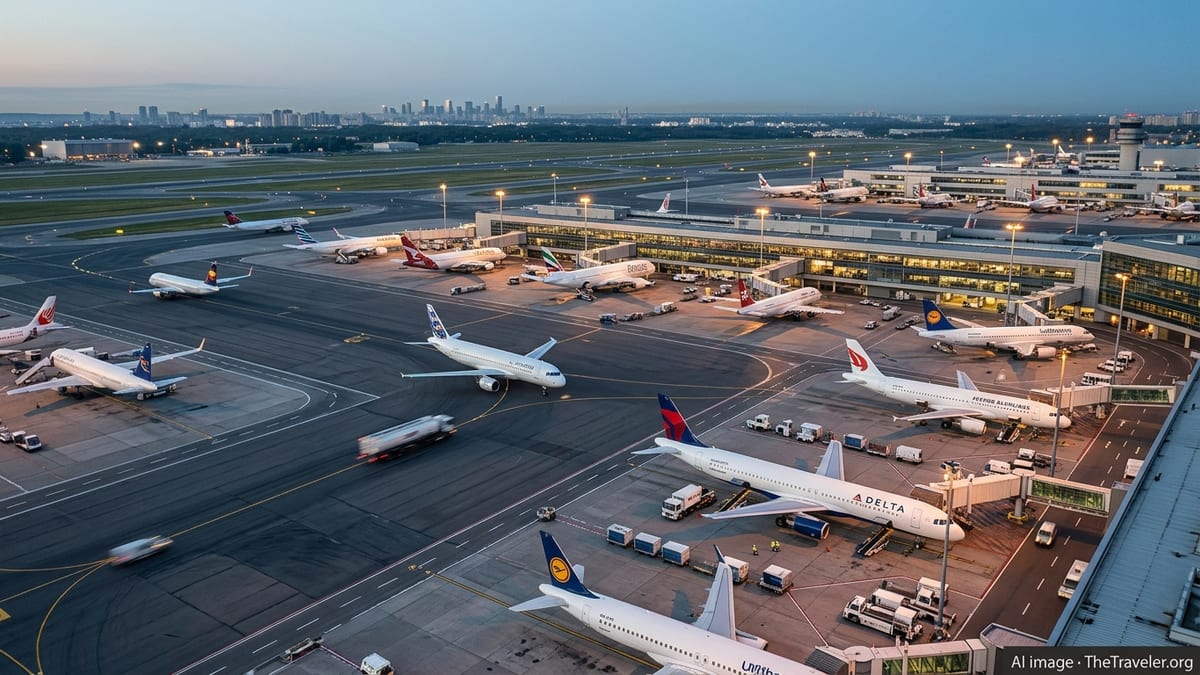
Oil Shock Ripples From Gulf to Global Skies
The Iran war, which erupted on February 28, 2026, has quickly spilled over from the battlefield to energy markets, disrupting crude exports and refining capacity across the Gulf. Reports indicate that missile and drone strikes on facilities around the Strait of Hormuz, along with heightened security risks for tankers, have pushed Brent crude well above 100 dollars a barrel at points in recent days. Analysts note that benchmark prices are up dramatically from prewar levels, with some estimates describing gains of more than 60 percent since late February.
Publicly available economic assessments highlight aviation as one of the sectors most exposed to the shock. The conflict has raised the cost of kerosene-based fuels such as diesel and jet fuel, which depend heavily on the types of crude and shipping routes now under strain. For airlines, that means a sudden jump in one of their single largest expenses at the same time they face detours around volatile airspace and continued pressure to invest in sustainability.
Industry data from the International Air Transport Association and other aviation bodies indicate that fuel routinely accounts for roughly a quarter to nearly a third of airline operating costs in normal times, and can be even higher for long-haul carriers. With that share already elevated by earlier energy volatility, the latest spike linked to the Iran war is forcing carriers to reassess pricing, capacity, and network planning with unusual speed.
Fares Edge Higher as Carriers Pass On Fuel Costs
Recent coverage of major United States carriers shows that ticket prices are already moving higher as jet fuel costs climb. Reports indicate that airlines such as Delta, American and United have seen hundreds of millions of dollars added to their quarterly fuel bills since hostilities began, yet continue to project profitable results thanks to robust demand and the ability to nudge fares upward. Advanced bookings for spring and summer travel remain strong, giving carriers room to pass on part of the fuel shock to passengers.
Across the Atlantic, European and Gulf-based airlines are also adjusting pricing formulas, particularly on routes most exposed to longer flying times and detours around Iran and adjacent conflict zones. Aviation analysts note that many carriers use fuel surcharges or dynamic pricing models that respond quickly to changes in jet fuel benchmarks, meaning travelers may notice higher totals at checkout even when base fares appear little changed. In some cases, promotional fares have quietly disappeared from search results, replaced by higher-yield inventory.
Industry economic studies released before the current crisis underlined how thin airline profit margins remain despite record global revenues. With fuel already flagged as the largest or second-largest line item for many operators, analysts suggest that few carriers can absorb a prolonged period of elevated jet fuel prices without either raising fares, cutting capacity, or both. Low-cost airlines, which rely on high aircraft utilization and lean cost structures, may be especially sensitive to sustained price shocks, although those with hedging programs could enjoy a temporary buffer.
Routes Redrawn Around War Zones and Closed Airspace
Beyond higher fuel bills, the Iran war is reshaping flight paths across a wide swath of Eurasia and the Middle East. Open-source aviation security briefings show that several major international airlines have suspended scheduled services to Iranian airports, limited operations to repatriation flights, or rerouted aircraft to skirt Iranian and neighboring airspace. These changes increase flight times between Europe, the Gulf, South Asia and parts of East Africa, which in turn raises fuel burn and crew costs.
The disruption comes on top of earlier route constraints in the region, including partial airspace closures over Pakistan and Yemen and intermittent restrictions linked to Red Sea tensions. Published analyses of South Asian carriers, for example, describe how the combination of the Iran conflict and Pakistani airspace limitations has forced longer routings for flights between India, the Middle East and Europe, straining already tight margins. Similar pressures are emerging for European and Gulf carriers that previously relied on direct overflight corridors now considered too risky.
For travelers, the changes can mean longer block times, additional technical stops on ultra-long sectors, and a higher risk of missed connections at crowded hubs. Some long-haul services that were marginally profitable even before the war are now under review, with network planners weighing whether to maintain frequency, upgauge aircraft to spread costs across more seats, or temporarily suspend certain city pairs altogether.
Regional Winners, Losers and Capacity Shifts
The impact of the oil shock and route changes is not uniform across regions. Public commentary from airline executives and financial analysts suggests that North American carriers, with large domestic markets and diversified revenue streams, may have more flexibility to offset higher fuel costs through ancillary fees and capacity adjustments. Many of these airlines also benefit from networks that are less dependent on Middle Eastern overflight corridors, allowing them to reorient capacity toward transatlantic, transpacific or domestic demand.
By contrast, Gulf super-connectors and some South and Central Asian airlines, whose business models hinge on acting as bridges between Europe, Asia and Africa, face tougher choices. Longer routings and higher fuel burn erode the cost advantage of hub-and-spoke operations that route traffic through the Gulf. Industry observers are watching closely to see whether these carriers reduce frequencies to certain European or African destinations, shift capacity toward more resilient intra-regional markets, or accelerate fleet upgrades to more fuel-efficient aircraft.
In Europe, network airlines must contend with both direct exposure to higher energy costs and mounting regulatory pressure around emissions. While some carriers may see an opportunity to capture market share if rivals cut routes, they also face trade-offs between maintaining connectivity and avoiding loss-making services that are particularly fuel-intensive under current conditions. Regional low-cost carriers, which rely heavily on high-frequency short-haul flying, could see a squeeze if higher ticket prices start to dampen discretionary leisure travel later in the year.
Travelers Face Higher Prices, Fewer Options and New Uncertainty
For passengers planning international trips in the coming months, the combined effect of rising fuel costs and shifting route networks is already visible in fare searches and schedule changes. Many leisure travelers are finding that prices for popular long-haul destinations, especially those involving connections in the Middle East or South Asia, have moved higher than last year, even outside traditional peak seasons. Business travelers, who tend to book closer to departure, may encounter reduced seat availability on certain routes as airlines trim frequencies or swap to smaller aircraft.
Travel industry analysts recommend that passengers build more buffer time into itineraries involving complex connections, particularly at hubs near the conflict zone, where rerouting and congestion can trigger rolling delays. They also suggest monitoring airline communications closely, as schedule adjustments and aircraft changes may continue as long as energy markets remain volatile and airspace restrictions evolve. Flexible tickets, while more expensive, could offer additional protection in an environment where detours and cancellations are more likely.
Despite the turbulence, publicly available booking data still show resilient demand for air travel, with many travelers prioritizing long-postponed trips even in the face of higher prices. The key unknown for airlines and passengers alike is how long the Iran war will continue to disrupt oil flows and regional security, and whether jet fuel prices will stabilize at elevated levels or retreat. Until that becomes clear, the global airline industry is likely to keep recalibrating fares and routes in real time, leaving the cost and convenience of international travel in a state of uneasy flux.