

More news on this day
Global aviation is facing its gravest shock since the pandemic as the Iran war triggers sweeping Middle East airspace closures, grounding more than 20,000 flights and driving oil prices sharply higher within days.
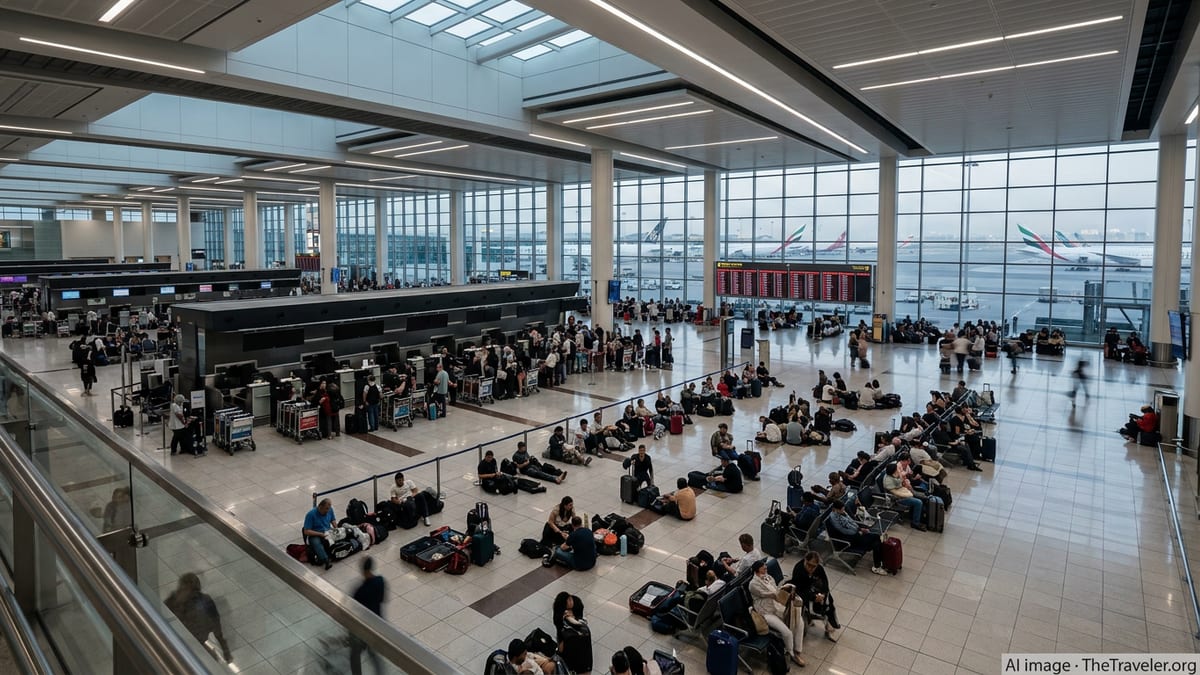
War Erupts, Hubs Go Dark and Skies Close
The coordinated United States and Israeli strikes on Iran that began on February 28 have rapidly cascaded into a full-blown aviation crisis, with governments across the Middle East closing or severely restricting their airspace. Iran, Iraq, Israel, Qatar, Bahrain, Kuwait, and the United Arab Emirates are among the countries that have either shut skies entirely or imposed tight curbs as missile and air defense activity intensifies.
Key global hubs in Dubai, Abu Dhabi and Doha, which together connect hundreds of cities across Europe, Africa and Asia, have been hit hardest. Airlines serving those airports have canceled or diverted thousands of flights in less than a week, severing the main corridor between Europe and Asia and rippling disruptions as far afield as North America, Australia and East Asia.
Industry trackers and analysts now estimate that more than 20,000 flights have been canceled worldwide in the first days of the conflict, as carriers anywhere with routes that overfly the region scramble to reroute, suspend or consolidate services. Aviation experts warn that the true scale is likely higher as smaller regional airlines and charter operations are added to the tally.
Travelers Stranded Worldwide as Networks Unravel
The shutdown of the Gulf super-hubs has stranded hundreds of thousands of passengers who relied on one-stop itineraries linking Europe and North America with Asia, Africa and Australasia. Airports from Bangkok and Singapore to London and Frankfurt are reporting clusters of displaced travelers sleeping in terminals or queuing for rebooking as flights via the Middle East vanish from departure boards.
Major carriers in Europe and Asia have suspended flying to a wide swath of Middle Eastern destinations, while also halting overflights of Iranian and Iraqi airspace. British Airways, KLM, Air France, Lufthansa and several Gulf and South Asian airlines have either pulled out of the region temporarily or rerouted aircraft on lengthy detours, compounding delays and stretching already thin crews and fleets.
Governments are rushing to mount repatriation efforts. The United States has urged its citizens to leave much of the region on any available commercial service, while European and Asian capitals work with flag carriers to secure seats for stranded nationals. Yet with airspace closures shifting hour by hour and only sporadic relief flights operating, many travelers report being offered itineraries that zigzag across continents or require days-long stopovers.
Rerouting Chaos Brings Longer Flights and Higher Costs
With much of the traditional Middle East corridor off limits, airlines are racing to redesign their route maps in real time. Longhaul services between Europe and Asia that once crossed Iran, Iraq and the Gulf in roughly 10 to 13 hours are now being sent north through crowded Caucasus corridors or far south over Egypt, the Red Sea and the Arabian Sea, adding two to five hours to some journeys.
The extra flying time is driving a surge in fuel burn, crew duty complications and aircraft utilization headaches. Aircraft scheduled to complete two round trips in a 24 hour period are in some cases only managing one, squeezing capacity at the exact moment demand is spiking on alternative routes that bypass the conflict zone.
Capacity constraints are already feeding into sharp ticket price increases. On certain Europe Asia city pairs, economy seats have virtually disappeared for the coming days, replaced by business class fares that are two to three times normal levels. Analysts warn that if the war and airspace closures persist, higher prices will spread beyond the immediately affected region as airlines reprice networks to reflect longer flying times and mounting operational risk.
Oil Surge Deepens the Financial Hit to Airlines
The aviation shock is being compounded by turmoil in energy markets. Iran's closure of the Strait of Hormuz and missile attacks near key shipping lanes have rattled traders and pushed crude prices sharply higher in the span of a week. Benchmark oil has climbed back toward levels that industry groups had flagged as a danger zone for fuel intensive sectors even before the conflict escalated.
Jet fuel, which already accounted for roughly 30 percent of airlines operating costs last year, is now poised to become an even heavier burden. Carriers with limited fuel hedging in place are especially exposed, forced to absorb soaring spot prices just as they are burning more fuel on extended detours. Financial analysts note that for large U.S. network airlines, a 10 percent rise in fuel costs can translate into billions of dollars in additional annual expenses.
Shares in many carriers across Europe, the Gulf and Asia have slumped in recent trading sessions amid fears that the double blow of higher fuel and lower capacity will erode already thin profit margins. Some airlines are responding by trimming non essential frequencies, freezing new route launches and signaling possible capacity cuts in the northern summer schedule if conditions do not stabilize.
Industry Braces for Prolonged Turbulence
While some limited flights have resumed in and out of Gulf airports during brief airspace windows, industry officials caution that any recovery is likely to be uneven and fragile as long as military operations continue. Safety regulators in Europe and elsewhere have issued conflict zone bulletins advising airlines to avoid large swaths of Middle Eastern airspace through at least early March, and these advisories could be extended.
Aviation and tourism consultants say the current shock, though centered on one region, is global in effect, similar in reach if not in duration to the early pandemic months. Tourism-dependent economies that had only recently seen visitor numbers rebound are bracing for cancellations and a collapse in connecting traffic, while air cargo operators warn of delays and higher costs for goods moving between Asia, Europe and Africa.
For travelers, the immediate outlook is one of uncertainty and disruption. Airlines are issuing waivers, promising free rebooking and refunds on affected itineraries, but call centers and digital channels are overwhelmed. With no clear timeline for de escalation in the Iran war or for the full reopening of Middle East skies, both passengers and airlines are preparing for a drawn out period of turbulence in global aviation.