

More news on this day
Escalating conflict involving Iran, Israel and the United States has closed or restricted vast swathes of Middle East airspace, forcing global airlines to reroute Europe–Asia flights through Southeast Asian hubs and reshaping some of the world’s busiest long haul corridors almost overnight.
Get the latest news straight to your inbox!
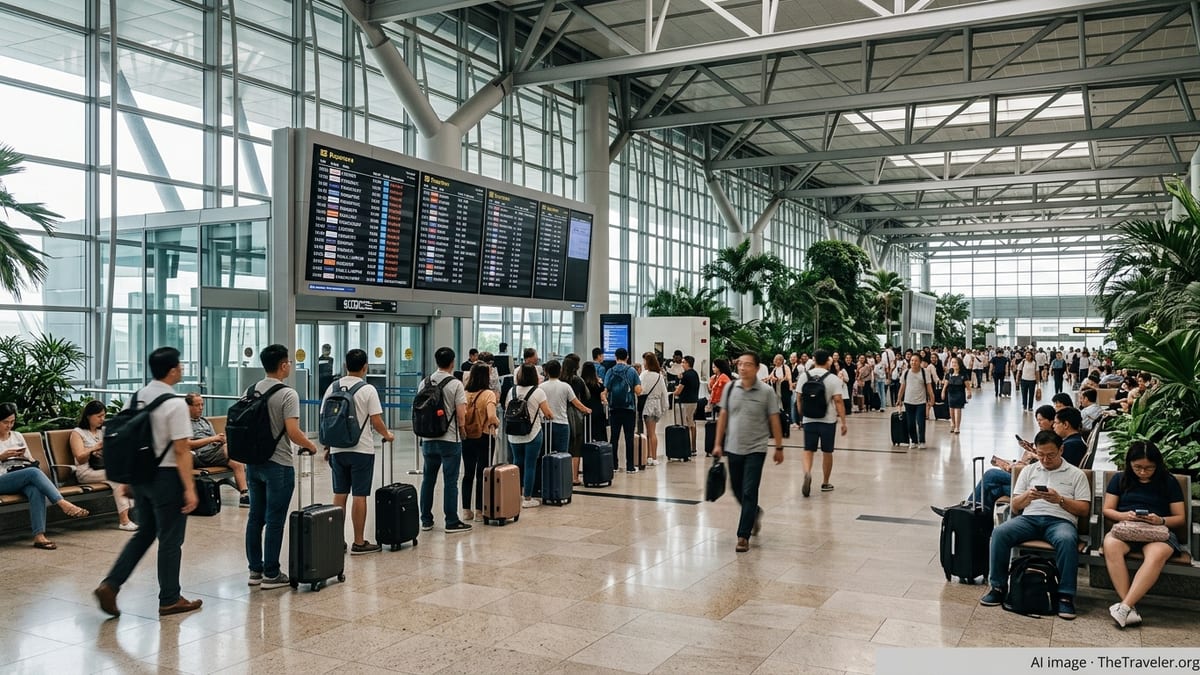
Why Airlines Are Avoiding the Middle East Right Now
Since late February 2026, a widening war centered on Iran and Israel has triggered sweeping airspace closures across much of the Gulf and Levant, disrupting the main artery that connects Europe to South and Southeast Asia. Publicly available flight-tracking data and aviation advisories show that airspace over countries including Iran, Iraq, Israel, Jordan, Lebanon, Qatar, Kuwait, Bahrain, the United Arab Emirates, Oman and Saudi Arabia is closed or heavily restricted for civilian traffic.
According to industry analyses, thousands of flights have been cancelled or rerouted in the space of days, with global scheduling data indicating that more than 3,000 services were grounded in the first week of the crisis alone. Gulf megahubs such as Dubai International, Abu Dhabi and Doha, which usually handle tens of millions of connecting passengers each quarter, have seen regular commercial operations severely reduced or paused, with limited evacuation and special services operating under emergency conditions.
Regulators have responded with strong warnings. Conflict zone bulletins from European and other aviation safety bodies highlight a high risk to civil aviation from military activity, missile strikes and electronic interference across the region. For many carriers, particularly those based in Europe and Asia, the operational and insurance risks of overflying contested skies currently outweigh the commercial benefits of using shorter Gulf routings.
Southeast Asian Hubs Step Into the Gap
With traditional Gulf corridors constrained, traffic between Europe and Asia is being pushed along alternative paths. One of the clearest shifts is toward Southeast Asian hubs such as Singapore Changi, Bangkok Suvarnabhumi and Kuala Lumpur International, which are absorbing long haul flows that previously relied on Dubai, Doha or Abu Dhabi for connections.
Passenger rights groups and aviation data providers report a measurable rise in transit volumes through these Southeast Asian airports since the latest round of Middle East airspace closures began. Airlines that already operate extensive networks from these hubs, including Singapore Airlines, Scoot, Malaysia Airlines and Thai Airways, have been adjusting schedules and equipment to capture displaced demand on Europe and Australia routes, while in many cases trimming or suspending their own services into the Gulf.
This pivot is visible in day to day operations. Travelers who might once have flown from London to Bangkok via Dubai or Doha are now seeing itineraries rerouted via Singapore or Kuala Lumpur, sometimes at short notice. In parallel, carriers from Northeast Asia and India are threading narrower corridors over the Caucasus or southern Red Sea, increasing the relative importance of Southeast Asia as a stable, lower risk waypoint for multi-leg journeys.
What This Means for Flight Times, Fares and Reliability
The most immediate impact for travelers is longer journeys. Analyses of recent long haul operations show that Europe–Asia flights avoiding the Middle East can face detours of two to five hours or more, depending on the chosen corridor and prevailing winds. One widely cited example involved a Delhi–New York service that stretched to nearly 22 hours with an extra technical stop in Europe after conflict-related rerouting.
Extended routings translate into higher fuel burn and crew costs, and airlines typically look to recover at least part of that through higher fares or reduced capacity. Early booking data in March 2026 points to rising prices on some Europe–Southeast Asia and Europe–Australia city pairs, especially where alternative one stop options are limited and demand remains strong. Budget-conscious travelers are finding that the cheapest itineraries may involve awkward departure times, multi airport transfers or longer layovers at Southeast Asian hubs.
Reliability is also under pressure. Airport and flight-status reports across East and Southeast Asia have documented hundreds of cancellations and thousands of delays tied indirectly to the Middle East closures, as late arriving aircraft and crews ripple through tightly planned schedules. Major terminals such as Bangkok Suvarnabhumi, Jakarta Soekarno Hatta, Kuala Lumpur and Singapore Changi have all reported heightened congestion during peak banks, with check in and security queues lengthening as airlines consolidate disrupted passengers onto fewer long haul departures.
How Key Airlines and Routes Are Adapting
Global network carriers are reacting in different ways depending on their home bases and fleet flexibility. Gulf airlines that built their business models on tri continent connectivity via Dubai, Doha or Abu Dhabi are bearing the brunt of the disruption, with many scheduled services cancelled outright and others converted into limited evacuation or cargo operations while airspace restrictions remain in place.
By contrast, Asia Pacific airlines that already rely on Southeast Asian hubs have moved quickly to protect core long haul links. According to published coverage from aviation trade outlets, carriers such as Singapore Airlines, Cathay Pacific, Thai Airways and Japan Airlines have suspended most Middle East destinations but maintained or even reinforced routes to Europe and North America using longer detours that bypass high risk areas. Some India based airlines are facing a double squeeze, with Pakistani airspace restrictions combining with the Iran conflict to make traditional westbound shortcuts difficult or impossible.
On the Europe side, major flag carriers are reworking schedules to maintain connectivity with South and Southeast Asia without overflying the Gulf. Many have shifted to more northerly routings over Turkey and the Caucasus where permissible, or to southern tracks that hug Egyptian and Red Sea airspace before turning east. These adjustments can add significant block time and complicate crew rostering, prompting some airlines to temporarily reduce frequencies on marginal routes and prioritize cities where demand remains strongest.
Practical Advice for Travelers Planning to Transit Southeast Asia
For travelers, the rapid rerouting of global air traffic through Southeast Asian hubs brings both challenges and opportunities. On the one hand, airports such as Singapore Changi, Bangkok Suvarnabhumi and Kuala Lumpur International are generally well equipped to handle large volumes of transit passengers, with extensive airside amenities and hotel options that can make long layovers more bearable.
On the other hand, the current disruption means that itineraries are more vulnerable to last minute changes. Public advisories from civil aviation authorities and travel risk firms emphasize the importance of monitoring flight status closely in the 24 to 48 hours before departure and again on the day of travel. Rebooking queues at airline counters can be lengthy when multiple long haul services are delayed or cancelled, so using mobile apps or call centers to request changes often saves time.
Travelers should also build in extra buffer time for connections, particularly when separate tickets or self transfers are involved. With aircraft and crews operating at the edge of legal duty limits on longer detour routes, even small upstream delays can cause missed onward flights. Those connecting through Southeast Asia may wish to consider overnight stops rather than tight same day turnarounds, especially on complex multi segment journeys between Europe, South Asia and Australasia.
Insurance and passenger rights remain another key consideration. While consumer protections vary by jurisdiction, many standard policies treat large scale airspace closures and armed conflict as extraordinary circumstances, limiting eligibility for compensation even when delays are severe. Travelers booking new tickets in the coming weeks may want to review the fine print on change fees, refund conditions and so called cancel for any reason coverage as the Middle East situation continues to evolve.