

More news on this day
Escalating conflicts from Eastern Europe to the Middle East are reshaping global air corridors, driving up costs and insurance premiums for airlines while reviving debate over how far governments should go to keep essential routes, connectivity and evacuation capacity intact if instability persists.
Get the latest news straight to your inbox!
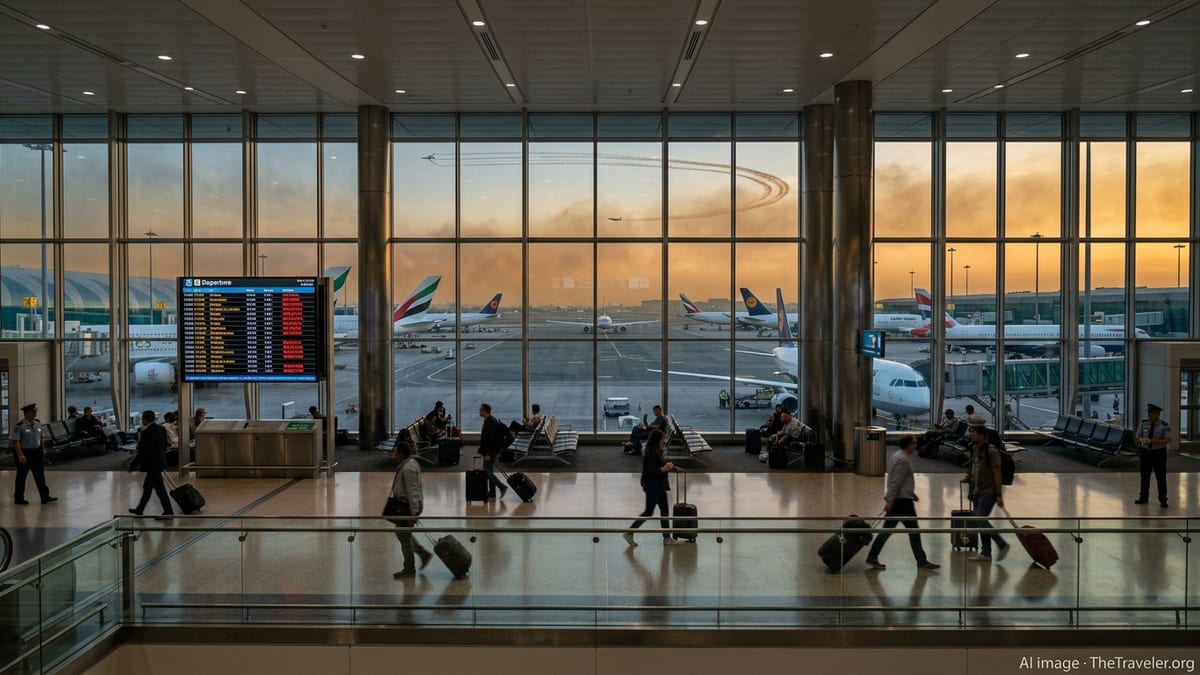
Airspace Closures and Rerouting Redraw Global Flight Maps
Years after the outbreak of war in Ukraine, many carriers continue to avoid Russian airspace, adding hours and fuel burn to long-haul services between Europe, North America and Asia. Industry data compiled by airline associations indicates that rerouted flights have become structurally embedded in schedules rather than short-term detours, curbing the efficiency gains airlines had rebuilt since the pandemic.
The spread of conflict across the Middle East and the Red Sea corridor has further tightened available airspace. Heightened military activity and missile and drone incidents have led several states to impose temporary closures or restrictions, while airline risk assessments have prompted voluntary avoidance of additional flight information regions. According to recent analysis referenced by international aviation bodies, a growing share of global traffic now threads narrow, crowded corridors viewed as lower risk, creating operational bottlenecks and complicating contingency planning.
These overlapping restrictions are fragmenting what was once a relatively seamless global network. Carriers based in regions less exposed to conflict are seizing opportunities to capture connecting flows, while airlines more directly affected face truncated networks and weaker hub economics. Observers note that this patchwork of access mirrors the geopolitical landscape, with aviation increasingly pulled into the orbit of broader strategic rivalries.
Regulators and international organizations have urged a more predictable framework for airspace decisions, emphasizing that safety assessments should follow transparent technical criteria rather than retaliatory closures. Publicly available statements highlight concern that politically driven restrictions risk undermining the resilience of global connectivity just as demand for international travel continues to recover.
Insurance, Fuel and Security Push Airline Costs Higher
Geopolitical shocks are feeding directly into airlines’ cost structures. The war in Ukraine and subsequent sanctions on energy exports, followed by instability in the Middle East, have created repeated spikes and volatility in oil and jet fuel markets. Economic briefings from airline industry groups show that fuel, already one of the largest expense lines, has been subject to abrupt price swings tied to conflict-related supply disruptions.
Security-related costs have risen in parallel. Market intelligence from the insurance sector indicates that aviation war-risk premiums have climbed as underwriters reassess exposures around conflict zones. Airlines operating near affected regions face steeper charges for hull and liability cover, while some routes are only commercially viable if insurers agree to tailored arrangements or if governments provide guarantees.
Airlines must also absorb additional spending on crew training, route planning, and onboard and ground security. Rerouted flights take longer, requiring more fuel, additional crew hours and, in some cases, extra aircraft to maintain frequencies. Industry economics reports suggest that these pressures are eroding margins even as passenger demand remains relatively robust, particularly for long-haul travel.
For price-sensitive travelers, these dynamics are beginning to appear in higher fares and surcharges on certain routes. Analysts warn that if conflicts deepen or spread, the combination of more expensive fuel, tighter insurance markets and operational disruptions could push some carriers, particularly smaller or regionally concentrated ones, back into financial distress.
Evacuations and Humanitarian Corridors Expose Strategic Role of Airlines
As conflicts have intensified, airlines have once again found themselves at the heart of large-scale evacuations and humanitarian efforts. Publicly available accounts from recent crises in the Middle East describe how commercial aircraft, sometimes operating under special permissions or charter arrangements, played a central role in repatriating foreign nationals and relocating vulnerable civilians when local security conditions deteriorated rapidly.
The sudden closure of multiple airspace segments during escalations has stranded travelers and disrupted crew rotations, illustrating how quickly commercial operations can be overwhelmed by fast-moving military developments. In several instances, states have organized special flights or partnered with their flag carriers to extract citizens, highlighting the continuing reliance of governments on commercial fleets to provide surge evacuation capacity.
These operations underscore airlines’ dual role as private businesses and critical infrastructure. Even as carriers grapple with higher costs and fragile balance sheets, governments and international organizations increasingly view them as essential partners in crisis response, whether for evacuations, medical transport or the maintenance of limited humanitarian corridors.
Policy commentators argue that this quasi-strategic function strengthens the case for structured public support mechanisms. When airlines are expected to operate into or near unstable regions for reasons that go beyond commercial logic, they contend, some of the associated risk may need to be underwritten or shared by the public sector.
Mounting Calls for Targeted and Coordinated Government Support
The question of government support is resurfacing as conflicts persist and new flashpoints emerge. Industry forecasts released by global airline associations have projected modest aggregate profitability, but with significant regional divergence, partly driven by proximity to conflict zones and exposure to rerouting. Analysts warn that another sustained shock to fuel prices, airspace access or war-risk insurance could tip weaker carriers into losses.
Rather than broad pandemic-style bailouts, recent policy discussions emphasize targeted tools. These include temporary state-backed insurance schemes for operations deemed strategically important, credit guarantees to keep essential long-haul links viable, and support for accelerated fleet and fuel-efficiency upgrades that can offset higher operating costs. Commentaries from economic think tanks also highlight the potential role of multilateral institutions in coordinating standards for such interventions to avoid distorting competition.
Some governments have already used limited measures, such as underwriting specific evacuation flights or offering guarantees for routes serving remote communities that might otherwise lose connectivity. Observers suggest that formalizing such frameworks before crises escalate further could provide clarity for both airlines and taxpayers, ensuring that support is tied to clear public-interest objectives and transparent conditions.
At the same time, regulators face pressure to balance financial assistance with consumer protection. Travelers affected by conflict-related disruptions have experienced complex refund and rebooking processes, particularly when multiple jurisdictions and codeshare partners are involved. Consumer advocates argue that any future support packages should be accompanied by stronger obligations around transparency on risks, flexible ticketing in volatile regions and clear communication when security assessments force last-minute changes to flight plans.
Long-Term Risk Management Becomes Core to Airline Strategy
With conflicts likely to remain a defining feature of the operating environment, airlines are embedding geopolitical and security risk more deeply into strategic planning. Network teams are running more frequent scenario analyses, modeling potential closures of key corridors and evaluating alternative routings that minimize exposure to emerging flashpoints. Fleet decisions, including range capabilities and fuel efficiency, are increasingly assessed not only on demand forecasts but also on their resilience to airspace fragmentation.
Carriers are also strengthening partnerships, alliances and joint ventures to share capacity and risk on long-haul routes that may be vulnerable to sudden disruptions. Industry observers note growing interest in flexible traffic-rights arrangements and cooperative agreements that allow airlines to re-accommodate passengers more effectively if particular hubs or corridors become inaccessible.
For governments and regulators, the new landscape raises broader questions about aviation’s role in national resilience. As commercial airlines adapt to a more volatile world, their ability to sustain connectivity in the face of conflict will depend not only on internal risk management but also on predictable regulatory frameworks, coordinated international standards and, where justified, carefully designed public support for operations that serve clear strategic and humanitarian needs.