

More news on this day
Rising jet fuel costs and localized supply shortages are prompting a growing number of airlines to scale back generous baggage policies, with extra checked bags and elevated allowances among the first perks to be trimmed as carriers race to contain mounting expenses.
Get the latest news straight to your inbox!
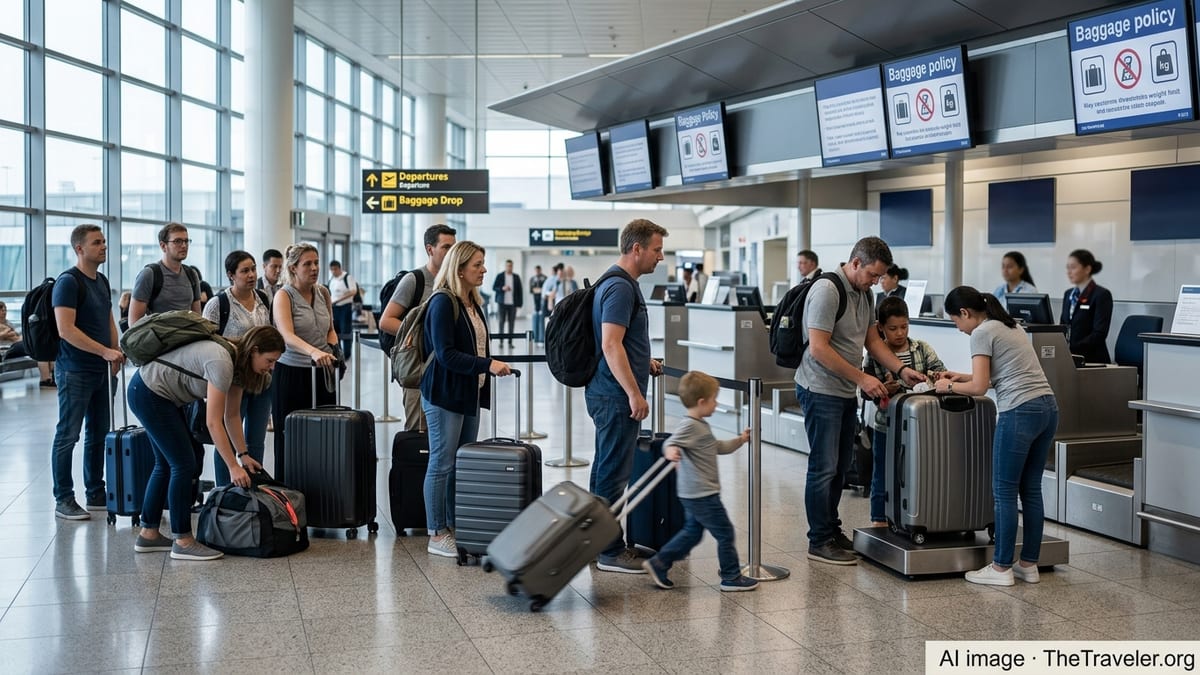
Jet Fuel Spike Puts Pressure on Airline Cost Structures
Publicly available market data show jet fuel prices have climbed sharply since early March 2026, as conflict in the Middle East disrupts crude exports and constrains refinery output in key producing countries. Industry coverage indicates that benchmark jet fuel, which was trading under 100 dollars a barrel through much of 2025, has recently swung into a 150 to 200 dollar range in some regions, rapidly inflating operating costs for long-haul and regional carriers alike.
Analysts note that fuel already represents one of the single largest expense lines for airlines, and the latest surge is hitting after years of pandemic recovery investments, fleet maintenance delays and higher labor costs. Reports on major North American and European airlines highlight a fresh round of earnings downgrades tied directly to the latest fuel shock, with some carriers warning that previously issued profit guidance for 2026 is no longer reliable.
While many large airlines hedge a portion of their fuel needs, sector commentary suggests that hedging strategies vary widely and are not sufficient to fully offset rapid price spikes. Several carriers entered 2026 with limited protection, leaving them more exposed to sudden increases in fuel bills and more inclined to make quick adjustments to fares, surcharges and ancillary revenue streams, including baggage.
From Free Bags to Fees: Perks Come Under Review
In this environment, airlines are increasingly scrutinizing customer perks that add weight to aircraft. Extra baggage allowances and free additional checked bags, once promoted as differentiators in a competitive market, are emerging as early targets. Industry news coverage in recent months has already chronicled a gradual shift away from expansive free-bag policies, particularly at low-cost and hybrid carriers seeking to narrow losses.
Some airlines that previously offered multiple free checked bags on all tickets have begun restricting those benefits to premium fare classes or top-tier loyalty members. Others are eliminating promotional extra-baggage offers on seasonal routes or halting campaigns that allowed travelers to check sports equipment and oversized bags at discounted rates. These changes are framed in public updates as part of broader cost-management programs rather than as isolated policy reversals.
Travel industry analysts point out that baggage is one lever carriers can move relatively quickly without reconfiguring schedules or renegotiating large contracts. By tightening extra allowances and increasing fees for additional or overweight bags, airlines can both reduce average aircraft weight, marginally cutting fuel burn, and generate incremental revenue to offset higher fuel expenses.
Local Fuel Shortages Trigger Temporary Allowance Suspensions
Beyond global price pressures, localized jet fuel shortages are also influencing baggage policies on specific routes. Recent aviation advisories and market reports describe supply reliability issues at several airports, including Caribbean and Asian destinations where imports have been disrupted by geopolitical tensions and sanctions. Notices to airmen and airline customer updates in those markets refer to the limited availability of aviation fuel for an extended period.
In response, some carriers have announced temporary suspensions or reductions of extra baggage allowances on flights serving affected airports. Publicly available statements indicate that these restrictions are being applied selectively, often on routes where aircraft cannot reliably refuel at destination and must carry additional fuel for the return leg. Under such conditions, limiting baggage weight becomes a more urgent operational priority rather than a purely commercial decision.
In at least one recent case discussed in regional aviation forums, an airline serving a fuel-constrained market reduced standard baggage allowances and halted the sale of additional checked bags for several days before later reinstating them once alternative fuel supplies were secured. The episode underscored how quickly baggage policies can change when supply chains are disrupted and highlighted the operational link between weight management and fuel planning.
Impact on Travelers: Higher Costs and Less Flexibility
For passengers, the combination of higher fares, surging fuel surcharges and restricted baggage options is reshaping the economics of air travel, especially on long-haul and leisure routes. Travel advisories and consumer coverage note that travelers who are accustomed to checking multiple suitcases or traveling with bulky sports gear are among those most exposed to the new rules, as previously free or discounted options become chargeable or disappear.
In markets where aviation regulators allow dynamic fuel surcharges, published guidance for early April 2026 shows surcharge bands rising into higher levels, adding the equivalent of tens or even hundreds of dollars to round-trip tickets. At the same time, airlines are tightening weight limits and enforcing baggage rules more strictly, reducing the informal flexibility that some travelers relied on when checking heavy bags at the airport.
Consumer advocates are urging travelers to monitor airline announcements closely, as baggage changes are often rolled out route by route and may apply only to tickets issued after certain dates. Travel agents and booking platforms are also updating advisory notes, encouraging customers to factor potential extra-baggage costs into their total trip budgets and to consider packing lighter or using shared luggage strategies when traveling in groups.
What Passengers Can Expect in the Months Ahead
Industry forecasts suggest that baggage policies are likely to remain fluid through the upcoming peak travel seasons, particularly if jet fuel prices stay elevated or supply disruptions persist. Airlines are expected to continue using a mix of fare adjustments, fuel surcharges and ancillary revenue measures to balance demand with higher operating costs, and baggage allowances will remain part of that toolkit.
Some network carriers may opt to preserve more generous baggage terms on their most competitive routes, focusing cuts on secondary or seasonal destinations where price sensitivity is lower and operational constraints are greater. Low-cost and ultra-low-cost operators, by contrast, are widely expected to keep shifting more of the total trip cost into add-ons, including extra baggage, seat selection and onboard services.
For now, publicly available information suggests travelers should be prepared for fewer complimentary extra-baggage options than in previous years and for a more fragmented landscape of allowances and fees across airlines and routes. As jet fuel markets remain volatile, the balance between operational necessity and customer service will likely continue to shape how airlines handle one of the most visible travel perks: the ability to check that extra bag without it breaking the budget.