

More news on this day
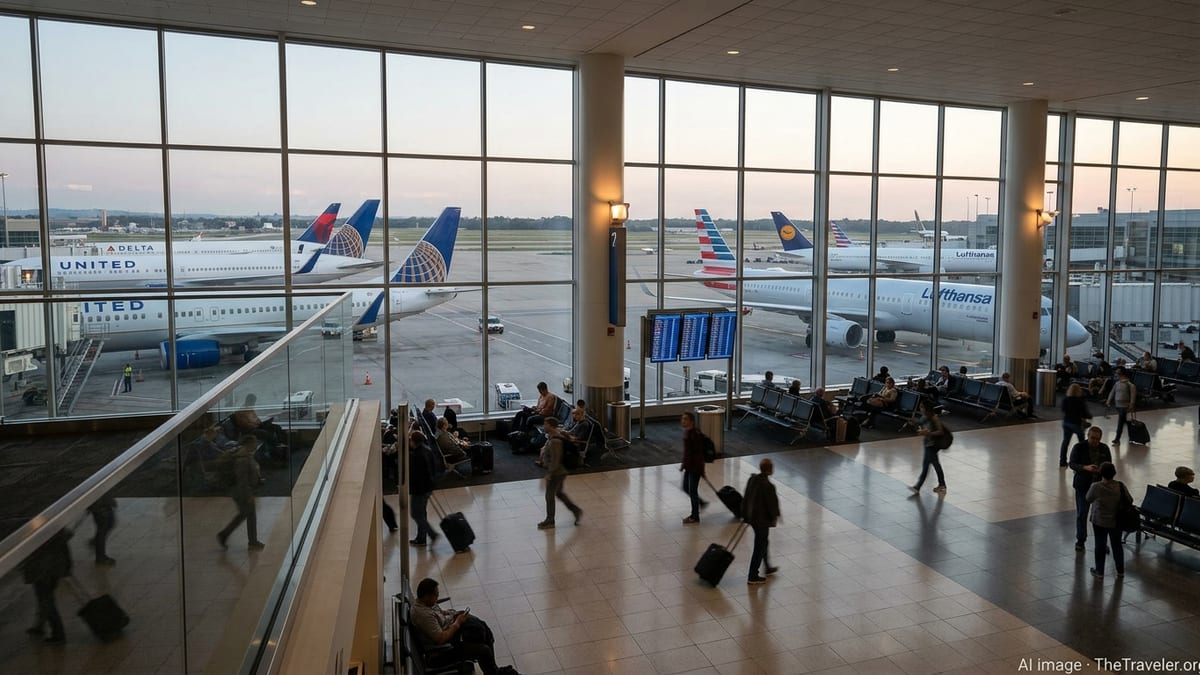
Major transatlantic carriers including United Airlines, Delta Air Lines, American Airlines and Lufthansa are reportedly trimming flight schedules by around 5 percent as jet fuel costs climb, a shift that is already prompting hotels in the United Kingdom and United States to brace for a potential downturn in inbound tourism and business travel.
Get the latest news straight to your inbox!
Fuel Shock Revives Capacity Discipline Across Major Carriers
Publicly available industry data and recent financial disclosures indicate that jet fuel has re-emerged as a key pressure point for airlines in early 2026, reversing several quarters of relative cost relief. Analysts note that fuel typically accounts for roughly a quarter of a network carrier’s operating expenses, making rapid price swings particularly difficult to absorb.
Reports from financial and aviation outlets suggest that United, Delta, American and Lufthansa are responding with a familiar playbook: disciplined capacity cuts focused on marginal routes, thinner frequencies and off-peak departures. The reductions, described by several analysts as amounting to roughly 5 percent of planned flying on selected routes rather than across entire networks, are intended to protect yields and avoid deep discounting as fuel costs rise.
Capacity trimming of this scale is small compared with the sweeping schedule reductions seen during the pandemic, but it arrives at a time when transatlantic traffic had been nearing or surpassing 2019 levels. Travel watchers say that even modest pullbacks can tighten seat supply on popular corridors between Europe and North America, potentially pushing airfares higher into the peak summer season.
While each airline is adjusting its network according to its own strategy, published commentary from industry analysts points to a common goal: prioritizing routes and hubs where demand and yields remain strongest, while paring back lower-margin flying that is most exposed to fuel price volatility.
Transatlantic Routes in Focus as UK and US Markets Tighten
Transatlantic services linking the US with the United Kingdom and continental Europe appear to be a particular focus of schedule fine-tuning. Observers tracking schedule filings and booking engines report selective reductions in shoulder-season frequencies on secondary US gateways and regional UK airports, along with the consolidation of some double-daily rotations into single daily flights.
Core city pairs such as New York to London, Boston to London and key US hubs to Frankfurt, Munich and other Lufthansa Group gateways remain heavily served, but some carriers are reportedly trimming less profitable departures at the margins. In practical terms, that can mean fewer midday or late-evening options, or the substitution of smaller aircraft on routes that had recently seen widebody upgrades.
Industry commentary suggests that the 5 percent figure reflects an average adjustment across targeted segments rather than a uniform cut. For leisure travelers, the impact may be felt most acutely in reduced flexibility, tighter availability of lower fare buckets and a greater risk that specific nonstop options disappear, forcing connections via larger hubs.
For airlines, transatlantic flying remains strategically critical, but it is also energy intensive. Rising fuel costs, combined with environmental charges in European markets and sustainable aviation fuel blending mandates, are making these long-haul services more expensive to operate, strengthening the incentive to concentrate capacity where demand is most resilient.
UK and US Hotels Prepare for Softer International Demand
Hotel owners and operators on both sides of the Atlantic are watching the airline adjustments closely. Industry briefings and market commentary indicate that many UK and US properties were budgeting for continued growth in international arrivals through 2026, particularly from high-spending long-haul segments that rely heavily on the very carriers now trimming capacity.
Travel economists note that even small reductions in flight volumes can translate into meaningful changes in hotel demand when they affect long-haul origin markets. If fewer seats are offered at affordable prices, some travelers will shorten trips, shift to closer destinations, or postpone discretionary journeys altogether.
Urban hotels in gateway cities such as London, New York, Boston, Chicago and Los Angeles are considered most exposed, given their dependence on transatlantic corporate travel, conferences and premium leisure guests. Operators in these cities are reported to be revisiting forecast models, with some building in more conservative assumptions for occupancy and room rates in the second half of 2026.
At the same time, there is an expectation that domestic demand in both the UK and US may provide a partial offset if residents choose to holiday closer to home in response to higher airfares. This could support regional and resort properties even as big city hotels face greater uncertainty around international arrivals.
Rising Airfares and Changing Booking Patterns
As airlines seek to pass at least part of the fuel burden on to customers, fare data compiled by travel platforms and discussed in recent media coverage shows upward pressure on average ticket prices, particularly for long-haul economy and premium cabins. The combination of higher base fares and fewer discounted seats is already prompting shifts in traveler behavior.
Tour operators and travel agencies report that some customers are booking earlier to lock in acceptable prices, while others are trading down in cabin class, shortening stays, or reducing ancillary spending on the ground. For hotels, this may translate into more last-minute reservations, greater price sensitivity and a higher share of shorter stays, especially in major city centers.
Corporate travel buyers, who had been gradually rebuilding international programs, are also monitoring fare trends. If air costs rise significantly faster than previously budgeted, companies may trim trip volumes, steer travelers to virtual meetings or consolidate travel on preferred carriers and routes, all of which can ripple through hotel demand in key business hubs.
Dynamic pricing in both aviation and hospitality is likely to intensify as capacity tightens. Revenue managers at hotels in the UK and US are expected to focus even more on granular forecasting, using real-time flight schedules and search trends to anticipate dips in arrivals from specific markets and adjust pricing strategies accordingly.
Strategic Responses From Tourism and Hospitality Sectors
Destination marketing organizations and hotel groups in both the UK and US are beginning to pivot their strategies in response to the changing air capacity picture. Publicly available announcements and trade commentary suggest a renewed emphasis on attracting higher-yield visitors, encouraging longer stays and promoting rail-linked multi-city itineraries that reduce the need for additional flights.
Some tourism boards are highlighting shoulder-season value, cultural events and lesser-known regions to entice travelers who may be discouraged by peak-season airfares. Hotels, for their part, are experimenting with packages that bundle longer stays, flexible cancellation terms or on-property credits to capture demand from guests who do make the trip despite higher transport costs.
Industry analysts caution that the situation remains fluid, with fuel prices and geopolitical risks continuing to evolve. Airlines have signaled that further schedule adjustments are possible if fuel costs remain elevated or if demand softens more than expected. For now, however, the reported 5 percent trimming by major carriers represents a measured attempt to balance capacity with costs, while UK and US hotels prepare for a tourism landscape that may be slightly leaner, more competitive and more dependent on domestic travelers than previously forecast.