

More news on this day
From blizzard-battered runways in North America to shuttered hubs across the Gulf, travelers are confronting a new level of uncertainty as severe weather and a widening Middle East conflict collide to disrupt global air travel.
Get the latest news straight to your inbox!
Winter Storms Trigger Ground Stops and Regional Shutdowns
Recent winter weather across North America has underscored how quickly airport operations can grind to a halt. In late February, a powerful blizzard known as Winter Storm Hernando swept through the Northeastern United States, closing runways, snarling road access and contributing to widespread delays and cancellations at major hubs. Publicly available airline and airport updates indicated that hundreds of flights were grounded at airports such as New York’s Kennedy and LaGuardia as snow totals climbed past two feet in parts of the region.
Operational data compiled after the storm showed that disruption was not confined to the northeast corridor. Ripple effects spread across airline networks as crews and aircraft were left out of position, forcing carriers to cancel or delay flights well beyond the storm zone. Industry statements described efforts to add extra seats and recovery flights once conditions improved, but many travelers still faced unexpected overnight stays or multi-day rebookings.
In the Pacific Northwest, a separate burst of snow and ice in mid March produced hours-long ground stops at Seattle-Tacoma International Airport. Local coverage reported that the Federal Aviation Administration temporarily halted inbound departures from other airports so that de-icing operations and runway clearing could catch up. Although those restrictions were lifted later the same evening, the interruption illustrated how sensitive busy airports remain to even short-lived winter weather events at the tail end of the season.
These episodes have reinforced long-standing concerns about congestion and resilience at major hubs. While airlines routinely build seasonal buffers into winter schedules, the intensity of recent storms and the concentration of traffic at a few key airports mean that a single regional shutdown can quickly become a nationwide challenge for both carriers and passengers.
Middle East Conflict Closes Airspace and Hub Airports
The impact of the latest Middle East conflict has been even more far-reaching for international air travel. Since late February, military strikes involving Iran and regional actors have prompted rapid airspace closures over Iran, Iraq and several neighboring states. Flight tracking data and news coverage indicate that Bahrain, Kuwait, Qatar, Syria and Israel have all imposed sweeping restrictions at various points, while the United Arab Emirates temporarily suspended most commercial traffic.
Those decisions effectively shut down some of the world’s busiest connecting hubs. Airports in Dubai, Abu Dhabi and Doha, typically handling tens of thousands of connecting passengers each day on carriers such as Emirates, Etihad and Qatar Airways, saw large portions of their schedules cancelled or diverted. Analytical reports suggested that more than 1,800 flights were cancelled in the immediate aftermath of the initial strikes, stranding tourists, migrant workers and business travelers across multiple continents.
By early March, limited evacuation and repatriation flights began operating from the UAE and selected regional airports, but regular commercial schedules remained heavily curtailed. Travel advisories from governments and corporate travel agencies urged passengers to verify flights repeatedly and, where possible, avoid itineraries that relied on Gulf hubs. Even travelers with no planned stops in the region felt the consequences, as long haul routes between Europe, Africa and Asia lost access to their usual midpoint connection points.
The closures have coincided with a separate crisis around the Strait of Hormuz, where heightened tensions and military activity have raised concerns about both maritime and air safety. Although there has been no universally recognized legal closure of the corridor, risk assessments distributed to operators describe a significantly elevated threat level and recommend wide detours, adding yet another layer of complexity to route planning over and around the Gulf.
Global Rerouting Adds Hours and Drives Up Airline Costs
With large stretches of Middle Eastern airspace restricted, airlines have been forced to redraw some of the world’s most heavily traveled corridors. According to industry briefings and route analysis, carriers operating between Europe and Asia are now diverting either north through narrow corridors over the Caucasus or south over Egypt, Saudi Arabia and the Arabian Sea. These detours can add two to five hours to a typical Europe Asia journey, depending on the city pair and available airspace.
Independent fare and schedule trackers report that, on some dates in early March, nearly 19,000 flights worldwide were affected by closures linked to the conflict, with several thousand outright cancellations and many more operating on extended routings. Travelers on itineraries involving Gulf carriers or stopovers in the region have faced some of the heaviest disruption, including missed connections and unplanned overnight stays in secondary hubs.
For airlines, the operational consequences are substantial. Extended flight times translate into higher fuel burn, additional crew hours and tighter aircraft utilization, all at a moment when global demand for long haul travel remains strong. Analytical research into the economic impact of the conflict suggests that avoiding Iranian and adjacent airspace on a single long haul flight can add more than an hour of flying time and significant extra fuel cost, multiplying rapidly across a daily schedule of dozens of affected services.
Carriers in Europe and Asia have issued travel alerts outlining temporary suspensions to cities such as Tehran, Tel Aviv, Beirut and selected Gulf destinations, alongside rebooking policies and waivers for passengers whose plans are affected. Some airlines are advising customers to opt for itineraries that connect via Istanbul, northern Europe or East Asia rather than traditional Gulf hubs, even when that means higher fares or longer ground times, in an effort to maintain reliability while the conflict continues.
Travelers See Longer Journeys, Higher Fares and Limited Options
For passengers, the convergence of weather-driven shutdowns and conflict-related airspace closures has translated into an uneven and often frustrating travel landscape. Reports from fare analysts show sharp spikes in ticket prices on key Europe Asia and Australia Europe routes that bypass the Middle East, as demand shifts to carriers still able to operate relatively direct paths. In some cases, published fares on short notice have tripled compared with typical levels for the same season a year earlier.
At the same time, travelers seeking to change or salvage disrupted itineraries are running into capacity constraints. With Gulf carriers cutting frequencies and many European and Asian airlines maintaining avoidance policies over Iran, Iraq and Israel, rebooking options can be limited, especially during peak periods. Public advisories from travel management companies suggest that passengers consider more flexible routings, including connections via secondary hubs, and allow significantly longer layovers to offset the risk of missed connections as schedules remain volatile.
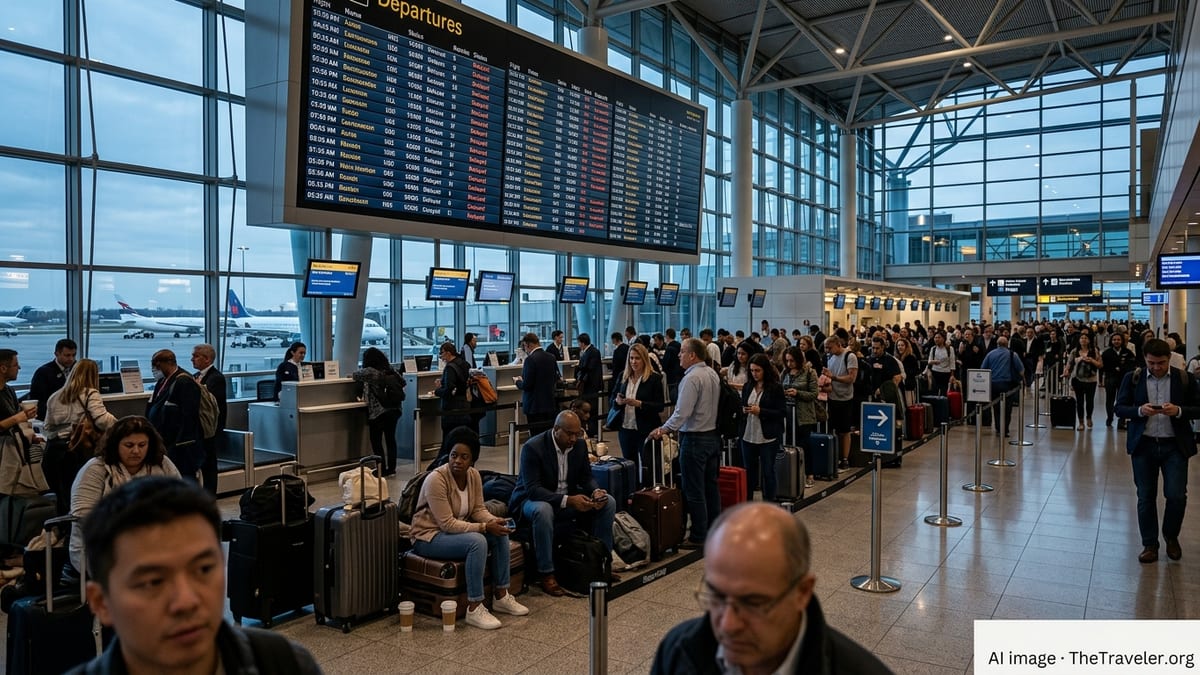
On shorter haul routes, such as intra Gulf or Middle East South Asia services, suspended flights have had direct consequences for migrant workers and residents who rely on frequent, relatively low cost connections. Coverage from regional news outlets has highlighted lengthy waits at airports, crowded check in halls and confusion over rapidly changing schedules, particularly where airlines have had to coordinate new charter-style services or repatriation flights at short notice.
Even travelers whose journeys remain outside the immediate conflict zone are being advised to monitor conditions closely. Airlines and regulators continue to adjust routings and capacity in response to shifting risk assessments, meaning that itineraries passing near the affected region can still be retimed or rerouted with little warning. The combination of longer flight paths, higher operating costs and constrained capacity points to a period of elevated fares and reduced flexibility for international fliers.
Airports and Regulators Reassess Resilience and Risk
The recent turbulence in global air travel has prompted a broader reassessment of how airports and regulators manage compounding risks. In the United States, new safety measures introduced in March require radar based separation between helicopters and fixed wing aircraft at more than 150 of the busiest airports, following a fatal midair collision near Washington in 2025. Publicly released policy documents indicate that the change aims to reduce the chance that congested terminal areas will experience similar incidents as traffic continues to grow.
Elsewhere, hub operators are reviewing their emergency plans for sudden airspace closures and ground stops. Operational summaries from airlines affected by Winter Storm Hernando describe efforts to pre cancel flights, reposition aircraft and deploy larger jets once conditions improved, in order to clear backlogs more quickly. Meanwhile, the near simultaneous need to reroute long haul traffic around the Middle East has underscored the limits of a global system that relies heavily on a small number of mega hubs in geographically sensitive regions.
Aviation analysts note that the layering of different shocks from weather, conflict and safety concerns is testing the resilience of the current network. When storms shut down airports in one part of the world at the same time conflicts close key air corridors elsewhere, spare aircraft and crew capacity can become scarce, making it harder for carriers to offer the kind of rapid recovery that passengers have come to expect.
For now, industry guidance emphasizes preparedness on the traveler side as well. Passengers are being encouraged to build more buffer time into complex itineraries, pay close attention to travel advisories and consider travel insurance products that address disruption from both severe weather and geopolitical events. With the outlook for the Middle East conflict still uncertain and late season storms lingering in parts of the northern hemisphere, airline schedules are likely to remain subject to sudden change.