

More news on this day
U.S. travelers are seeing some relief at airport security checkpoints as Transportation Security Administration officers begin receiving pay again after weeks of working without compensation, but transportation analysts caution that delays and schedule disruptions may persist even as Immigration and Customs Enforcement operations remain insulated from the funding turmoil.
Get the latest news straight to your inbox!
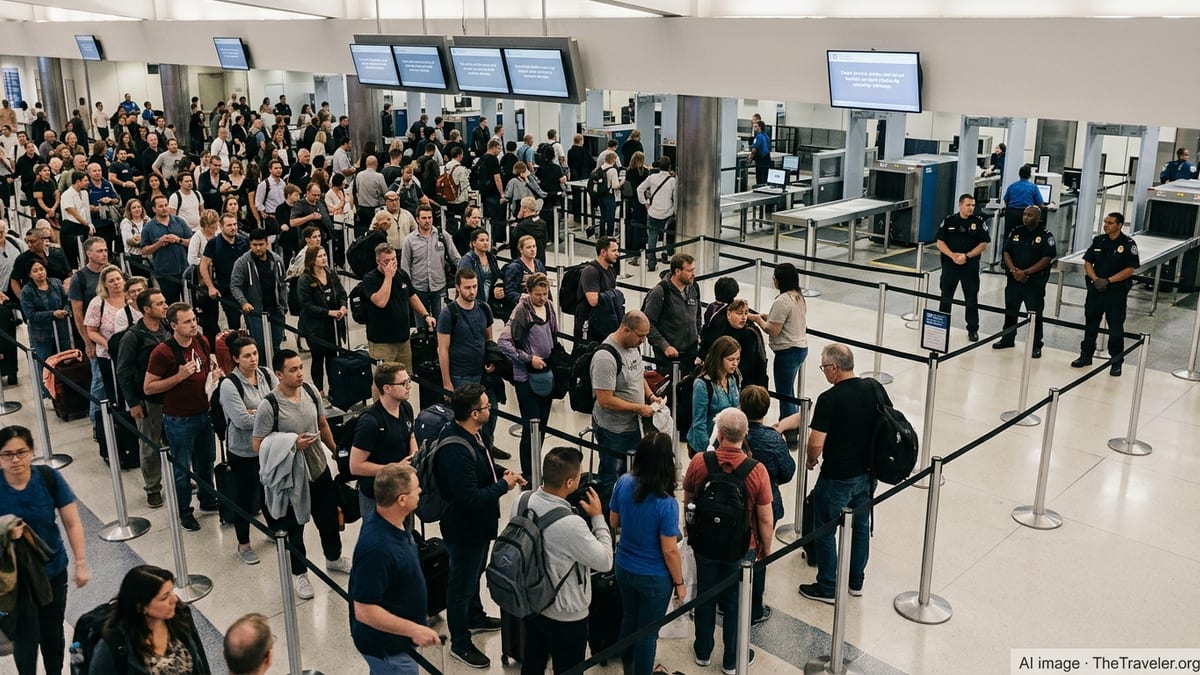
Paychecks Return, But Operational Strain Remains
After a prolonged lapse in Department of Homeland Security appropriations that began on February 14, TSA employees have started to receive back pay and the promise of regular paychecks going forward. Publicly available reporting indicates that the shift followed emergency executive action to restart compensation and a partial funding agreement that prioritizes frontline transportation security while larger political disputes continue.
Airports that had become symbols of the shutdown’s impact are now seeing shorter security lines and fewer last-minute lane closures. Coverage from multiple outlets notes that several of the worst bottlenecks, including multi-hour queues at major hubs, eased within days of TSA pay being restored as more officers returned to their posts and sick calls declined.
However, the operational damage is not expected to vanish immediately. Travel industry observers point out that weeks of understaffing created backlogs in training, leave scheduling, and overtime allocations. Some checkpoints are still rebuilding rosters after experienced screeners left their jobs altogether during the pay freeze, a factor that could keep certain airports vulnerable during peak travel periods.
A law requiring back pay for federal employees once funding resumes has softened some of the financial blow for affected workers, but it does not undo the attrition that occurred while paychecks were halted. Union statements and expert analysis suggest that TSA may need months to fully stabilize staffing patterns, particularly at high-volume coastal and hub airports.
Lingering Delays for Travelers
With TSA compensation flowing again, the most acute scenes of airport chaos have largely subsided, yet travelers are being advised to continue budgeting extra time at checkpoints. Recent coverage describes a patchwork recovery, in which some airports have returned to near-normal wait times while others still experience sporadic spikes tied to staffing gaps, weather disruptions, or flight banks that exceed checkpoint capacity.
Travel data cited in national reports indicates that average wait times have improved since the worst days of the shutdown, when some airports reportedly reduced operations to a fraction of their usual lanes. But analysts caution that recovery is uneven, and smaller facilities that rely on a limited pool of screeners can be especially vulnerable if even a handful of employees are absent.
Airlines have also been working through residual schedule impacts. During the height of the disruptions, carriers adjusted departure times, swapped aircraft, and occasionally cancelled or consolidated flights when security queues threatened to push large groups of passengers past boarding deadlines. While many of those emergency measures have been rolled back, operations planners remain wary of renewed bottlenecks if negotiations in Washington once again put TSA funding into question.
Travel experts recommend that passengers departing from major hubs continue to arrive earlier than they might have before the shutdown and to monitor airline and airport alerts closely. They note that even if average wait times improve, sudden surges of passengers or local staffing shortages can still cause hour-long lines with little warning.
ICE Operations Insulated from the Funding Fight
In sharp contrast to TSA’s experience, publicly available budget information shows that Immigration and Customs Enforcement has remained largely insulated from the current Department of Homeland Security funding lapse. ICE is drawing on a separate multiyear stream of money approved in an earlier, wide-ranging domestic policy package that directed tens of billions of dollars toward immigration enforcement.
That arrangement meant ICE agents continued to receive regular paychecks even as tens of thousands of other DHS employees, including TSA officers, went weeks without compensation. Nonpartisan fact-checking and budget analyses highlight this divergence as a central reason why ICE field operations, detention activity, and investigative work have continued with relatively little visible disruption.
The political decision to separate ICE funding from the rest of DHS has become a focal point in congressional negotiations. Some lawmakers have pushed to keep TSA, Coast Guard, and disaster relief funds moving irrespective of debates over immigration enforcement, while others have insisted that any new DHS money also expand or protect ICE’s operational authority and budget.
For travelers, the uneven funding picture contributes to the sense of a two-track federal response. While airport security officers grapple with the aftershocks of missed paychecks and staffing losses, immigration enforcement activities have proceeded on a more stable footing, reinforcing broader debates over priorities within homeland security spending.
Congress Seeks a Path Out of the Shutdown
In the background of the travel disruptions, Congress is still working to fully resolve the partial DHS shutdown. In late March, the Senate approved a funding package designed to restore pay to TSA and several other DHS components while explicitly excluding fresh money for ICE and Border Patrol. That move was framed in published coverage as an attempt to decouple immediate transportation and security needs from longer-running fights over immigration policy.
The House initially rejected the Senate approach, leaving the shutdown in place even as airport lines grew longer. More recent reporting indicates that Republican leaders have since outlined a new path aimed at fully funding DHS and bringing the historic lapse to an end, although details continue to shift amid intraparty divisions and negotiations with the White House.
Short-term continuing resolutions and stand-alone pay directives for TSA have emerged as interim tools to tamp down the most visible travel chaos without resolving the entire budget dispute. Policy analysts warn that this cycle of temporary fixes could become a recurring feature of DHS funding unless lawmakers eventually reach a broader agreement on immigration enforcement and border security.
The uncertainty has raised concerns among airport operators and the travel industry, which typically plan staffing, infrastructure investments, and route expansions months or years in advance. They argue through public statements and reports that repeated funding crises make it more difficult to forecast demand and maintain consistent service levels for passengers.
What Travelers Should Expect Next
Looking ahead, transportation experts anticipate a gradual normalization of airport screening provided that TSA pay remains uninterrupted. Training pipelines that were slowed or paused during the shutdown are resuming, and some airports are revisiting contingency plans developed during the crisis to ensure they can react more quickly if future funding disputes arise.
At the same time, the underlying vulnerabilities revealed by the shutdown have not disappeared. Many TSA officers endured back-to-back funding crises within a relatively short period, and workforce surveys referenced in recent coverage suggest morale remains fragile. Industry observers note that recruiting and retaining screeners in high-cost metropolitan areas may become even more challenging if workers fear that future pay disruptions are likely.
For now, passengers are being urged to treat the recent improvement in wait times as a welcome development rather than a guaranteed new baseline. Travel advisers recommend maintaining flexible itineraries where possible, building in additional time for connections at congested hubs, and paying close attention to any shifts in federal budget negotiations that could once again affect TSA operations.
While ICE agents are expected to continue working with stable pay under their separate funding stream, the split between immigration enforcement and transportation security budgets ensures that debates over DHS priorities will remain central to both politics and the passenger experience. Until a more durable funding framework is in place, experts say, the risk that airport operations could once again be disrupted will linger in the background of every peak travel season.